
In Britain, a black cat crossing the street is a stroke of luck; in the United States, it’s a reason to turn around. Cultures have built very different ideas about what a cat represents, from sacred guardian to bad omen. Some of those beliefs live on today in bronze statues and breeds first described in centuries-old manuscripts.
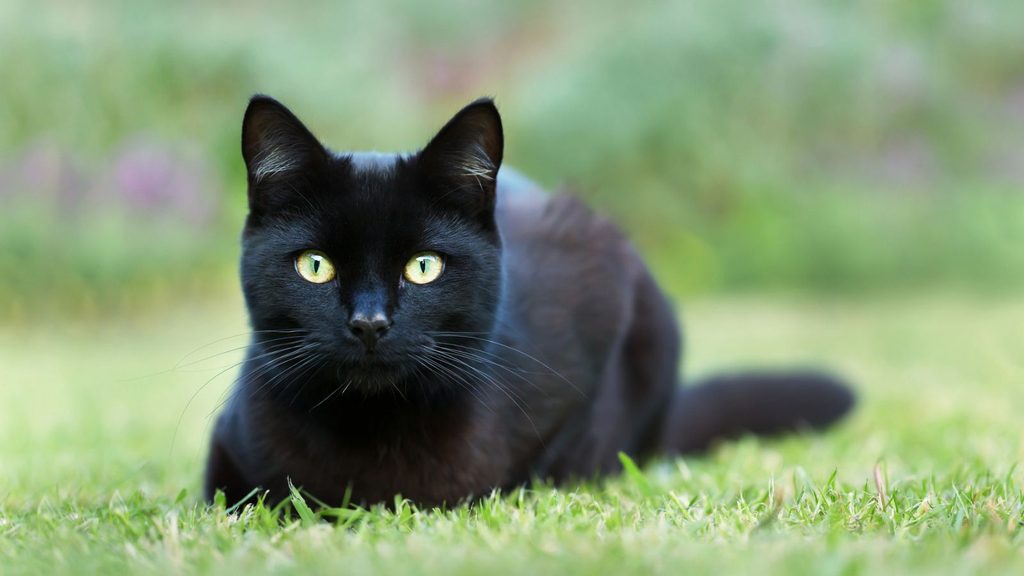
A cat spends its days claiming the warmest spot on the couch and showing up at the table exactly when a plate looks least shareable. Litter boxes and scratched doorframes are part of the package, plus a habit of swatting things off counters just to watch them drop. People keep choosing to live with it all, mess included, because something about that indifference is exactly what makes the animal worth having around. On Oct. 29, National Cat Day turns quirky cats into a bigger question about why humans have spent so much history on one particular animal and not another.
Humans have wondered about that for centuries, long before anyone organized a national day around it. Ancient Egypt gave cats a prominent place in its religion, and Japan made them a permanent fixture on small business counters. That same reverence shows up in stranger forms too, from a British sailor’s superstition about cats falling overboard to a centuries-old Thai manuscript describing which cats bring luck.
Ancient Egypt treated a cat’s passing as a household emergency
The Greek historian Herodotus wrote that Egyptian households in mourning for a cat that died naturally would shave only their eyebrows, compared with shaving the entire body for a dead dog. He also described Egyptians prioritizing their cats over their homes during a fire, with the animals said to slip past the broken line people formed and spring into the flames themselves.
The devotion left a physical record. Archaeologists uncovered an estimated 180,000 mummified cats, weighing about 19.5 tons, at Istabl Antar, near Beni Hasan, and sold them in Liverpool on Feb. 10, 1890, as fertilizer. Centuries earlier, the historian Diodorus Siculus wrote that he saw an angry crowd rush the home of a Roman who had accidentally killed a cat, and neither the king’s officials nor fear of Rome could save him.
Japan’s lucky cat figurine traces back to one of several origin legends
The maneki-neko, the raised-paw figurine found in restaurants and shop windows worldwide, is tied to Gōtoku-ji temple in Tokyo, built in 1480 and renamed in 1659 after the posthumous Buddhist name of Ii Naotaka. Legend holds that a cat beckoned Naotaka away from the tree while he sheltered from a storm, and lightning struck the spot moments after he left, so he became the temple’s patron in gratitude.
That affection for cats lives on today on Aoshima Island, where about 80 cats now outnumber the three elderly residents left. Fishermen once brought cats aboard to control rats, and the cats multiplied largely undisturbed after the local fishing industry collapsed.
Istanbul turned 1 street cat into a bronze memorial
Cats are considered ritually clean in Islamic tradition, and a widely repeated story about the Prophet Muhammad, in which he cut off his sleeve rather than disturb a sleeping cat, is often cited as why many of the city’s mosques welcome them inside. Istanbul’s welcome for cats is not just historical.
Tombili, a street cat whose photo of him lounging against a flight of steps went viral online, passed away after a month-long illness in early August 2016. A petition gathered more than 17,000 signatures calling for a statue, and about two months later, sculptor Seval Şahin installed a bronze figure at the exact spot where the photo was taken. The statue was stolen just over a month after its unveiling and recovered two days later.
Britain still treats a black cat as good fortune, not bad luck
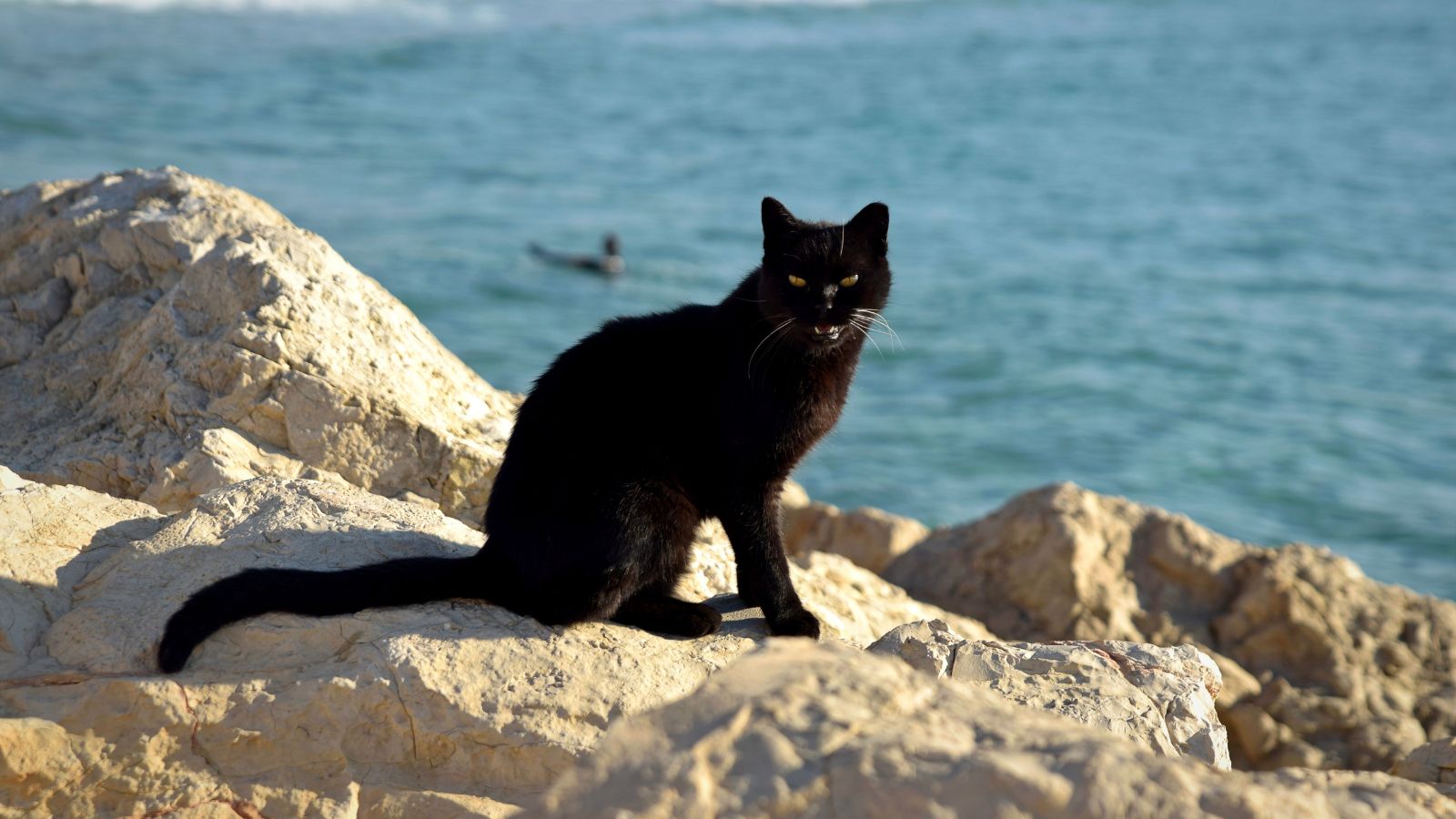
In the United Kingdom, a black cat crossing someone’s path is broadly considered good luck, the opposite of the superstition in the United States, according to Cats Protection, though it varies by region. In Yorkshire, owning one is lucky, while meeting one is not.
The belief once extended to sea voyages. Rats and mice fed on ships’ food cargo, and sailors in Europe held that keeping a black cat aboard ensured safe passage. Others feared a cat that went overboard would summon a storm, and a ship that survived it would suffer nine years of bad luck.
Thailand’s most famous cat breed began as a lucky omen in verse
The Wichien Maat, or Moon Diamond, generally identified with the classic Siamese, appears in the Tamra Maew, manuscripts that praise lucky cats in verse, comparing one cat’s eyes to dewdrops on a lotus. The tradition is linked to the Ayutthaya period, but all surviving copies date from after the 1767 sack of the capital. Most versions name 17 lucky types, and only a handful are known to have survived.
In 1878, the American consul in Bangkok, David Sickels, sent a cat to First Lady Lucy Hayes, believing it to be the first Siamese to reach America. The cat, named Siam, arrived in early 1879, became the pet of the Hayeses’ daughter Fanny, and passed after falling ill about nine months later.
The cat on your couch still gets the warmest spot
Somewhere right now a cat named Luna is claiming the warmest spot on the couch and ignoring the rest of the room. She doesn’t know she belongs to a species once mourned in Egypt and cast in bronze in Istanbul, and she wouldn’t care. She’s already doing all she needs to do.
Jennifer Allen is a retired professional chef and long-time writer. Her work appears in dozens of publications, including MSN, Yahoo, The Washington Post and The Seattle Times. These days, she’s busy in the kitchen developing recipes and traveling the world, and you can find all her best creations at Cook What You Love.