
A phone booth was never just a box with a phone in it. Someone actually sat down and designed it, thought about who would use it, where, and why they’d need a door that closed behind them. These seven designs prove America once put real thought into how you made a call, right up until everyone just started carrying the whole booth around in their pocket.
Wooden Sit-Down Booths
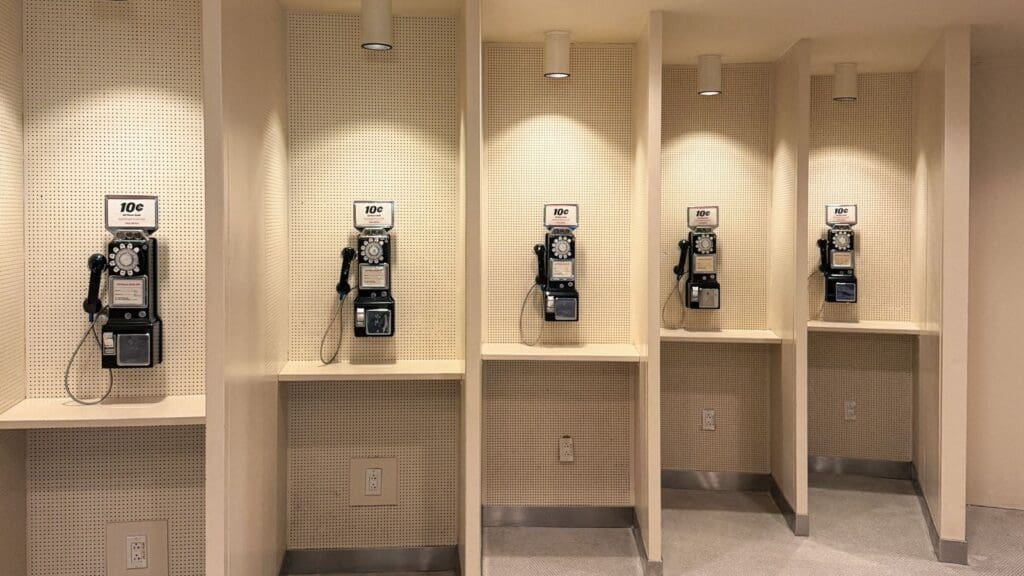
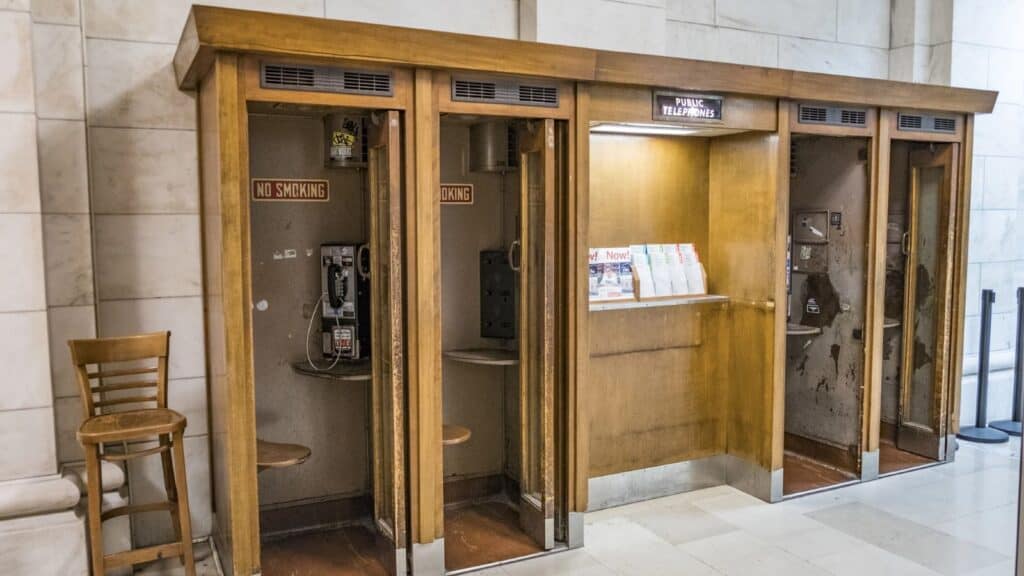
Indoor booths once put comfort and privacy first. Bell System history says early indoor booths were constructed from durable hardwood such as mahogany. A 1930 Bell Labs article described a seated No. 6 booth, with finishes including dark mahogany, medium mahogany, oak and walnut. By the 1960s, as glass-wall office buildings changed commercial interiors, Bell Labs designed an indoor glass-and-metal booth to better fit those newer surroundings.
The Airlight Booth
The Airlight helped define the classic glass-and-metal outdoor phone booth. Introduced in the mid-1950s, it used an aluminum frame, glass walls and an interior light so callers could use it outdoors day or night. A surviving example in Prairie Grove, Arkansas, was listed on the National Register of Historic Places in 2015, becoming the first telephone booth to receive that status. The wider decline was steep. FCC figures show more than 2.1 million U.S. payphones in 1999 and fewer than 100,000 by the end of 2016.
Calling From the Driver’s Seat
Drive-up payphones brought the call directly to the car. Bell System records say the idea was first tested in Mobile, Alabama and Chicago in 1957. Drivers could pull alongside the phone and place a call without getting out. The idea proved popular, turning the payphone into a convenience designed specifically around drivers.
The Open Walk-Up Enclosure
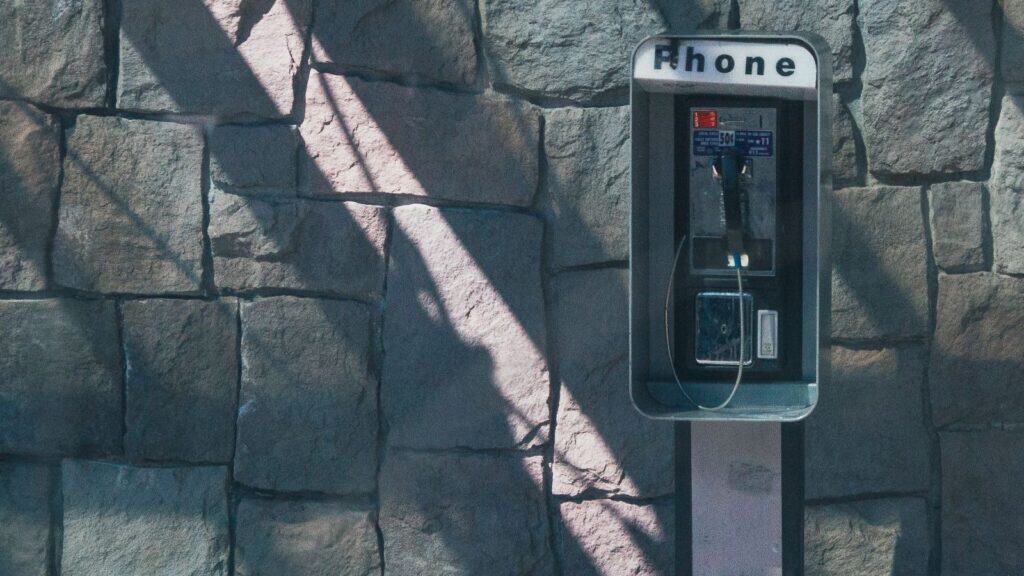
A public phone did not always need four walls and a door. A 1972 service manual lists dedicated walk-up and drive-up public telephone mountings. Bell Laboratories also described a walk-up enclosure that could stand alone, attach to walls or be grouped in multiple installations for busy places such as shopping centers. Outdoor versions could also carry a canopy and lighted sign.
Pagoda Roofs in Chinatown
Payphone booths could reflect the neighborhood around them. Photographer Emile Bocian captured pagoda-topped booths on Bayard Street in New York’s Chinatown in 1979. The image is part of the Museum of Chinese in America collection. The museum notes that public telephone booths like these have all but disappeared, leaving the photograph as a record of a utility that also became part of the street’s visual character.
The Advertising Kiosk
A payphone enclosure could double as advertising space. New York City’s 1999 franchise agreement with Telebeam allowed ads on the exterior rear and side panels of public-payphone kiosks. By May 2022, city officials were removing what they called the last free-standing public payphones after many city payphones had already been replaced by digital kiosks. The label was not absolute: four full-length “Superman” booths remained on the Upper West Side, along with payphones on private property.
The Architectural Booth
Bell Labs also designed payphone enclosures to become part of a building’s interior. At New York’s World Trade Center, its “architectural” booth used a welded steel center frame, a stainless steel faceplate and bronze-colored glass wings. It could stand alone or be installed in groups. The design answered a request from the World Trade Center’s architects for coin-telephone enclosures that would blend with the interiors instead of looking like separate boxes placed in the room.
What the Booth Gave the Call
As mobile subscriptions rose, the number of payphones fell sharply. What disappeared with the booth was harder to replace: a public place built around having a private conversation. The old designs show that convenience and privacy do not always arrive together. A phone in your pocket can go almost anywhere, but the little room around the call was doing useful work, too.