
Every garlic clove planted this fall is a clone of the bulb it came from. Garlic is largely sterile and grows best from cloves rather than seed, and viruses and other pathogens can build up in clove-grown garlic over successive crops. Where the cloves come from matters, and the supermarket may not be the best place to get them.
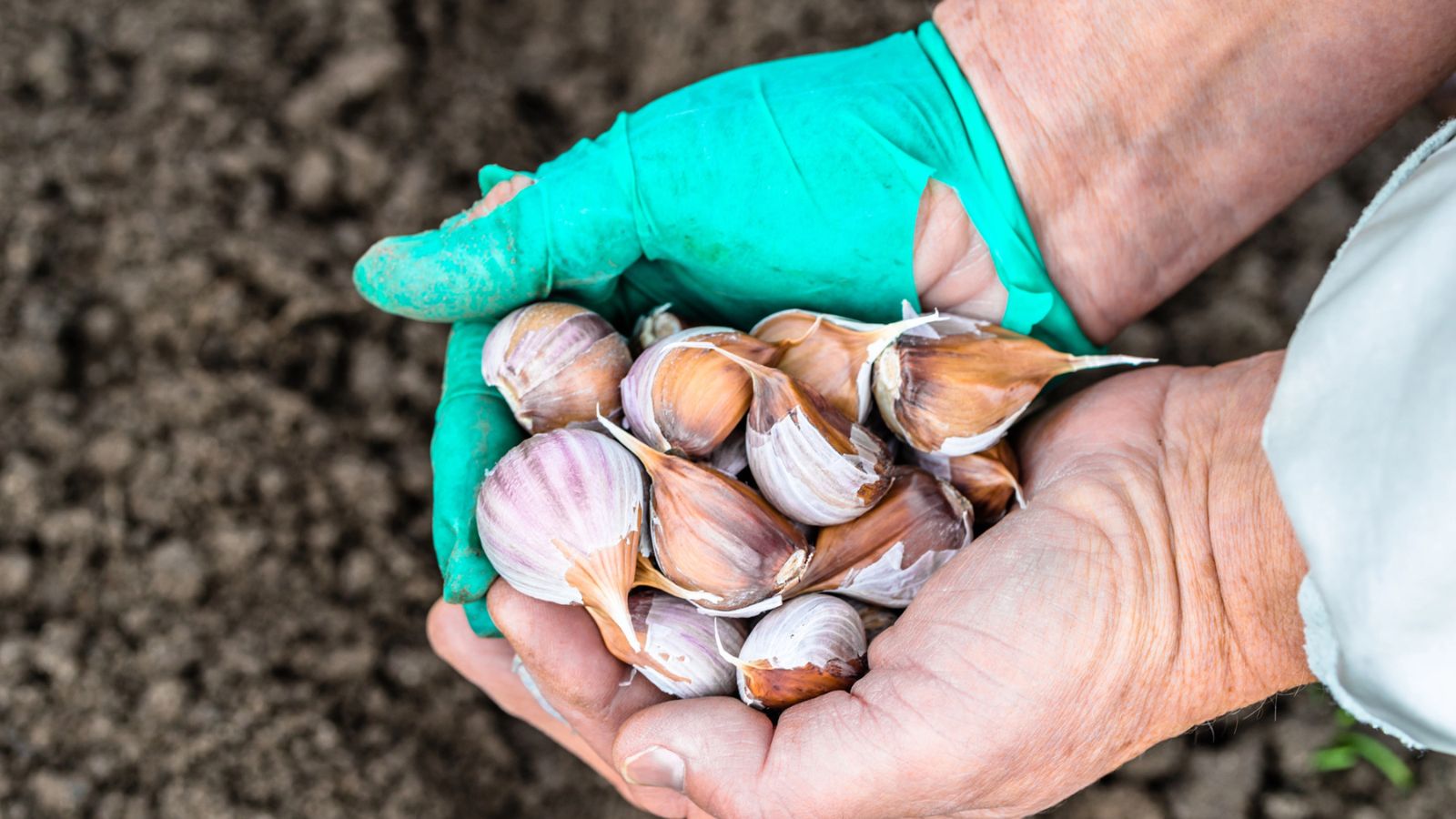
Cloves are separated from the bulb no more than a day before planting. Roots start forming in fall, and growth pauses over winter until spring soil warms. A layer of straw or leaf mulch helps protect the cloves over winter. You can buy seed garlic from garden centers and mail-order sellers, or use the previous year’s bulbs.
Garlic also produces a second kind of planting stock above ground. Hardneck varieties send up a flower stalk called a scape in late spring, and the stalk ends in a cluster of small aerial bulbs called bulbils, each a clone of its parent. Planted the conventional way, bulbils need at least two growing seasons to become a marketable bulb. A recent trial cut that to one season by first raising bulbils into seedlings in a nursery. The transplanted seedlings yielded 17.7 metric tons per hectare at the highest potassium dose tested, statistically comparable to the 18.3 tons from cloves.
Garlic skips seed
Seed is rarely the route for garlic, since the plant is largely sterile and grows best from cloves, which produce plants matching the bulb they came from. One field study planted the same stock in every plot to limit genetic variation between plants. A stretch of cold treatment is also needed before a bulb forms, which is why cloves go in during fall instead of spring.
What a clone hands down
In garlic grown from cloves, viruses and other pathogens can build up gradually over successive cropping cycles. Two viruses widely reported in garlic-growing regions, onion yellow dwarf virus and leek yellow stripe virus, significantly reduce bulb yield and quality.
Supermarket bulbs may have been treated to extend shelf life or may belong to a variety that grows only in warmer climates. Seed garlic from a local farm or garden center is the safer choice for a crop that grows successfully.
Hardneck and softneck behave differently
Hardneck garlic produces fewer cloves per bulb, but the cloves are larger, and the flavor is stronger and more complex. Its skin is thicker but more brittle, and the central stem turns rigid at maturity. Softneck garlic has a milder flavor and does better in mild winters and hot summers. Its leaves stay soft at maturity, which makes braiding possible.
Growers remove the scape so the plant can put more energy into bulb formation. The scape is also edible, which gives growers something to harvest while the bulbs finish growing.
Bulbils help with some problems and not others
Bulbils form in the air on the flower stalk and do not touch the soil while they develop, which may reduce the spread of certain soil-borne pathogens compared with cloves. They are not inherently virus free, though, because viruses can travel from the mother plant into the developing bulbils through the plant’s vascular connections.
A single plant can produce hundreds of bulbils, which allows planting stock to multiply quickly. Lab techniques such as meristem culture or thermotherapy can be paired with bulbils to eliminate viruses from planting stock.
Saving bulbs for next fall
Gardeners who want to replant their own crop set aside the biggest bulbs at harvest, since cloves from the largest bulbs give the highest yield. Within each saved bulb, plant the largest cloves, because they produce the largest bulbs at harvest.
Anyone planning to store garlic until planting time starts by curing the bulbs in a shady spot with good air circulation. Once the wrappers turn papery and the roots dry, the roots and stalk are trimmed and the bulbs go into a cool, dark and dry place.
Soil that grew garlic or another allium crop needs a two-year break before replanting, which means saved cloves go into a bed that has not held garlic or any allium in the past two years. University of Vermont Extension advises planting cloves at least 2 inches deep and 4 to 8 inches apart, which leaves room to dig the bulbs safely at harvest.
Harvest timing matters for clones
Harvest comes in mid to late summer, once about half the leaves have turned yellow. Bulbs left in the ground too long lose their wrappers while the cloves separate. Growers who find the bulbs not yet ready can cover them back up with soil and check again in a week or two.
Jennifer Allen is a retired professional chef and long-time writer. Her work appears in dozens of publications, including MSN, Yahoo, The Washington Post and The Seattle Times. These days, she’s busy in the kitchen developing recipes and traveling the world, and you can find all her best creations at Cook What You Love.