
Pozole is a hominy stew, until a cook in Sonora makes it with wheat. The dish’s ceremonial origin story centers on a 1500s account of a corn stew that never uses the word pozole. Across Mexico, the name covers red pork bowls in Jalisco and green ones in Guerrero, and its history comes with its own disagreements.
The 1500s account behind pozole’s ceremonial origin story was written by Bernardino de Sahagún, a Franciscan friar from Spain who worked in 16th-century Mexico. With Nahua collaborators, he produced the “Florentine Codex,” a 12-book encyclopedia of Indigenous Mexican knowledge, and its second book describes Aztec religious ceremonies and feasts. The codex also includes a maize stew, and tellings of pozole’s ceremonial past often cite it.
A ceremonial stew with another name
The codex, written between 1540 and 1585, calls the maize stew “tlacatlaolli.” It never mentions pozole by name. A Nahuatl dictionary entry defines tlacatlaolli as a stew eaten when a captor’s family also ate a piece of the captive’s flesh, citing the 1951 English translation.
The historian Alberto Peralta de Legarreta, an authority on pre-Columbian food in Mexico, goes further, insisting the word pozole never appeared in any pre-Hispanic text. During the 300 colonial years, Asian and European elements were likely added to the stew, Peralta says, inspired by Spanish pucheros that combine meats and grains.
The 1937 recipe and the flag colors
Chef and researcher Ricardo Muñoz Zurita believes the pre-conquest corn stew was not made with pork. In his view, cooks could have used venison or rabbit, and a meatless version would not have been so unusual.
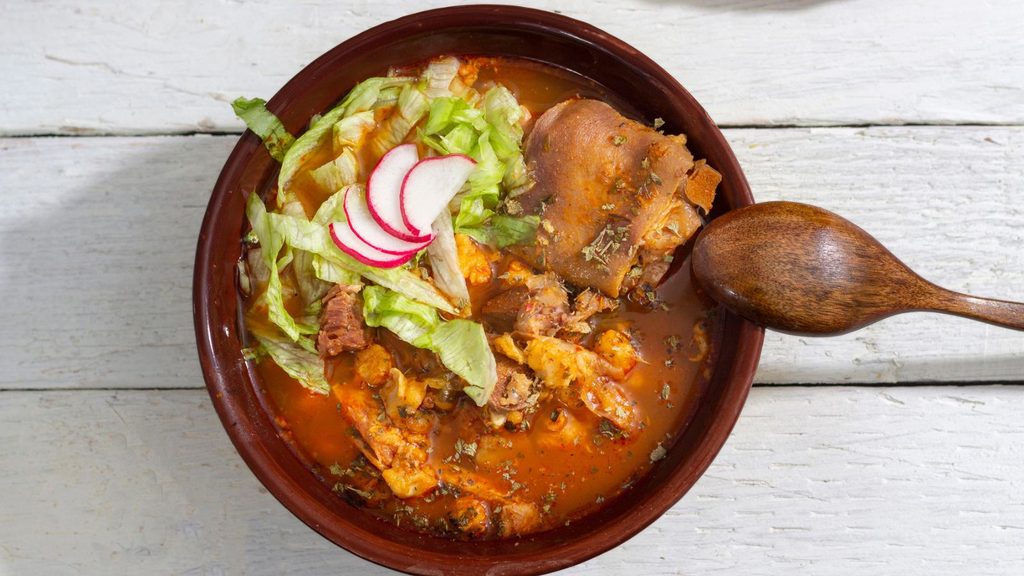
The earliest recipe Peralta found for pozole as it is known now dates to 1937, and he ties the period to the aftermath of the Revolution, when Mexicans needed a shared view of their history. Garnishes in the colors of the Mexican flag, with green lettuce, white onion and red radish, are linked to that nationalist period.
The red, green and white versions
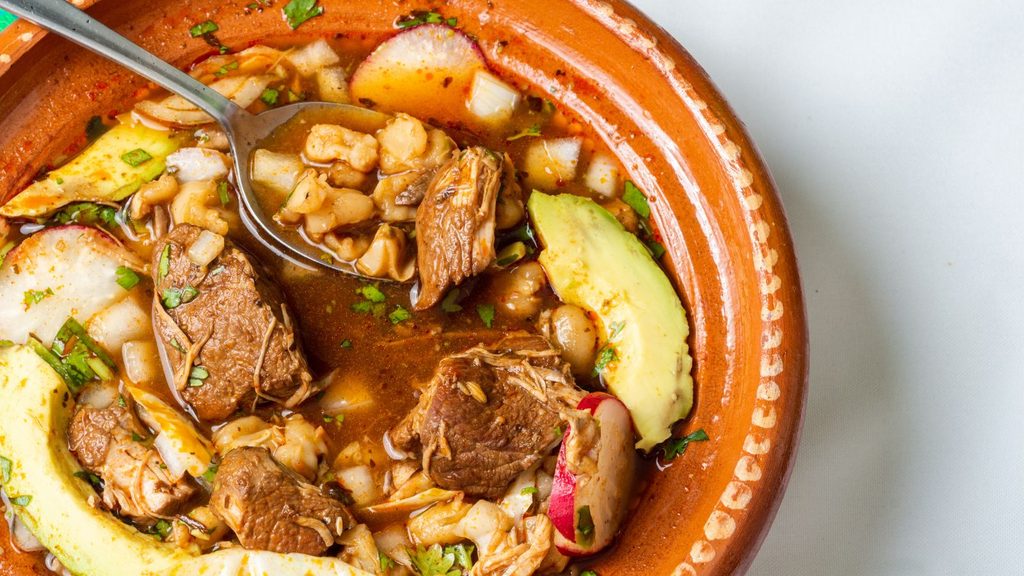
Jalisco and Michoacán are known for red pozole. In Jalisco, the broth uses guajillo or ancho chile and pork, especially the head. Guerrero, by contrast, is known for green and white. The green style gets its color and flavor from tomatillo, along with herbs such as hoja santa and epazote, and another account describes a base of pumpkin seed with toppings of chicharron and avocado.
Seasonings for white pozole include onion, garlic, bay leaf and oregano, with chiles added as the cook prefers. Mixtec cooks make a white version of pork with hoja santa, sometimes adding chicken, while Puebla’s white pozole uses chicken.
Versions beyond the big 3
Colima has a dry pozole in which pork and corn kernels are fried in lard with only a little broth, then served on tostadas. In the Purépecha region of Michoacán, a version called “batido” cooks the corn until it nearly falls apart, leaving the stew thick; in Pátzcuaro, it is beaten in tubs, much like atole. It is made with red corn and puya chile and served with garnishes such as oregano and chile powder. Elopozole uses fresh corn kernels instead of dried hominy and is cooked in broth with pork or chicken.
Along the coasts of Colima and Jalisco, people make seafood pozole especially during Lent. The broth is built on dried shrimp, with fresh shrimp added at the end. Nayarit eats a version flavored with chilacate chile.
Wheat, boar and mushrooms
Some regional bowls drop corn altogether. Wheat pozole is made in eastern Michoacán and the State of Mexico, and in Sonora, where the Hermosillo recipe combines wheat with fava beans, chickpeas, nopal and purslane, plus oxtail, and the Yaqui cook their own wheat version. Sonora also has a pozole built on a tepari bean broth with oxtail and ancho chile.
Sinaloa cooks wild boar in water with nixtamal and finishes it with an ancho chile sauce seasoned with oregano and cumin. Vegetarian cooks replace the meat with wheat or mushrooms and make the dish white or red. In the Guerrero towns of Acatlán and Chilapa, a bean pozole cooks corn kernels and beans together in bean broth with garlic and onion.
Thursday pozole
Guerrero keeps a tradition of eating pozole on Thursdays, and in Chilpancingo the green version is still almost ritual. Accounts of where the custom began disagree. One tale ties it to the 1821 agreement between Agustín de Iturbide and Vicente Guerrero, after which the two generals declared a feast with roasted pig for pozole. Another places it near an Acapulco nightclub in the 1980s, where hungover patrons wanted pozole the next day and a vendor was always nearby.
Same name, different bowls
Beyond Guerrero’s Thursday tradition, pozole is served in some villages at festivities that involve a pig and invite everyone in town. Because the same name covers hominy and wheat versions, anyone trying a regional bowl can ask what goes in the pot.
Mandy writes about food, home and the kind of everyday life that feels anything but ordinary. She has traveled extensively, and those experiences have shaped everything, from comforting meals to small lifestyle upgrades that make a big difference. You’ll find all her favorite recipes over at Hungry Cooks Kitchen.