
The Michelin Guide added four new stars to Québec in its second annual selection this May, bringing the province’s total to 13. The announcement arrived just days after four restaurants in Montreal appeared on North America’s 50 Best list, a distinction shared by only a handful of cities on the continent.
For food lovers, that’s enough reason to book a trip. For everyone else, the recent awards point to something bigger than just restaurants: Québec is quickly becoming the best way to experience a European vacation without leaving the continent.
Montreal and Québec City offered much of what draws travelers to Europe long before Michelin arrived. Both cities boast walkable historic neighborhoods, an unhurried cafe culture, centuries-old architecture and majestic, grand dame hotels. The recent restaurant recognition simply adds another layer to an experience that already draws visitors.
Together, the two cities make a compelling case for a European-style getaway that doesn’t require a passport full of stamps or an overnight flight. Travelers only need a Via Rail ticket or a car with a full tank of gas.
Montreal: The European city that never crossed the Atlantic
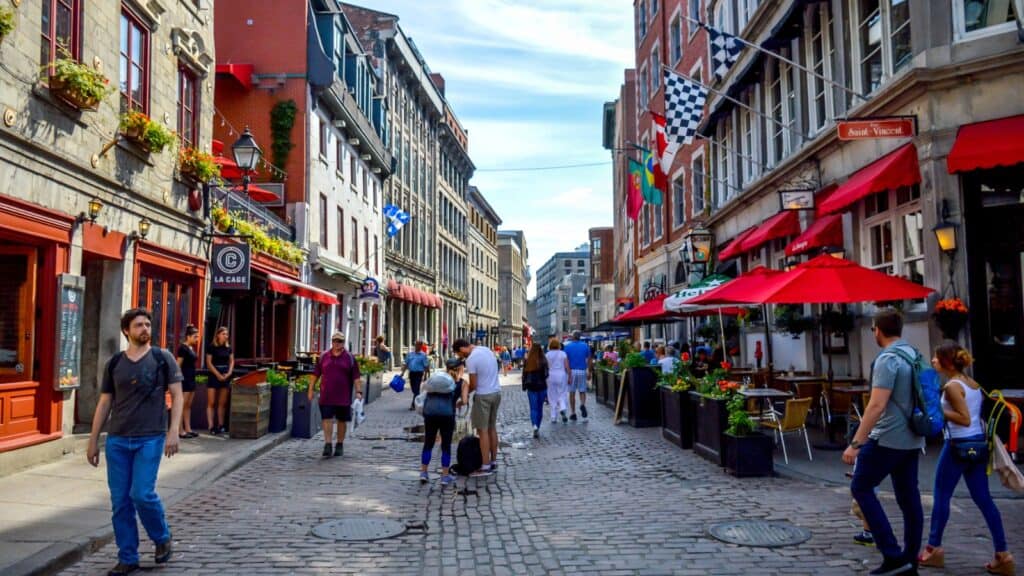
Getting to Montreal from most North American cities takes two to four hours by air; less if you’re driving from the northeast. Yet within minutes of arriving, the city stops feeling like North America. Church spires rise above stone buildings, cafe terraces spread across the sidewalks and conversations move between French and English.
Old Montreal, with its cobblestone streets, grey limestone facades and the Basilique Notre-Dame rising over the waterfront, reads like a quarter of Lyon that somehow drifted across the Atlantic. On summer evenings, people fill the sidewalk tables outside cafes and restaurants. The buildings are old, but the neighborhood doesn’t feel frozen in time.
A few kilometers north, the focus shifts from historic landmarks to neighborhood life. The Plateau-Mont-Royal is known for its outdoor staircases, colorful murals and independent wine bars with natural wine lists that would hold their own in any French city.
This is where Montrealers actually live and eat. Walking between Old Montreal and the Plateau on a warm evening is as close to a European flaneur experience as this continent reliably offers.
A landmark hotel with a legendary past
Staying right at the center helps when traveling. Downtown Montreal puts you within walking distance of Old Montreal and a short metro ride from the Plateau, which means less time planning and more time actually eating and wandering.
The Fairmont Reine Elizabeth sits at that center point, directly above Montreal’s Central Station, and connects to the city’s underground network of tunnels, shops and metro lines. The hotel opened in 1958 as the last property in the Canadian National Railway’s luxury hotel chain. It was the first building in Canada with central air and telephones in every room. John Lennon and Yoko Ono did their 1969 bed-in for peace here, and you can still book that suite. A full renovation in 2016 was completed, with 123 pieces of art by local Québec and Canadian artists throughout the property.
The hotel’s restaurant, Rosélys, is worth a visit whether or not you’re staying there. Much like Montreal itself, the restaurant takes local ingredients seriously.
At Friday dinner service, live jazz fills the room while servers carry seafood towers to neighboring tables and finish rum baba tableside. Standout dishes included duck with hazelnut and salsify prepared two ways, along with an octopus starter paired with cucumbers, served roasted, pressed and sliced into ribbons. Even the charcuterie board highlights producers from Québec and elsewhere in Canada, right down to the jams and balsamic vinegar.
That same focus carries into the weekend brunch. Montreal bagels come with Canadian lox, omelets are made to order and the breakfast sausages are made exclusively for the hotel. The result feels less like a hotel buffet and more like a showcase of Québec’s food culture. But the crown jewel of Rosely’s just may be the Royal tea. A nod to the city’s Anglophone half, this preset tea ceremony includes a pot of steaming brew of your choice, as well as a tower of decadent petit fours and little finger sandwiches, all made in-house with local products. The gluten-free and vegan options are just as delicious as the originals.
For something more casual, Annette bar à vin, Michelin-starred Hoogan and Beaufort’s younger sibling, offers one of the city’s better wine bar experiences. The restaurant recently earned a Bib Gourmand in the 2026 Michelin Guide and will take you to a unique part of the city, the Angus yards.
In Montreal, good food isn’t limited to a handful of destination restaurants. Wine bars, neighborhood bistros, tasting-menu spots and corner cafes are woven into daily life across the city. That’s what makes eating here feel different from most North American cities. Just last week, Montreal cemented its place on North America’s 50 Best Restaurants list with four new entries: Mon Lapin, Le Violon, Sabayon and Beba.
Québec City: Europe without the airfare
If Montreal feels European, Québec City takes the comparison a step further. The latter feels like a piece of it settled along the St. Lawrence River and never moved. It’s about a three-hour drive from Montreal, or a short train ride through Via Rail.
Québec City’s historic center is unlike anything else in North America: stone buildings line narrow streets, church spires rise above the rooftops and the old defensive walls still trace the edge of the historic center. While Montreal balances its history with modern skyscrapers, the city wears its past more openly.
Québec is very much still functioning. Residents share the streets with visitors, while local businesses operate alongside historic landmarks. Daily life here continues among buildings that have stood for centuries.
Travelers looking for a more contemporary side of Québec City should spend some time in Saint-Roch. Just downhill from the old walls, the neighborhood is filled with independent restaurants, wine bars and cafes that draw as many locals as visitors. It’s the Quebéc City equivalent of the Plateau, younger and easier to get into on short notice.
The hotel at the center of Quebéc City’s story
The train may connect the two cities, but the Fairmont Le Château Frontenac is what defines Québec City’s skyline. The Château Frontenac has watched over Québec City since 1893, when Canadian Pacific built it on the foundations of the Château Saint-Louis. More than a century later, it remains the city’s defining landmark.
The hotel’s history is woven into Canada’s. Churchill, Roosevelt and Mackenzie King met here during the 1942 and 1943 Québec Conferences, using the Pink Room to discuss plans that would eventually lead to the Normandy landings. Over the years, the hotel has accumulated plenty of other stories; Celine Dion was discovered performing here, the building appears in a “James Bond” novel and a Korean drama. Today, it remains one of the country’s most recognizable hotels, earning a place in the Michelin Guide’s 2026 hotel selection.
Fairmont Le Château Frontenac’s restaurants reflect the growing attention being paid to Québec City’s dining scene. The hotel’s main restaurant, Le Champlain, carries a Michelin recommendation and eleven consecutive Wine Spectator Awards of Excellence, sourcing entirely from local producers. It was fully booked on the available nights during this visit, which is becoming a recurring problem at Québec City’s better tables.
Bistro Le Sam is the more relaxed option. The menu leans toward French bistro classics done well, making it a reliable option after spending a day exploring the city.
Why Michelin is paying attention
The city’s growing recognition feels less like a breakthrough than a long-overdue acknowledgment, because the restaurants have been putting in the work for years.
Tanière³ holds Québec’s only two-star Michelin rating. Chef François-Emmanuel Nicol’s cooking is the benchmark for what serious Québec terroir looks like. Its sibling restaurant, Légende, has one star and works through Québec’s culinary history in tasting menu format.
The newest addition to the list is Le Clan, which earned its first Michelin star in the 2026 guide. Chef Stéphane Modat takes local sourcing to unusual lengths, printing the geographic coordinates of each dish’s primary ingredient directly on the menu. The wine program is overseen by Pier-Alexis Soulière, who was named Canada’s Best Sommelier in 2021.
A five-course menu with wine pairing costs $90. Lunch is available for less than $45, while weekend brunch is $20. In a city where many travelers arrive expecting European prices, those numbers stand out.
Ksenia Prints is a food and travel writer from Montreal, Canada. She blogs over at We Travel We Bond, writing about family travel off the beaten path.