
Restaurant chains can disappear in more than one way. Some close every location. Others shrink to a handful of restaurants or vanish from U.S. streets while the brand carries on elsewhere. These 13 names once had much bigger footprints, and each shows how quickly a familiar place can become a memory.
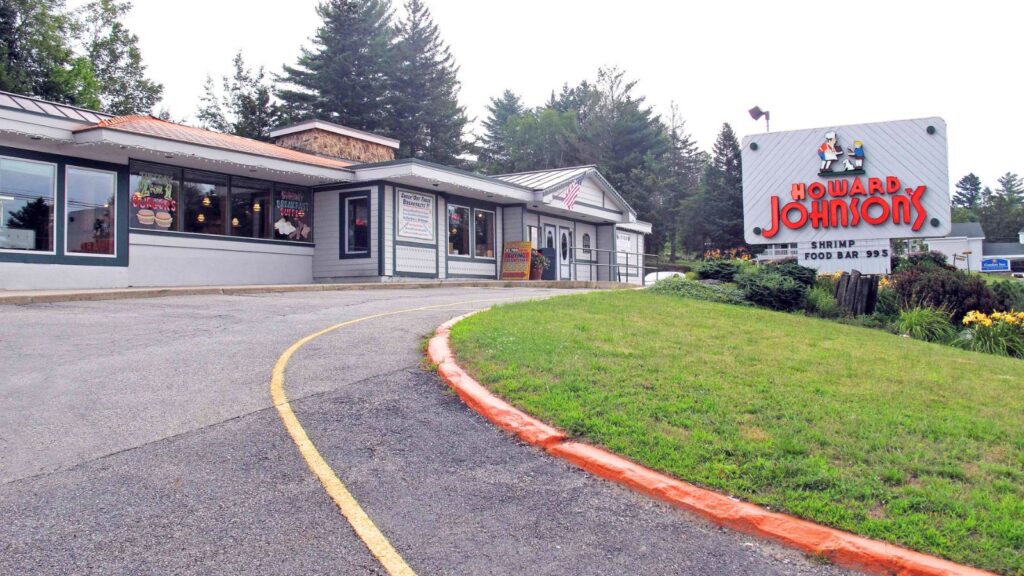
Howard Johnson’s
Howard Johnson’s once had around 1,000 restaurants along American highways and turnpikes. The orange-roofed stops were famous for fried clams and 28 ice cream flavors. The last restaurant, in Lake George, New York, closed in 2022. The hotel name still exists under Wyndham.
Burger Chef
By December 1967, Burger Chef was the country’s second-largest restaurant chain behind McDonald’s. General Foods bought it in 1968. Its Funmeal arrived before McDonald’s Happy Meal, and the Big Shef became a signature burger. Burger Chef was sold in 1982, and the final franchise closed in 1996.
Gino’s Hamburgers
Gino’s started in Maryland in 1957 and built its name on burgers and chicken. Marriott bought the original chain in 1982 and converted many restaurants to Roy Rogers. Gino’s returned in 2010. Its official site now lists two Maryland restaurants, in Glen Burnie and Towson.
Lum’s
Lum’s made beer-steamed hot dogs its calling card and grew to more than 400 locations. A Swiss company bought the chain in 1978 before bankruptcy hit in the early 1980s. Most restaurants disappeared, but a Bellevue, Nebraska location kept the name alive until 2017.
Farrell’s Ice Cream Parlour
Farrell’s turned dessert into theater with old-fashioned uniforms, player pianos and oversized sundaes delivered with plenty of noise. The chain grew past 100 locations before shrinking sharply in the 1980s. Comeback attempts followed, but the final Brea, California restaurant closed in 2019.
Beefsteak Charlie’s
Beefsteak Charlie’s offered an all-you-can-eat salad bar, shrimp and unlimited beer, wine and sangria. It had almost 70 locations in 1984. By 1987, 20 restaurants had closed and the company had lost $20 million before an acquisition. Its last long-running locations closed by 2001.
Kenny Rogers Roasters
Kenny Rogers and John Y. Brown Jr. launched Kenny Rogers Roasters in 1991. The company filed for Chapter 11 bankruptcy in 1998, and the last U.S. location closed in 2011. The name survives overseas, with more than 200 restaurants operating across Asia.
Sambo’s
Sambo’s grew from a 1957 Santa Barbara restaurant to more than 1,100 locations. The owners said the name combined the founders’ names, but restaurants also used imagery from “The Story of Little Black Sambo,” and the brand faced criticism. The company filed for bankruptcy in 1981. The original restaurant retired the Sambo’s name in 2020.
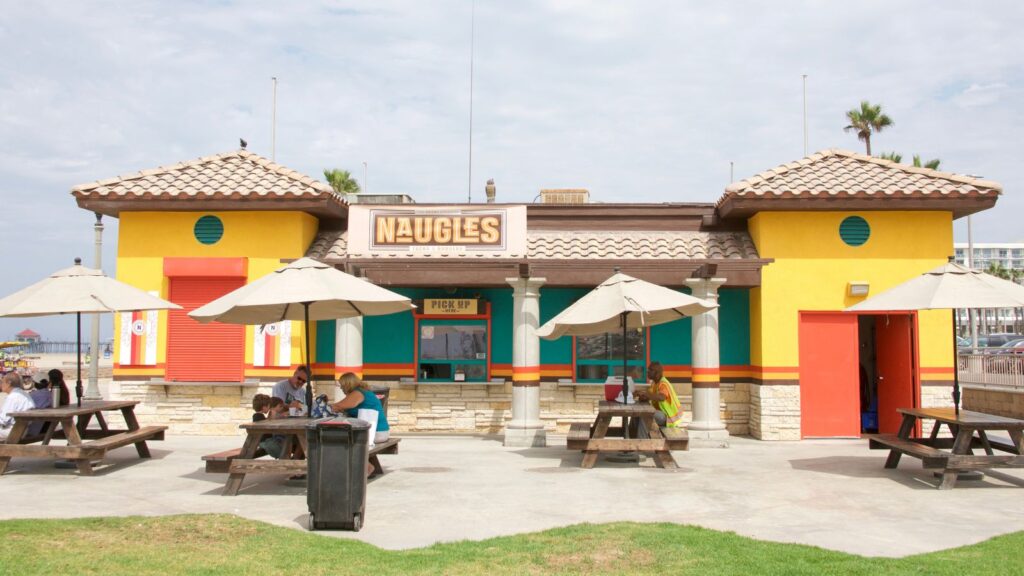
Naugles
Naugles started in Southern California in 1970 and merged with Del Taco in 1988. The last restaurant from the original chain closed in 1995, but the brand returned in 2015. Its recent fixed locations are marked closed, while a Naugles food truck in Fountain Valley, California lists current hours and takes orders.
Red Barn
Red Barn grew to around 400 restaurants. Its Big Barney arrived before McDonald’s Big Mac, and some locations offered self-service salad bars. Under later ownership, restaurants closed as leases expired around 1988. A few former locations continued independently as The Farm, with the last known one closing in 2020.
ShowBiz Pizza Place
ShowBiz Pizza Place mixed pizza, arcade games, and the Rock-afire Explosion animatronic band. The chain grew to more than 200 U.S. locations. ShowBiz and Chuck E. Cheese came under the same corporate owner in 1985. By 1992, every ShowBiz location had been rebranded as Chuck E. Cheese.
Winky’s
Winky’s sold 15-cent hamburgers and expanded across Pennsylvania, Ohio and West Virginia. At its 1977 peak, it had 42 locations. A weak Pittsburgh-area economy, debt and competition from larger chains added pressure. Winky’s filed for Chapter 11 bankruptcy in 1982, then closed its remaining restaurants soon afterward.
Don Pablo’s
Don Pablo’s opened in Lubbock, Texas, in 1985 and became the country’s second-largest full-service Mexican restaurant brand. It grew past 100 locations and had an in-restaurant tortilla stand where customers watched fresh flour tortillas being made. Only three restaurants were left by the end of 2018. The final location closed in New Jersey in 2019.
When Familiar Restaurant Signs Fade
Some of these chains are completely gone, while others survived overseas or came back on a much smaller scale. What disappeared was the broad American footprint that made their signs so familiar. For many diners, that is enough to make the names feel like restaurant history.