
Not many days can claim they started with a friendly game on a racquetball court, but Sept. 19, Talk Like a Pirate Day, has that and a global following to show for it. What began as a private joke between two friends in Albany, Oregon, in 1995 found its worldwide audience through a single syndicated column in 2002. Behind the “arrr” and the eye patches, something is making this day work, and it runs deeper than the silliness suggests.
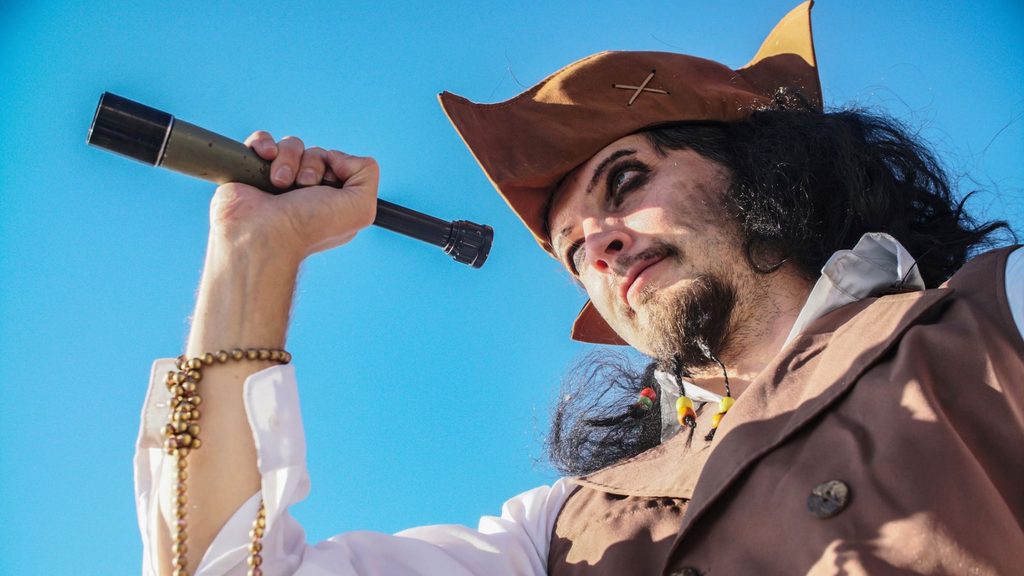
The accent everyone reaches for on Sept. 19, the rolling r’s, the growled vowels, the “arrr” used as punctuation, owes far more to one actor’s performance than to any documented pirate dialect. Robert Newton, a British actor born in Dorset and raised partly in Cornwall in England’s West Country, played Long John Silver in Disney’s 1950 adaptation of “Treasure Island” and played the role with a heavily exaggerated version of his native regional accent.
Newton followed Long John Silver with Blackbeard in 1952 and returned to Long John Silver in 1954. Those performances helped cement the West Country-inflected voice that became the standard Hollywood sound of a pirate.
The real origin of the pirate voice
The accent was theatrical, but it was not invented from thin air. Linguist Molly Babel of the University of British Columbia has noted that England’s West Country was home to many of the era’s sailors and pirates. The regional dialect’s “arrr” functioned as a casual affirmative, much like “eh” in Canadian English. West Country speakers also tend to emphasize their r’s strongly and replace “is” and “are” with “be,” both features Newton leaned into for effect.
The historical reality of actual pirate crews was far messier. They drew sailors from across Europe, Africa and the Caribbean, with no single shared accent or vocabulary among them. Newton’s performance distilled all of that into one instantly recognizable sound, and popular culture never looked back.
By the time John Baur and Mark Summers invented Talk Like a Pirate Day during that racquetball game in 1995, the accent had already been baked into three decades of film and television. The two friends ran the whole thing themselves for years under self-assigned pirate aliases, Ol’ Chumbucket and Cap’n Slappy, maintaining a dedicated website long before Dave Barry’s 2002 syndicated column sent the day to a global audience. The day did not create the cultural shorthand. It just gave people a calendar date to use it out loud.
Your brain is in on the joke
The speed with which most adults fall into pirate mode on Sept. 19 has less to do with pirate enthusiasm and more to do with how human brains respond to playful permission. Studies of adult playfulness have linked a more playful disposition with more adaptive coping, positive emotions and, in some studies, greater life satisfaction. What seems to matter most is the mindset behind the activity, including curiosity, openness and willingness to engage without needing a fixed outcome.
The social side of play matters too. Adult playfulness has been linked to stronger relationships, more positive emotion and greater social engagement, which may help explain why a day like this feels so easy to join in on. Dr. Stuart Brown, founder of the National Institute for Play, has spent decades arguing that play remains biologically and psychologically important across the lifespan.
Adults often need something that makes participation feel low-risk before they will allow themselves to be openly silly. That may help explain why a shared cultural moment, one where everyone already knows the rules, removes so much of the friction. Talk Like a Pirate Day works in part because the bar to join in is so low that opting out feels like the stranger choice. One “arrr,” and suddenly the entire coffee line is crew.
The day that does more than it looks like
The back half of the calendar fills up fast with obligation: back-to-school logistics, end-of-year pressure, weekends that disappear before they start. Talk Like a Pirate Day demands nothing from the people who observe it except a moment of shared, openly ridiculous fun, and research on adult playfulness suggests that this kind of low-stakes humor and social engagement can have psychological value.
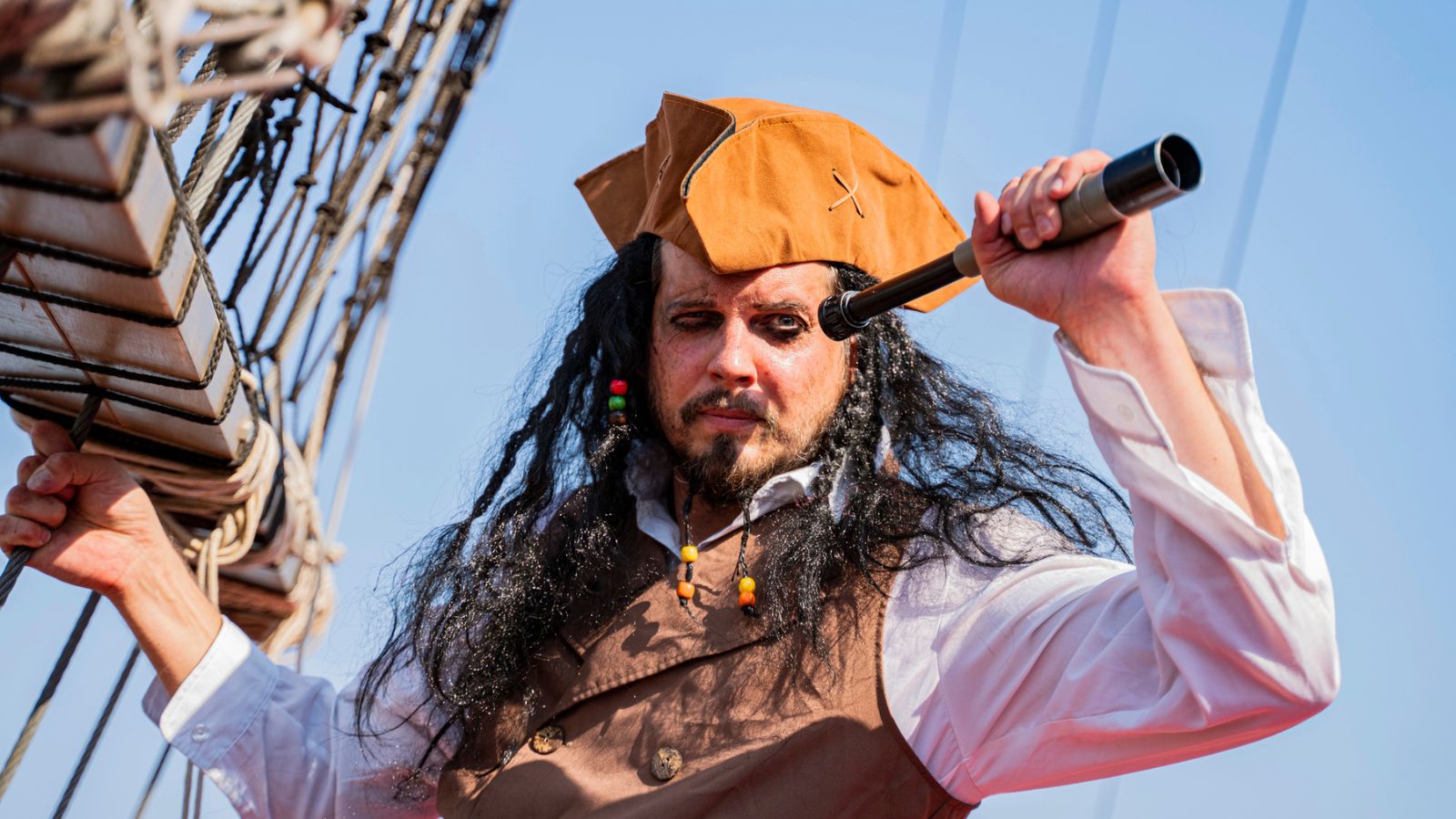
The day has run for more than two decades not because of pirate nostalgia, but because the need it fills is genuine. Researchers who study play argue that humans are built for it at every age, and most of the time, all it takes is one well-timed “arrr” to remember that.
Jennifer Allen is a retired professional chef and long-time writer. Her work appears in dozens of publications, including MSN, Yahoo, The Washington Post and The Seattle Times. These days, she’s busy in the kitchen developing recipes and traveling the world, and you can find all her best creations at Cook What You Love.