
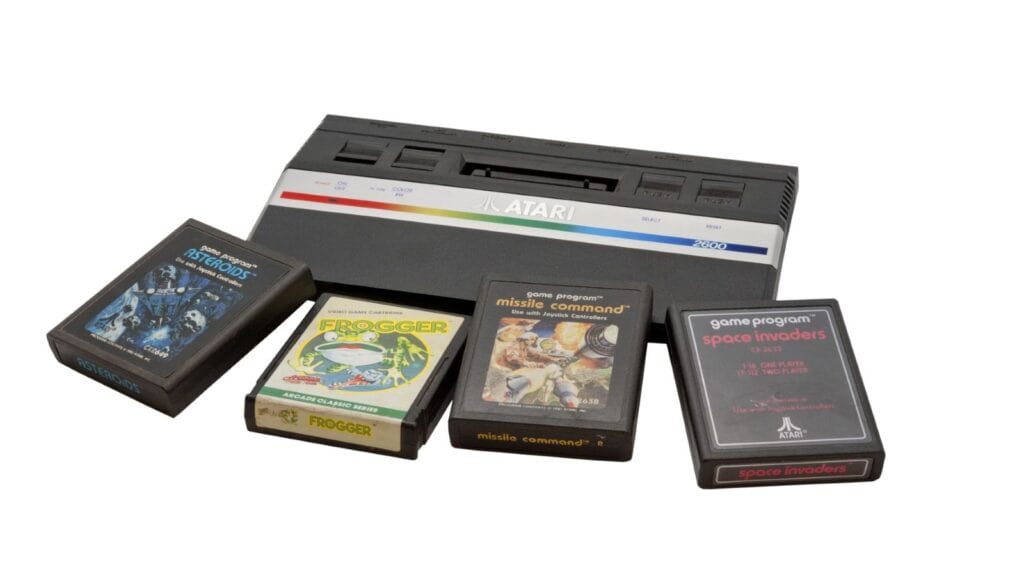
Owning an Atari 2600 or an early Nintendo Entertainment System meant remembering far more than the games themselves. Getting to the title screen could feel like its own challenge, with cartridges that needed coaxing, televisions tuned to the right channel, and siblings waiting for a turn. Those routines became part of playing, which is why the hardware quirks can be easier to remember than the games.
The Rituals You Learned by Doing
Blowing Into the Cartridge
When an NES game would not load, the instinct was often to pull out the cartridge and blow into it. The breath was not the magic part. The NES depended on clean contact between the cartridge and its 72-pin connector, and adding moisture could encourage corrosion. Removing and reinserting the cartridge could improve the connection, which helped make the ritual feel convincing.
Wrestling with the RF Switch
Before HDMI, getting a console on the television could mean working through an RF switch and the antenna connection. Nintendo’s instructions told players to use channel 3 or 4, depending on local interference. If the settings did not match, you could get snow or a distorted picture instead of a game.
Fighting over Whose Turn It Was
A home console could turn one television into shared territory. “One more life” stretched longer than promised, a sibling hovered nearby, and a two-player game could settle arguments faster than any timer. The hardware may have been built for the living room, but the real multiplayer system was the family deciding who got the controller next.
The Details Hidden in the Hardware
Duck Hunt’s Secret Second Player
Duck Hunt had a trick many players missed. In Game A, a second player could use Controller 1 to control the duck’s flight while the first player aimed the Zapper. It was not a second light-gun mode. One person hunted while the other tried to make the duck harder to hit.
Writing Down Passwords
Saving progress was not automatic. Metroid and Kid Icarus were Nintendo’s first NES games to use password-backed progress, while The Legend of Zelda used battery-backed storage in its cartridge. That made scraps of paper part of the gaming setup. Lose the code or copy a character incorrectly, and returning to the right spot could become a problem of its own.
The Pack-In Game You Got
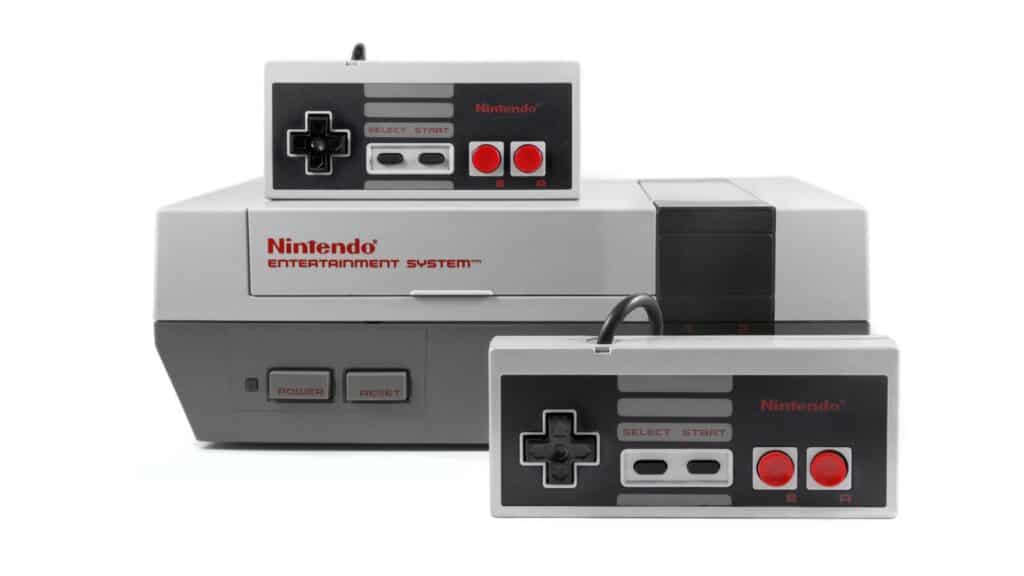
Buying the console often meant meeting a game before you had chosen one yourself. Atari’s VCS launched with Combat as its pack-in, although Sears’ Tele-Games version used a different title. Nintendo bundles changed over time. The 1985 Deluxe Set included Duck Hunt and Gyromite, while the later Action Set paired the NES with Super Mario Bros./Duck Hunt.
The Woodgrain Atari
Early Atari VCS models wore an imitation woodgrain front panel, a look collectors still associate with the “Woody” versions. The styling changed as the console aged. By 1982, Atari had an all-black model that collectors nicknamed the “Darth Vader.”
The Joystick That Eventually Gave Out
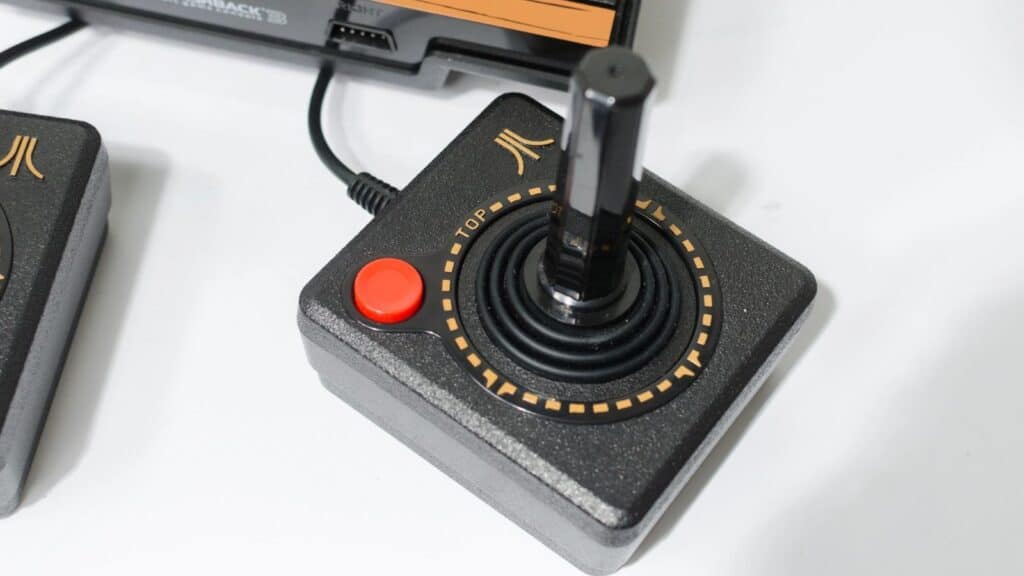
The Atari CX40 could take plenty of use, but worn parts were a real enough problem that Atari sold a CX41 repair kit in the 1980s. It included replacement internal parts for the CX40 joystick. A controller that stopped working did not always mean the game was to blame.
The Industry Was Changing Around You
The Crash You Only Saw on Store Shelves
The North American console market fell sharply after its early-1980s boom. Historian Alex Smith has described industry sales dropping from roughly $3.2 billion to perhaps around $200 million at the low point, while cautioning that the often-repeated $100 million figure is probably too low. Nintendo entered that battered market with an NES test launch in 1985 before expanding the system the next year.
The Rental with a Different Manual
A rented game did not always come with the original instruction booklet. In 1989, Nintendo sued Blockbuster over stores photocopying Nintendo manuals to include with rentals. Within days, Blockbuster agreed to a court order telling its managers and franchisees not to copy them. The dispute helps explain why a rental case might come with replacement instructions instead of a photocopy of Nintendo’s booklet.
Nintendo Power in the Mailbox
Nintendo Power turned tips, maps and game secrets into mail worth waiting for. Founding editor Gail Tilden later said Nintendo sent out 3.2 million complimentary copies of the first issue. Maps and strategy pages gave players a way past the places where a game had them stuck, long before online walkthroughs became normal.
Why the Little Obstacles Still Matter
Old consoles asked you to participate in ways modern hardware often hides. You learned which connection was loose, which note held the right password, and when another player deserved the controller. None of that was designed as a life lesson. It simply turned entertainment into something hands-on and shared, which is a big reason those small routines stayed memorable long after the television was switched off.