
A grocery trip once came with a small ritual attached. At participating stores, the cashier handed over strips of S&H Green Stamps along with the purchase. Collectors saved them, filled books, studied the Ideabook, and waited until those little green squares added up to something useful. Long before loyalty points lived in an app, rewards took up space in a drawer.
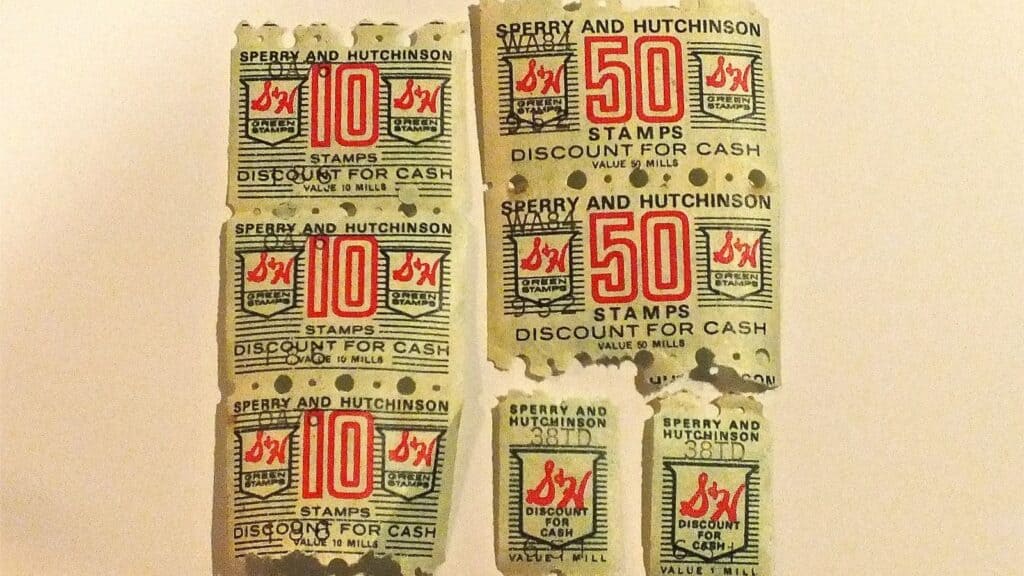

The Stamps Came Back with Your Change
S&H Green Stamps showed up at all kinds of participating businesses, including supermarkets, department stores, and gasoline stations. The basic rate was easy to understand: for every 10 cents spent, customers received a stamp worth 10 points. A larger shopping trip meant more stamps to save. Instead of tracking an account balance, you carried the reward home on paper.
Lick-and-Stick Was Part of the Ritual
The stamps did not arrive ready to cling to a page. Glue was applied to the backs during production and designed to work again when re-moistened. For many collectors, that meant licking the stamps before pressing them into a saver book. The repetitive “lick ’em and stick ’em” routine became one of the most recognizable parts of using Green Stamps.
The Saver Books Kept Score
Saving the stamps was only half the job. They also had to be put into paper saver books until enough books were full to redeem. Carl Willis, who managed the company that printed S&H stamps in Oklahoma, recalled that kids often got the job of filling the books. Page by page, the stack made it easy to see how close you were getting to a reward.
The Ideabook Was a Wish List
Collectors could flip through S&H’s Ideabook and see what their filled books might eventually buy. The catalog became a major part of the experience, with merchandise ranging from everyday household goods to bigger rewards. By 1964, S&H was reportedly distributing 32 million copies a year. Picking something out gave all that saving a destination before the books were ready to redeem.
Full Books Bought Real Merchandise
The payoff was merchandise, not a coupon for a future purchase. Filled books could be exchanged for items that included furniture, silverware, lamps, appliances, and other household goods. The number of books required depended on the prize. Smithsonian notes that one booklet could get a porcelain lamp, while six could get a bicycle. A stack of pasted books could become something you actually brought home.
The Redemption Center Felt Like a Store
Mail order was not the only way to claim a reward. S&H operated physical redemption centers where customers brought completed books and chose merchandise. During the program’s 1960s peak, the United States had about 800 S&H redemption centers and more than 100,000 participating businesses. Walking in with finished books made the payoff feel tangible after all that saving.
Bigger Rewards Took Patience
Some prizes were attainable after a few books, while bigger goals could take much longer. That kind of saving was common enough to become a national habit. By the mid-1960s, researchers estimate that roughly 4 out of 5 U.S. households were collecting trading stamps, pasting them into books, and exchanging those books for consumer goods. The reward grew slowly, but you could watch the progress happen.
The Slow Reward We Traded Away
The stamp habit faded as shopping and loyalty programs changed. Smithsonian places S&H’s decline in the mid-1970s as the U.S. economy stagnated, and notes that many stores later chose to offer their own rewards programs. By the late 1980s, fewer than 100 retailers were still participating. S&H moved online as Greenpoints in 2000. What disappeared was a slower kind of saving, one that made the wait part of the reward.