
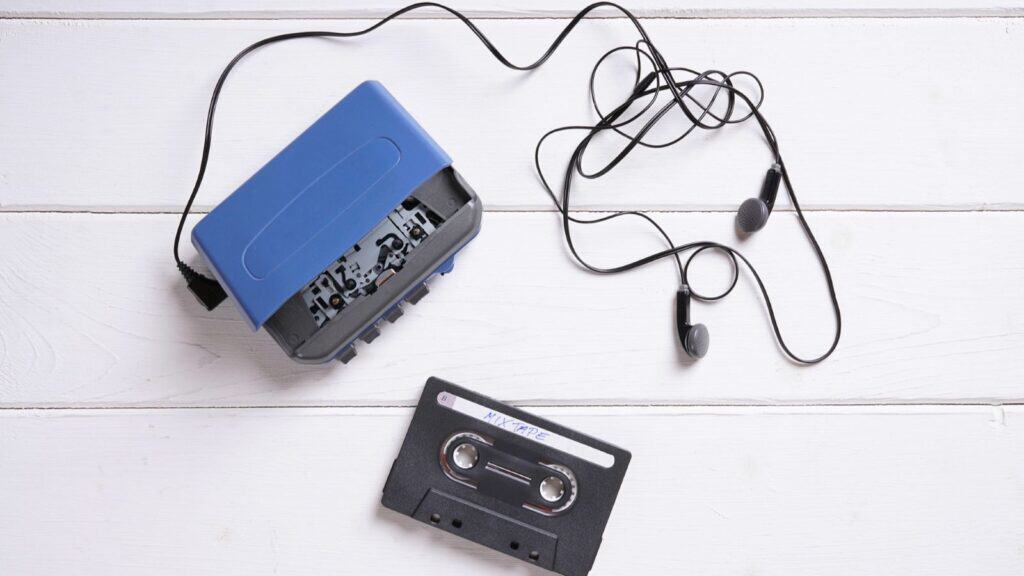
A Walkman made music portable, but it never made listening effortless. You still had cassettes to flip, batteries to watch, and buttons that behaved differently from later players. The little machine came with its own routine, and that routine is a big part of why it is so easy to remember.
The Habits You Built Around It
The 45-Gram Foam Headphones
The original TPS-L2 shipped with the MDR-3L2 headphones, which weighed just 45 grams. Sony said conventional headphones of the era weighed 300 to 400 grams, so the new pair was unusually light. Their small size and foam earpieces became part of the early Walkman look.
Battery Life Depended on What You Bought
The TPS-L2 used two AA batteries, but battery type made a huge difference. Sony’s operating manual lists about 2.5 hours with Sony Super Batteries and about eight hours with alkaline AAs. It also says weak batteries could slow tape speed, so sinking pitch could be a sign that your power was fading.
A Hot Car Was Bad News for Cassettes
Leaving tapes in a hot car was a genuine risk. The International Association of Sound and Audiovisual Archives says high temperatures can permanently deform thermoplastic materials used in cassette shells. Heat can also change tension inside a tape pack. A cassette baking on the dashboard could come back misshapen or harder to play.

That Skip Probably Belonged to a CD Player
If the music skipped when you hit a hard bump, the memory probably belongs to a portable CD player. Philips says vibration and shocks can make CDs skip, which is why later players used electronic skip protection. Cassettes had a different problem. Uneven tape speed could create wow and flutter, heard as changes in pitch or a warble.
The Machine Had Its Own Rules
The Orange Button Was the Hotline
The orange button on the TPS-L2 was not Play. Sony’s manual calls it HOT LINE. Hold it down, and the cassette volume dropped while the built-in microphone sent nearby conversation through the headphones. It made sense on a player designed to let two people listen together.
Auto-Reverse Came Later
On the TPS-L2, you inserted the cassette with the side you wanted facing up. Flipping the tape was part of the job. Auto-reverse appeared on the WM-7 in 1982. If your machine changed direction by itself, you had a later Walkman than the 1979 original.
The Belt Clip Made It Wearable
By 1981, the WM-2 had become much smaller and came with a plastic holder that included a belt clip. You did not have to keep the player in your hand every time you moved around. The clip turned the Walkman into something you could wear, which fit the whole point of portable audio.
2 Headphone Jacks Made Listening Social
The first Walkman was less solitary than its reputation suggests. Sony says the TPS-L2 had two side-by-side headphone jacks, letting two people listen at once. Early versions labeled them “GUYS & DOLLS.” Sharing a tape could be as simple as finding a second pair of headphones.
The Yellow Sports Walkman Was Built for Outdoors
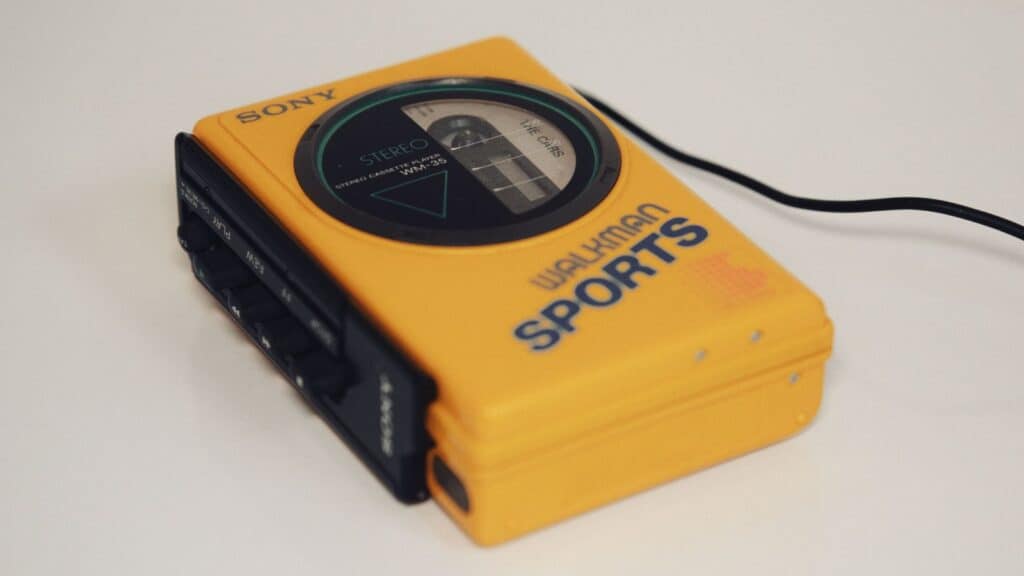
Then came the yellow one. Sony dates the WM-F5 to 1983 and calls it the first Walkman developed for outdoor activities. Its impact-resistant ABS case and rubber-sealed controls were made for rougher, splash-prone use. That bright yellow also became associated with later sports models.
Portable Music Used to Need You
The Walkman gave you freedom, but it also asked for attention. Listening meant choosing a tape, keeping the machine running, and accepting the small limits of the format. That hands-on routine made portable music feel like something you actively did, not just something that happened around you. The device needed your participation, and that is a big reason its quirks are still easy to picture decades later.