
A cab driver’s one bite built one of America’s favorite sandwiches. A poker game may have built another, and two bars with the same name are still fighting over the third. Only one of those fights has actually forced historians to change their minds, and the rest are still just as loud heading into National Sandwich Day on Nov. 3.
No patent exists for any of these sandwiches, and no notary sat at a lunch counter or a poker table to record who thought of what first. That absence of paperwork is exactly why four of these disputes are still open decades later.
Families pass the same story down for generations, and old menus get thrown out instead of archived, so by the time anyone thinks to write it down, the people who actually remember are gone. A sandwich can become a city’s signature dish before anyone bothers to ask who made it first, and once that happens, the only proof left is whoever still has a relative willing to argue about it.
At least four of the country’s best-known sandwiches have two or more competing origin stories, and one of them has forced a real revision in published food history. The Reuben’s New York claim held the documented edge for decades, backed by food historian Andrew Smith’s own published citation, until historical societies in Omaha turned up a decades-older sandwich menu that beat it. Published food history rarely has to walk back a sandwich claim, but this one came close.
The Reuben’s strongest evidence is a 40-cent menu
Omaha’s version starts at the Blackstone Hotel in the 1920s, where a manager named Bernard Schimmel is said to have built a corned beef and sauerkraut sandwich for a regular poker player named Reuben Kulakofsky. The Kulakofsky family’s own account credits Schimmel only with delivering a deli platter, not inventing a sandwich. New York’s version starts earlier, at Arnold Reuben’s own delicatessen, with a 1914 sandwich made for actress Annette Seelos, though that version had ham, cheese, turkey, coleslaw and dressing instead of corned beef.
A 1941 professional cookbook citation kept the New York claim ahead for decades. Then historical societies turned up a 1934 Blackstone menu listing a Reuben for 40 cents, with a 1937 version for 35 cents, years ahead of that cookbook citation. The find held up, though a chicken-topped version on the 1937 menu kept the timeline from closing cleanly.
A cab driver’s one bite built the cheesesteak
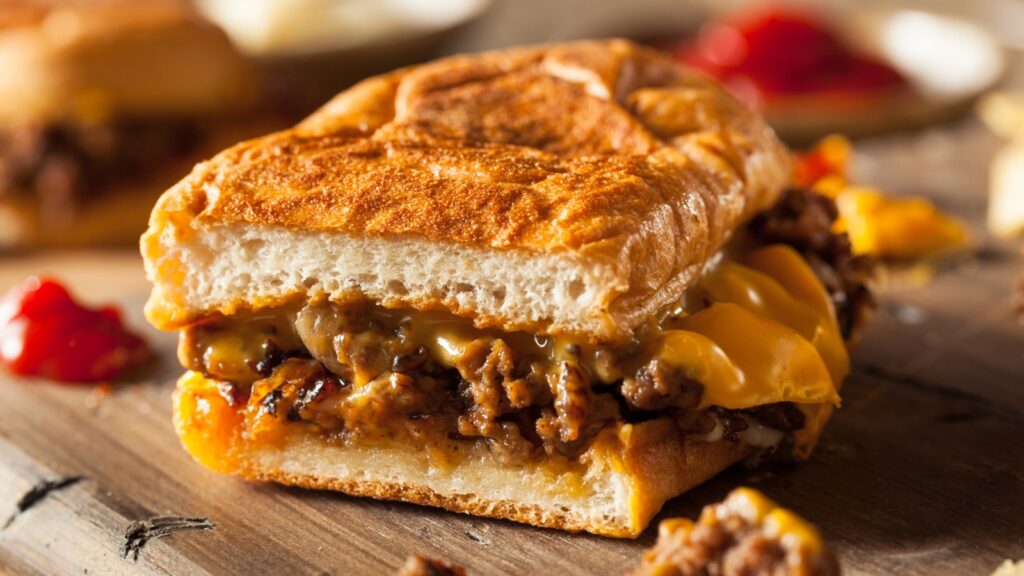
Pat Olivieri ran a hot dog cart at Ninth and Passyunk in South Philadelphia in 1930. A 21-year-old cab driver named Dave Kohn asked for a taste of the beef Olivieri was grilling for his own lunch, then told him to stop selling hot dogs and sell that instead. Kohn later became a vice president at Philadelphia’s Yellow Cab Company and passed away in 1992.
The story survives only because his grandniece and his nephew still tell it, and Olivieri’s own family cannot confirm it. No newspaper clipping from 1930 backs it up either way.
Cheese arrived even later, and the accounts disagree on timing, too. One credits a manager known as Cocky Joe Lorenza with adding provolone sometime in the 1940s. Another places Cheez Whiz’s arrival in the 1950s, without crediting anyone.
The sloppy Joe never settled on one birthplace
A Havana bar owner named José García served his regulars a handheld, tomato-stewed beef sandwich in the 1930s, and the nickname sloppy Joe reportedly stuck to both him and the dish. Ernest Hemingway is said to have talked his favorite bar in Key West into taking the same name, and that bar still sells more than 60,000 of the sandwiches a year.
A separate legend, unconnected to either bar, credits a chef named Joe in Sioux City, Iowa, with adding tomato sauce to a loose meat sandwich already popular there. A New Jersey deli has its own version too, built on cold deli meats rather than ground beef. The three accounts never merged into one agreed story.
A named inventor still couldn’t settle the club sandwich
A New York newspaper mentioned a Union Club sandwich as early as November 1889. A second paper that same month credited the dish only to an unnamed club chef. Two later papers went further and named an actual inventor, Ely Goddard, crediting him with sliced chicken between toasted bread.
The rival claim comes from the Saratoga Club House in upstate New York, now a casino, where an encyclopedia of American food records the sandwich on a menu in 1894. That’s five years after the Union Club’s newspaper mention was already in print.
One of these arguments might already be settled
A sandwich’s origin story stays folklore until somebody happens to hold onto the one piece of paper that can correct it. That’s chance, not record-keeping, and it’s the only reason the Omaha claim ever pulled ahead. The same chance is still sitting in attics and historical society files across the country, waiting to overturn the story behind some other food nobody has thought to question yet.
Mandy writes about food, home and the kind of everyday life that feels anything but ordinary. She has traveled extensively, and those experiences have shaped everything, from comforting meals to small lifestyle upgrades that make a big difference. You’ll find all her favorite recipes over at Hungry Cooks Kitchen.