
Clear clam chowder skips the cream and tomatoes, leaving the clams nowhere to hide. Cooks in Rhode Island and on North Carolina’s Hatteras Island have long made it that way, with a thin broth and a short list of ingredients: mostly clams, potatoes and onions. Meanwhile, state officials are limiting how some of those clams are harvested and moving others from polluted water to cleaner water.
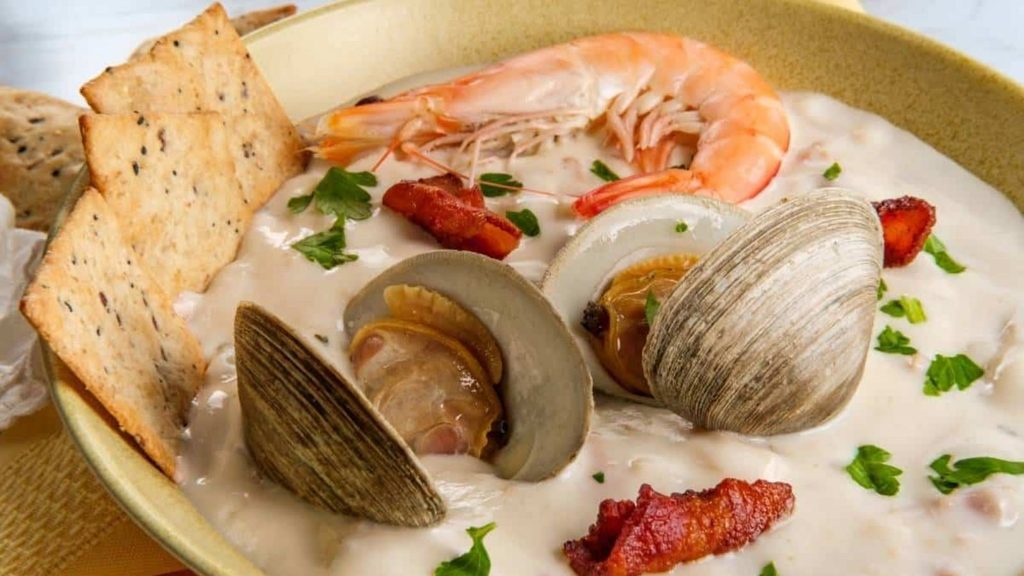
Chowder is often traced to a centuries-old French fishing village tradition of tossing a share of the daily catch into a communal pot. In New England, it met native hard-shell quahogs stirred with onions and potatoes, plus salt pork or bacon. Dairy joined the pot when cows were available, while some culinary historians maintain that Native peoples preferred the clear broth.
Manhattan’s version leaves out the dairy and adds tomatoes, which bothered one Maine lawmaker enough to draft a 1939 bill criminalizing mixing tomatoes and clams. Connecticut and Rhode Island keep both out of their clear-broth soups, and the Hatteras style, also known as Core Sound style, follows that custom as well.
Hatteras cooks built a chowder from scarcity
Hatteras Island chowder is a pot made from whatever people had on hand. Cooks fry out salt pork and cook only fresh, wild clams and their juice, with potatoes, onions and a little black pepper. The clams come from Pamlico Sound, and commercial landings of hard clams across North Carolina have shrunk, with the 2025 total of 3.6 million clams the lowest in a 31-year record.
Clams were available at low tide and stored potatoes and onions kept well, so coastal families could turn to the chowder through tough winters while often trading salt fish or oysters with upriver farmers for corn. A 2015 chowder cook-off on Ocracoke, North Carolina, that raised money for a child care center defined traditional as clams and their juice, water, potatoes, onions, salt pork or bacon, salt and pepper, and any other ingredient made an entry non-traditional. Several of those entries used cream, and the clams were gathered as locally as possible.
Rhode Island’s clear chowder claims an old pedigree
Rhode Island’s clear chowder is a thin, light broth made with clam juice, quahogs, bacon or pork, onions, potatoes and butter. The clear style is said to be one of the earliest forms of chowder, and a lesser-known Rhode Island variation uses a tomato broth without tomato chunks. Quahog landings in the state fell 14% in 2025 in both pounds of meat and value, the latest step in a long decline from the state’s late-1950s peak.
States now manage the clams behind each bowl
North Carolina adopted Amendment 3 to its hard clam plan in May 2025, ending mechanical harvest on public bottom after May 2028 and leaving hand harvest open year-round. Until then, mechanical harvest is limited to December through March. The plan lists competition from farmed clams in other states and closures of polluted waters as factors affecting harvest, and it calls the stock’s status unknown because of limited data. Recreational diggers may take clams by hand without a license, though recreational harvest in 2025 was less than half its long-term average.
Rhode Island has moved quahogs from polluted waters to cleaner ones since 1954, and the practice has run annually since the late 1970s. The clams must clear out bacteria for at least 60 days before harvest. Funding comes from fines on municipal wastewater plants, and a 2025 House resolution that would have put $2.3 million toward more transplants and a hatchery program died in committee.
A paid transplant in 2025 got help from the Narragansett Bay Commission and moved quahogs out of Apponaug Cove. In May 2026, quahoggers moved clams out of Greenwich Cove, which is closed to shellfishing because of high bacteria levels. The area where the clams were moved stays closed until December, about six months after the move. Elsewhere in New England, parts of Boston Harbor are now clean enough for recreational shellfishing for the first time in a century.
Maine, meanwhile, has limited its soft-shell clam harvest to hand tools such as a steel-tined hoe since 1957. The harvest rebounded in 2025, rising about 9% to 6.2 million pounds of shellstock, though it stayed below the 2021 level. That gives the creamy side of the clam chowder divide a fishery with its own ups and downs.
Rhode Island has a hand in both bowls
Portuguese fishing communities in Rhode Island are often credited with creating the tomato-based chowder now known as Manhattan clam chowder. That gives the state a hand in both the clearest bowl and the reddest one. Whether the pot is clear or creamy, the harvest rules and relocation programs that affect the clam supply are set long before anyone starts cooking.
Mandy writes about food, home and the kind of everyday life that feels anything but ordinary. She has traveled extensively, and those experiences have shaped everything, from comforting meals to small lifestyle upgrades that make a big difference. You’ll find all her favorite recipes over at Hungry Cooks Kitchen.