
Egg prices in the United States have fallen 35.2% over the past year, one of the sharpest year-over-year drops in the federal government’s May inflation report. However, the cost of buying breakfast on the way to work is still moving in the other direction.
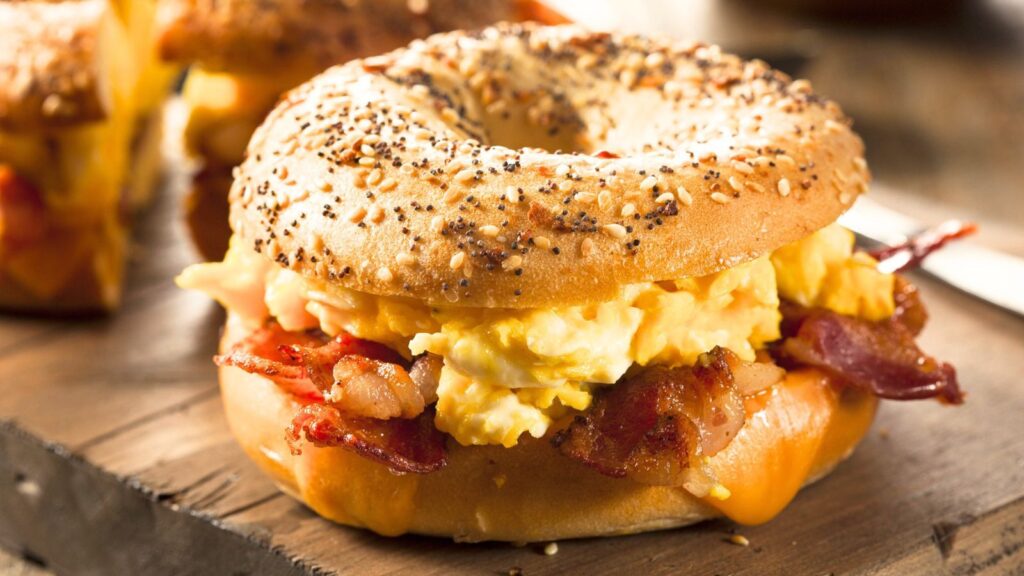
Two breakfasts moving in opposite directions
In recent years, eggs were one of the most visible symbols of grocery inflation. Limited demand, due in part to the spread of avian flu, caused prices to skyrocket, eventually averaging more than $6.00 per dozen last year.
According to the Bureau of Labor Statistics’ May Consumer Price Index, grocery prices surged 2.7% over the past year, while the cost of food away from home soared 3.5%. The price of eggs fell 35.2% over the same period, according to the agency’s detailed CPI table; a large move for a staple grocery item.
The split between restaurant food and home food is not new. According to the USDA Economic Research Service’s Food Price Outlook, food-away-from-home prices rose faster than food-at-home prices in both 2024 and 2025, and the agency expects that pattern to continue in 2026. The reason is not just the food itself. Labor, rent, service, packaging and overhead all appear on a restaurant receipt, but none of them can be found in a carton of eggs.
The gap shows up clearly at the drive-thru window. A 2025 LendingTree analysis found that the average fast-food meal in major U.S. cities costs $11.56. In San Francisco and Seattle, it was closer to $14. A separate LendingTree fast-food survey found that 78% of Americans described fast food as a luxury. Add a specialty coffee to a breakfast combo, and the morning stop can clear $15 in the most expensive markets. At that price, a five-day-a-week habit costs more than $300 a month.
Why eggs got cheap again
The collapse in egg prices follows several years of volatility driven by highly pathogenic avian influenza, which began reducing laying flocks in 2022. USDA ERS data show retail egg prices rose sharply over the past few years, with another big jump in 2025. At the March 2025 peak, the national average price for a dozen large Grade A eggs hit $6.23, and the price of a carton became shorthand for grocery inflation in general.
At the height of the outbreak, some grocery stores placed purchase limits in the egg aisle, and some restaurants added per-egg surcharges to breakfast orders. Waffle House, for example, added a 50-cent surcharge per egg in early 2025 as bird flu pushed costs higher.
Production has been recovering since. Farm-level egg prices, which tend to move ahead of the retail case, were far lower this spring than a year earlier, and the U.S. Department of Agriculture projects more eggs will come to market in 2026 than in 2025.
What the math looks like at home
According to BLS average price data published by FRED, a dozen large eggs averaged $2.19 in May. That works out to about 18 cents an egg. A two-egg breakfast costs about 36 cents before toast, butter, milk or anything else added to the plate.
The home version is not a perfect comparison to a purchased breakfast. A drive-thru meal includes labor, packaging, convenience and the simple relief of not having to cook. But the spread is large enough to change the morning math. A year of two-egg breakfasts, five mornings a week, uses about 43 dozen eggs and costs roughly $95 at May prices. The same five-day-a-week habit at $15 per stop runs close to $3,900 a year.
Speed has always been the drive-thru’s real advantage, and that is the gap home cooks have been trying to close. Cottage cheese eggs turn a two-egg scramble into something more filling in about the time it takes to toast bread. Breakfast quesadillas batch a week of mornings in one go, freeze cleanly and reheat in less time than an order takes at the window. The appeal is not fancy cooking. It is removing one expensive decision from the part of the day when most people are already rushed.
A breakfast the rest of the world already cooks
Egg breakfasts anchor home cooking well beyond the United States, and many of the world’s versions follow the same basic logic: eggs, vegetables or sauce and a starch that turns a few ingredients into a meal.
In North Africa, Moroccan shakshuka poaches eggs in a spiced tomato base that can be made ahead and reheated when breakfast needs to happen fast. Masala omelets across South India fold minced onion and green chili into beaten eggs. Mexican kitchens spoon salsa over fried eggs and leftover tortillas for huevos rancheros. Chinese home cooks stir-fry eggs with tomato and serve them over rice. In Japan, a raw egg stirred into hot rice is breakfast at its most stripped down.
The details change by country and kitchen, but the underlying math is familiar. Eggs cook quickly, stretch easily and turn low-cost ingredients into something that feels like breakfast instead of a compromise. That is exactly the kind of meal that gets more useful when eating out keeps getting more expensive.
Where prices go from here
None of the current forecasts point toward a quick reversal. USDA predicts retail egg prices will fall 29.8% in 2026, the largest projected decline among the 15 grocery categories it tracks and one of only three expected to get cheaper. Its forecast for food away from home points the other way, with restaurant prices expected to keep rising.
That matters for breakfast because the modern morning stop is rarely just an egg sandwich. It is often an egg sandwich, a coffee drink and sometimes a second item added because breakfast has to last until lunch. Coffee-heavy nonalcoholic beverages are also projected to rise, which makes the full breakfast stop harder to ignore in a monthly budget.
For the home cook, the advantage is not just that eggs have gotten cheaper. They are flexible enough to become a fast scramble, a skillet meal or breakfast quesadillas before the day has a chance to turn into another $15 receipt.
Shruthi Baskaran-Makanju is a food and travel writer and a global food systems expert based in Seattle. She has lived in or traveled extensively to over 60 countries, and shares stories and recipes inspired by those travels on Urban Farmie.