
Pizza ovens have become a must-have backyard upgrade, but with options ranging from $200 portable units to $5,000 built-in installations, choosing the right one takes some planning. The key isn’t finding the best, but picking the one that matches how you actually cook and live. Before you get swept up in beautiful product photos and fancy features, take a step back and think about what you really need.

Check your patio
This post may contain affiliate link(s). As an Amazon Associate, I earn from qualifying purchases. See Disclosures.
Before falling in love with any particular oven, take a realistic look at your available space. Most pizza ovens require at least 3 feet of clearance on all sides, and that’s just for safety. You also need to think about where people will stand while you’re cooking and whether you have overhead clearance if you plan to install under a covered area.
Measure your outdoor cooking space carefully. And we mean actually measure, don’t just eyeball it. Consider both the oven footprint and all the extras, such as fuel storage, work surfaces and guest positioning. Heat and smoke travel farther than you might expect.
Your existing utilities make a big difference in which fuel options make sense. If you already have gas lines, natural gas becomes much more appealing. No gas access? Consider propane, wood or electric options. Each comes with different setup requirements and ongoing costs.
Don’t forget about local restrictions either. Some areas have rules about wood-burning appliances, setback requirements for gas units or HOA guidelines that limit your options. Check these early to avoid disappointment later.
How will you use it
Be honest about your cooking style and how often you’ll realistically fire up this oven. Some people love the weekend ritual of building a wood fire and making it part of the entertainment. Others want to come home on a Tuesday, flip a switch and have dinner ready in 20 minutes.
Also, consider your typical get-togethers. If you usually feed two to four people, your needs are very different from someone who regularly hosts neighborhood pizza parties. Large ovens that can handle multiple pizzas sound great until you realize they take forever to heat up for a simple family dinner.
Consider what else you might want to cook aside from pizza. Many people realize their pizza oven becomes their go-to for bread, roasted vegetables or slow-cooked meats. If you’re interested in expanding beyond pizza, that affects which features matter most.
The timeline question is crucial. Are you looking for convenience, or are you drawn to the hands-on process? Neither approach is wrong, but matching your oven choice to your patience level and available time makes the difference between regular use and an expensive yard decoration.
Fuel options
Your fuel choice affects everything from how quickly you can start cooking to ongoing costs to cleanup time. Within each of these examples, larger ovens will take longer to heat than smaller versions. Each type has clear advantages depending on what matters most to you.
Gas or propane gives you the most convenience and control. Turn it on, wait 15-60 minutes depending on your oven and you’re ready to cook. The temperature remains consistent, cleanup is minimal and you don’t require any special skills to achieve good results. If you want to use your oven regularly without much trouble, gas makes sense.
Wood delivers traditional pizza oven flavor and can reach higher temperatures than most gas models. However, you’re signing up for 45 minutes of heating time or more, managing the fire throughout cooking and cleaning up ash afterward. Wood is a great choice for cooks who enjoy the process as much as the results.
Electric works well when other options aren’t practical, especially for covered outdoor areas. This style of oven is the easiest to operate, but most electric models can only reach a maximum of 700 degrees Fahrenheit. While this isn’t hot enough to give you true Neapolitan-style results, it can still make a solid pizza. Think of it as a very hot outdoor oven rather than a true pizza oven.
Pellet systems bridge wood and gas by using compressed wood pellets that burn cleanly and allow better temperature control than logs. You get some wood flavor with easier management, though pellets cost more than firewood.
Hybrid models let you switch between gas and wood depending on your mood and available time. They cost more upfront, but offer maximum flexibility.
Size and capacity
Size affects everything from how quickly your oven heats up to how much space you need to how much fuel you’ll use. Bigger isn’t always better; it depends on how you plan to use it.
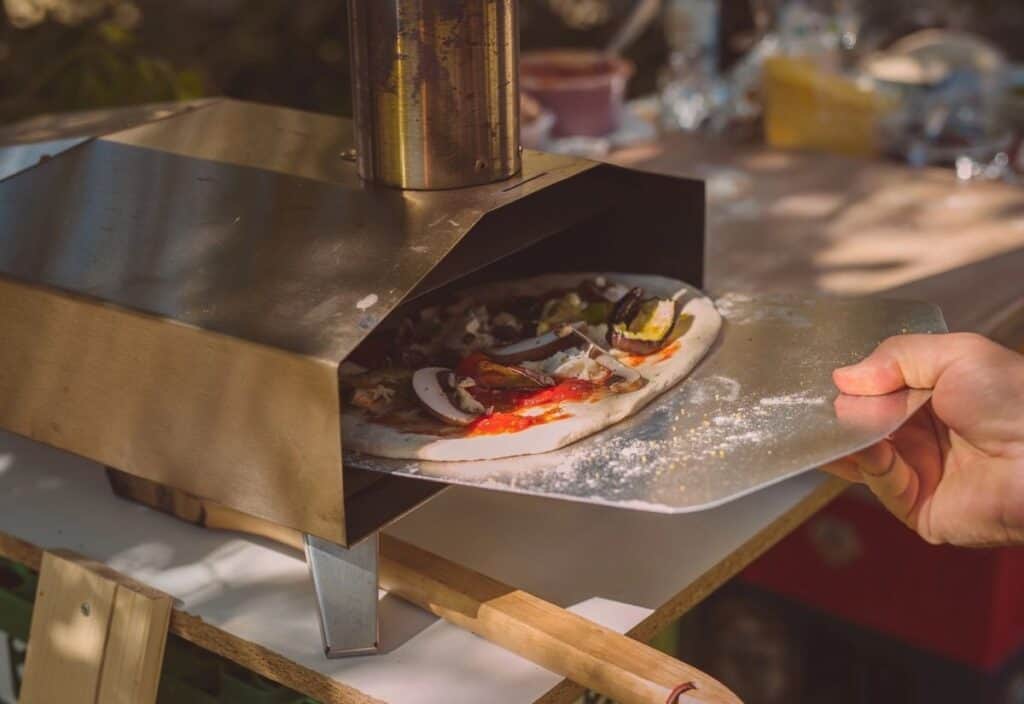
Smaller cooking chambers, 12-14 inches, heat up fast and use less fuel, but limit you to personal-sized pizzas and cooking one at a time. These work well for small families who value quick heating over cooking capacity.
Medium-sized ovens, 16-18 inches, hit the sweet spot for many people. They can handle standard large pizzas or multiple homemade pitas, heat up reasonably quickly and don’t overwhelm smaller patios. Most families find this size range meets their needs without excessive fuel costs.
Large ovens, 20 inches or more, excel when you regularly feed a crowd and want to cook multiple pizzas simultaneously. They take longer to heat up and use more fuel, but they’re efficient for big cooking sessions and serious entertainers.
Remember, heating time increases with size. Larger ovens store more heat once they’re up to temperature, making them great for extended cooking sessions. Smaller ovens waste less energy for quick meals and cool down faster.
Installation types
Your installation choice affects both the upfront costs and how you’ll use the oven in the long term. Think about your commitment level and future plans.
Portable ovens have the easiest entry point. They cost less, need no permanent installation and can be stored away or moved if you relocate. The trade-off is usually a smaller cooking capacity and lower maximum temperatures.
Freestanding models on carts allow more cooking power while still providing flexibility. They’re substantial enough for serious cooking but can be repositioned around your patio as needed. Most include storage space for accessories and fuel.
Built-in installations create the most impressive setups and often achieve the best performance, but you’re making a permanent commitment. They require professional installation for gas connections and often involve significant construction work to create the ideal cooking environment.
DIY kits appeal to hands-on people who want custom results without starting from scratch. You get the oven components and build the surrounding structure yourself. This requires real construction skills but allows complete customization.
Budget considerations
The sticker price is just the beginning. You must also factor in installation, accessories and ongoing costs to understand the real investment.
Purchase prices vary wildly based on size and features. Basic portable units start around $200-$400, mid-range freestanding models run $800-$2,500 and built-in installations can easily exceed $5,000 before any construction work.
Installation costs depend heavily on what you plan to do. Portable units don’t require installation, while built-in ovens might need gas line work, electrical connections and substantial masonry or construction work that can equal or exceed the oven cost.
Don’t forget essential accessories like pizza peels, covers, thermometers and cleaning tools. These typically add $100-$300 to the overall cost but are necessary for safe, effective operation.
Ongoing fuel costs vary significantly. Wood is generally the cheapest per use, but requires storage and management time. Gas costs more per session but offers predictable expenses without storage needs. If you opt for a propane setup, investing in at least two tanks is crucial for maintaining uninterrupted fuel access.

Making your selection
Start by being realistic about how you’ll actually use the oven versus how you imagine using it. If convenience matters more than authenticity, gas or propane makes sense regardless of other factors. If you’re drawn to the traditional experience and have the time and energy for the extra work, wood-fired options are a better fit.
Consider starting smaller if you’re unsure about usage patterns. You can always upgrade later, and a basic model that gets regular use beats an expensive one that sits unused.
Ask yourself the hard questions: How often will you really use this? What’s your tolerance for preparation and cleanup time? Do you have the space and utilities for your preferred option? Are you buying for current needs or future aspirations?
The right pizza oven is the one you’ll actually use to create great meals and memories. Match your choice to your real cooking style and space constraints, and you’ll end up with an oven that becomes a regular part of your outdoor cooking routine.
Renee N Gardner is the creator behind Renee Nicole’s Kitchen, a recipe blog based on seasonal ingredients, dedicated to helping home cooks build their kitchen confidence to become home chefs. When Renee isn’t writing, developing recipes or photographing food, you’ll find her in the garden, traveling or enjoying the outdoors with her husband, son and two dogs.