
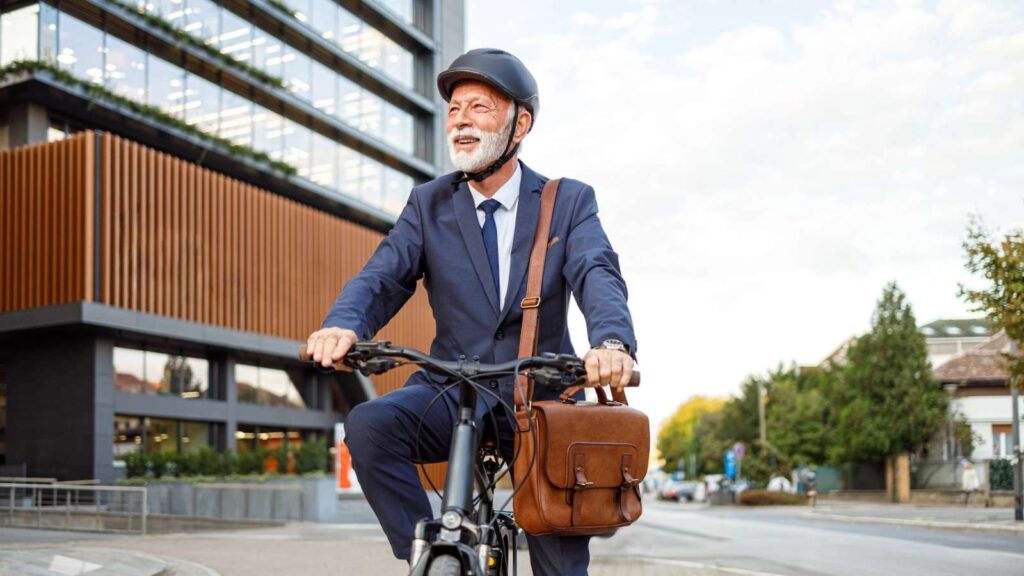
Rush-hour traffic still crawls along, but plenty of commuters already fly past brake lights in bike lanes. Bike to Work Week this May 11 to 17 has become a practical snapshot of modern commuting habits, with hybrid schedules, rising transportation costs and shorter office trips making cycling a far easier fit for daily travel.
This post may contain affiliate link(s). As an Amazon Associate, I earn from qualifying purchases. See Disclosures.
Most Americans still drive to work, though 14% of commuters use public transportation and 9% bike, with alternatives continuing to gain ground since 2019. Many workers no longer build their week around the same office routine five days in a row, which leads more people to plan trips based on mileage, parking costs and the number of days they actually need to commute.
Commuting frequency depends on work demands
Work schedules no longer follow a five-day office pattern for many employees. Hybrid arrangements have reduced how often people travel for work, with office visits spaced out based on job requirements rather than a fixed weekly arrangement.
Activity during Bike to Work Week often builds midweek, when more employees are on-site, and travel plans tend to align with meetings, project deadlines or weather conditions. Some workers choose specific days to commute instead of maintaining a set schedule from Monday through Friday. This pattern attracts occasional riders, who join on select days rather than commit to a daily routine.
Flexible schedules change travel timing
Commute patterns now extend beyond the traditional early-morning and late-afternoon peaks. With fewer fixed start times, movement across cities spreads across the day, which affects how traffic builds and clears at different hours.
Later departures and mid-morning commutes are more common, while some workers head in earlier to avoid crowded periods. Midday activity has also increased, adding another layer to daily traffic flow. These changes give workers more control over when they leave home and return. Additionally, lower congestion at certain times can make cycling routes easier to navigate. With fewer cars on the road during off-peak hours, some riders find it more practical to include biking in their routine.
Higher expenses affect commuting choices daily
Gas prices in the United States have climbed above $4 per gallon for the first time in nearly four years, linked to supply disruptions connected to the conflict in West Asia. Parking costs add to the total, which makes daily driving less appealing.
In response, some workers test lower-cost options on certain days. Cycling eliminates fuel use and helps limit wear on personal vehicles, which can reduce ongoing expenses over time. This shift often begins gradually rather than replacing driving entirely. Short, repeat routes are usually the first to change, since nearby office visits or quick errands make it easier to adjust without a major overhaul.
Commuters combine biking with transit
Many commuters now rely on a mix of biking and public transit to complete their trip. A short ride can connect home to a station or bridge the gap between a stop and the office, which makes longer distances easier to manage.
Transit systems support this setup through bike racks on buses and designated space on trains. These features make it possible to carry a bike for part of the journey. During Bike to Work Week, many participants take part through these combined routes rather than riding the entire distance.
Increased interest in biking alters daily routines
Growing interest in biking suggests that commuting may continue to transition away from fixed daily routines toward more flexible travel patterns built around convenience and distance. As workers adjust how often and when they travel, transportation habits may become less centered on one consistent mode of getting to work. Local planning efforts could increasingly focus on adaptable infrastructure that supports changing movement across cities throughout the day.
Zuzana Paar is the creator of Sustainable Life Ideas, a lifestyle blog dedicated to simple, intentional and eco-friendly living. With a global perspective shaped by years abroad, she shares everyday tips, thoughtful routines and creative ways to live more sustainably, without the overwhelm.