
The mainstream cruise industry is building bigger than ever. Ships carrying 5,000 passengers, private islands and onboard roller coasters have made scale the default language of cruise marketing. But among travelers willing to spend the most, something different is happening.
This post may contain affiliate links that may earn us a commission. For more information, see our Disclosures.
New research from Internova Travel Group, one of the world’s largest travel services companies, found that one-third of North American travelers now express interest in small-ship cruising. Among luxury and ultra-luxury travelers, the demand is stronger. The data, drawn from millions of bookings and a survey of 4,000 North American travelers, found expedition cruise prices have risen more than 20% since 2023, the largest price increase of any cruise category, and a reliable indication of demand outpacing supply.
Expedition and exploration cruising is the fastest-growing segment in the entire cruise sector, with passenger numbers up 42%, according to Cruise Lines International Association, or CLIA, a trend the association’s 2026 report confirms is continuing.
Access is the new luxury
The organizing idea is the same across every operator driving this shift. A vessel carrying 36 guests instead of 3,600 can navigate a shallow river gorge in the Australian Kimberley, anchor overnight in a harbor closed to larger ships or sail into an Antarctic bay that mainstream itineraries will never reach. Small size is not a compromise in this market; it is the product.
The operators defining the category
SeaDream Yacht Club has been making this argument since before “expedition cruising” was a marketing term. The family-owned line, now celebrating more than 25 years, operates two intimate mega-yachts carrying just 112 guests each under a philosophy it calls “yachting, not cruising.” That means overnight stays in secluded harbors, midnight departures from anchorages closed to larger ships and the kind of spontaneity only a small vessel can deliver. When conditions are right in the Caribbean, the captain anchors, deploys the onboard marina and hosts a Champagne & Caviar Splash with jet skis and an inflatable slide off the stern. Itineraries span the Mediterranean, Caribbean and Northern Europe.
At the far end of the expedition spectrum, Terra Nova Expeditions has launched what it calls the world’s first cruise-sailing hybrid in Antarctica. The 20-day Ultimate Antarctic Adventure pairs a purpose-built expedition vessel with a six-day microexpedition aboard the intimate Icebird Yacht, which gives guests access to rarely visited bays and the ability to sail among icebergs well beyond any traditional Antarctic itinerary. The line carries a maximum of 98 guests and backs the adventure with its Antarctic Classroom, a structured onboard program pairing guests with scientists for real-time citizen science and sustainability education.
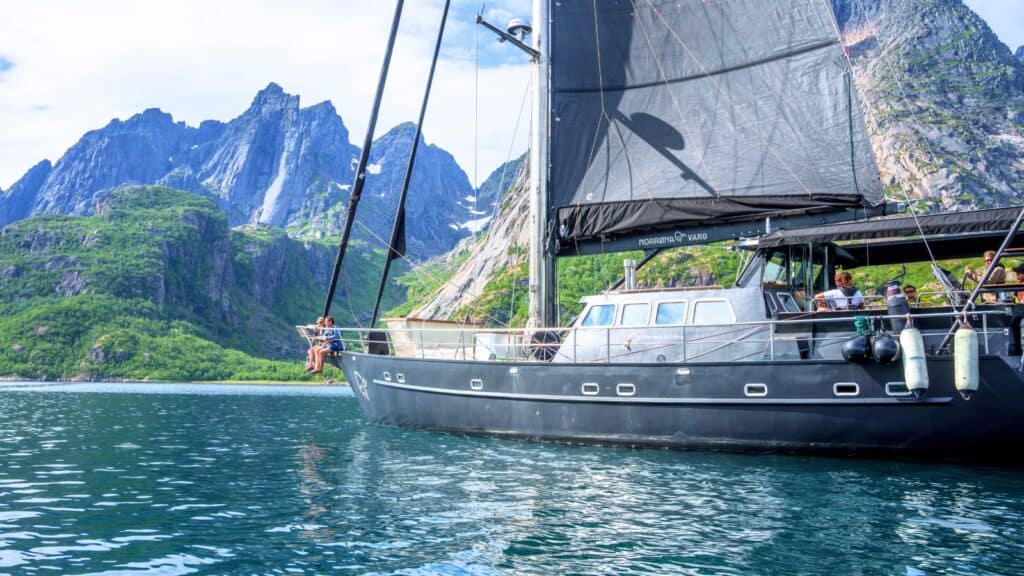
In Arctic Norway, Varg Sail Yacht takes intimacy to its logical conclusion. The 62-foot sailing yacht, operated by Norwegian outdoor brand Norrøna Adventure, accommodates just six guests across three cabins and earned a spot on TIME’s World’s Greatest Places list for 2026. Winter voyages center on whale watching and northern lights in the Barents Sea, while spring itineraries combine ski touring with coastal sailing through the Lyngen Alps. Summer shifts to the remote anchorages of the Lofoten archipelago. A wood-fired sauna and outdoor hot tub sit on a deck; the culinary program is built around foraged and locally sourced Arctic ingredients.
Sailuxe operates 13 premium Lagoon catamarans ranging from 51 to 65 feet across the Aeolian Islands, Sardinia’s Costa Smeralda and the waters around Amalfi and Capri. Each vessel carries a crew trained to boutique hotel standards and a private chef certified through an exclusive partnership with the Gambero Rosso Academy, Italy’s most respected culinary institution. Signature experiences vary by catamaran: cinema under the stars off one coast, private granita-making with a Sicilian producer off another. Bookings have grown 113% in the past two years.
Geography makes the case for small-ship cruising in British Columbia and Alaska. Maple Leaf Adventures operates in Haida Gwaii, the Great Bear Rainforest and remote Vancouver Island, places where cultural site access, wildlife sensitivity and permit structures cap group sizes by design. The company’s luxury vessel, Cascadia, delivers spacious cabins, locally inspired design and highly personalized service in a market where the company says no comparable luxury offering exists.
True North Adventure Cruises has spent more than 35 years making the same argument along Australia’s Kimberley coast. The 50-meter expedition vessel carries a maximum of 36 guests with a crew of 22, and its shallow draft allows it to navigate river systems and gorges that larger ships cannot physically enter. An onboard helicopter extends that reach further, lifting guests above Mitchell Falls and into the wilderness inaccessible by any other means. Chef-driven menus built on sustainable local ingredients, 18 en-suite staterooms and a $4 million fleet refit ahead of the 2026 season round out a product that holds full membership in Luxury Lodges of Australia.
Regent Seven Seas Cruises extends the access argument through time. Its new Legendary Voyages collection for 2028 includes the 101-night Grand Pathways of Europe and the 61-night Grand Silk Seas Passage, built around longer port stays and deeper destination immersion rather than maximizing ports visited. Shore excursions, fine dining and business-class air are all included, which lets travelers focus entirely on the places they are in rather than the logistics of getting there.
New Zealand’s Heritage Expeditions brings 40-plus years of Southern Ocean expertise to the category’s most remote itineraries. The second-generation family-owned operator sends its new vessel, Heritage Discoverer, on a 21-day preview voyage this November to the Antarctic Peninsula, South Georgia and the Falkland Islands, ahead of the ship’s maiden 2027-28 season. A maximum of 130 expeditioners sail with an expedition team of 15 and 14 Zodiacs. South Georgia alone hosts penguin, seabird and fur seal populations numbering in the millions; early-season Antarctica delivers more than 20 hours of daylight each day.
Where the category is heading
CLIA projects expedition cruise capacity will grow 150% between 2019 and 2029, a figure that confirms this segment has moved well past niche status. The operators that see the sharpest demand share one advantage: a product that cannot be replicated at scale. The gorge, iceberg bay and remote anchorage belong only to the vessel small enough to reach them.
The real measure of luxury
The table stakes in high-end travel now are the suite, fine dining and personalized service. What this generation of small-ship operators is selling is something harder to manufacture: a berth on a vessel small enough to go where the crowds are not and, in some cases, where almost no one has gone before. In 2026, that is the most exclusive address at sea.
Jennifer Allen is a retired chef turned traveler, cookbook author and nationally syndicated journalist; she’s also a co-founder of Food Drink Life, where she shares expert travel tips, cruise insights and luxury destination guides. A recognized cruise expert with a deep passion for high-end experiences and off-the-beaten-path destinations, Jennifer explores the world with curiosity, depth and a storyteller’s perspective. Her articles are regularly featured on the Associated Press Wire, The Washington Post, Seattle Times, MSN and more.