
Late May has quietly become the smartest window for an American road trip, offering longer days, lower hotel rates and lighter traffic before the summer travel surge drives up costs and crowds. About 71% of Americans plan to drive on their next vacation, but the difference between a smooth summer escape and a traffic-clogged headache often comes down to timing.
This post may contain affiliate links that may earn us a commission. For more information, see our Disclosures.
Most of that demand targets the same crowded season. Late June and early July are the priciest and busiest periods of the summer, with airfare up nearly 15% year over year. At the pump, the national average hit $4.52 per gallon in mid-May 2026, the highest since summer 2022. As more Americans choose to drive rather than fly in response to rising airfare, road traffic concentrates into the same predictable peak windows. The travelers moving before that happens are finding an entirely different road.
The moment before the rush
School is still in session across most of the country through late May, which means the family travel surge that defines peak summer has not yet arrived. The days between late May and the second week of June are among the calmest of the entire summer driving calendar. It is a narrow window that most road trippers skip entirely on their way to July. A record 39.1 million drivers are expected on American roads this summer driving season, and the bulk of that volume lands after schools let out.
Daylight is already near its annual peak by late May, and most of the continental United States sees between 14 and 15 hours of daylight, close to the summer solstice maximum. That is enough time to cover a serious distance, stop at a trailhead and still reach a property before dark. It is a driving day that does not feel rushed.
Late May and the rate advantage
Early summer lodging is consistently the most affordable period of the season, with prices climbing sharply as demand builds toward the Fourth of July. Traveling in early June or mid-August can significantly reduce hotel costs compared to peak summer weeks, and a road trip that departs in late May captures that rate environment before it closes.
Availability follows the same pattern. Hotels, campgrounds and vacation rentals that require weeks of advance booking in midsummer are often accessible with far less lead time in late May. For travelers who want to adjust routes, extend stays or make last-minute detours, that kind of flexibility is something a July itinerary rarely allows. About 76% of global car travelers prefer road trips to flying because they leave more room for spontaneity, something that becomes far easier before peak summer crowds take over the roads.
What the roads and parks look like
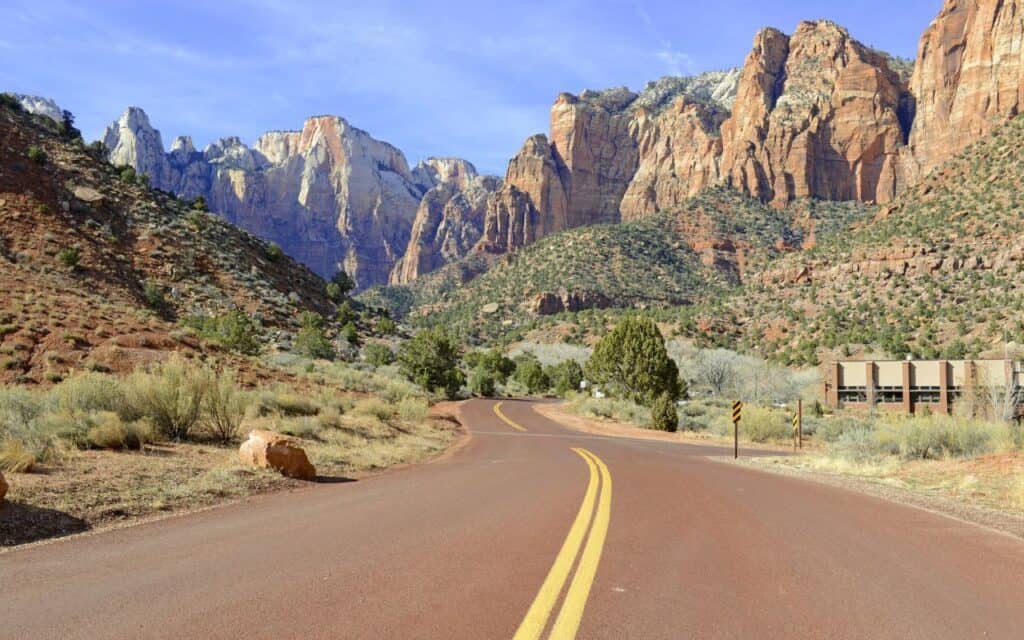
More than 118 million people visited the nation’s 63 national parks in 2025, with June, July and August consistently the heaviest months. At Zion, Yellowstone and the Great Smoky Mountains, peak summer means timed entry permits, full parking areas well before 8 a.m. and trailheads at capacity by mid-morning. In late May, those same gates, trails and overlooks are open and far less crowded.
Mountain passes across the Rockies and Sierra Nevada are typically clear by late May, making the most scenic routes drivable without the congestion that sets in once classes are over. Furthermore, temperatures across the Southwest and Pacific Coast are warm but not yet extreme. The desert regions of Arizona and Nevada, which climb into dangerous heat by midsummer, are still comfortable. And the wildflower bloom across the Southwest and Pacific Northwest peaks in late spring, a phase that closes well before most summer road trippers leave their driveways.
A narrowing window worth taking
Late May is not an escape from summer travel volume; it is a question of timing within it. Depart before that spike builds, or head out once it passes, and the roads belong to a different kind of traveler.
With more Americans driving instead of flying this summer, competition for the same highways, campsites and hotel rooms during peak weeks will only get sharper. The travelers who go earlier find something that has become genuinely rare in American summer travel: room to move.
Mandy is a luxury travel, fine dining and bucket-list-adventure journalist with expert insight from 46 countries. She uncovers unforgettable experiences around the world and brings them to life through immersive storytelling that blends indulgence, culture and discovery, and shares them with a global audience as co-founder of Food Drink Life. Her articles appear on MSN and through the Associated Press wire in major U.S. outlets, including NBC, the Daily News, Boston Herald, the Chicago Sun-Times and many more.