
Three Caribbean islands see the sharpest search spikes heading into summer 2026. Sint Maarten, Aruba and San Juan outpace the broader Caribbean trend by a wide margin, and booking now is still the window to get ahead of peak crowds and peak prices.
This post may contain affiliate links that may earn us a commission. For more information, see our Disclosures.
The broader Caribbean is already having a breakout year. Recent travel data reports summer 2026 Caribbean searches up 15% year-over-year, driven more by accommodation bookings than flights, a sign that travelers are locking in longer stays earlier than usual. Average U.S.-to-Caribbean economy fares at $385, 32% below South America, and are keeping demand at levels the region hasn’t seen before.
Sint Maarten: Up 133% and still climbing
No other destination on this list has the structural advantage Sint Maarten does, which helps explain a 133% year-over-year jump in searches according to TravelAge West. Two countries share one island, with Dutch Sint Maarten and French Saint Martin each offering a genuinely different experience without a passport crossing between them, and ferry and charter connections to Anguilla, St. Barts and Saba extend that range further.
The travelers who book it are also doing their homework: Google Search data from April shows zip-lining ranked as the top-trending activity searched for Sint Maarten and Mullet Bay Beach logged as a breakout destination query. Late spring falls within the shoulder season here, with peak-season crowds gone, hotel rates lower and the island still weeks away from meaningful hurricane risk.
The cost most first-timers miss is inter-island transport, since ferry and charter fees to those neighboring islands accumulate fast and rarely appear in initial booking quotes. Travelers looking for a slower pace without leaving the island should spend time on the French side, where beaches are quieter, the dining scene runs Creole-French and the casino-resort energy of the Dutch side gives way to something considerably more relaxed.
Aruba: Up 62%, driven by geography as much as anything else
Aruba is located 15 miles off the Venezuelan coast, well outside the main hurricane belt, and that geography has become a selling point in its own right. The island averages roughly 350 days of sunshine per year with very low historical exposure to direct storm impacts, which makes it an easy booking decision for travelers who want warm weather without the weather anxiety most Caribbean islands carry in summer. The 62% year-over-year gain in search interest is the direct result.
For travelers who book in May, conditions are as good as any month on the calendar: dry-season weather holds, trade winds keep temperatures comfortable and occupancy runs lower than it will once June arrives. The cost that catches visitors off guard is the gap between advertised and actual spend, since all-inclusive rates along the Palm Beach corridor frequently exclude resort fees and gratuities.
Those who want to sidestep the resort strip entirely should head to Savaneta, the island’s oldest village on the southwestern coast. Local seafood restaurants, calmer water and none of the north end’s high-rise density create a quieter side of Aruba that many visitors never reach.
San Juan: Up 52%, largely because no passport is required
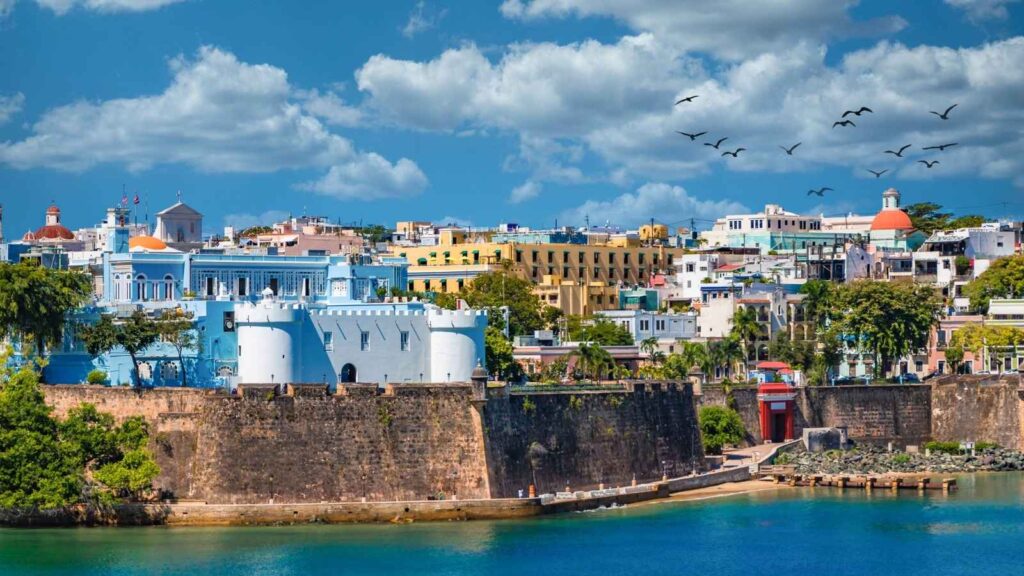
The case for San Juan starts with something no other Caribbean destination offers U.S. travelers: no passport, domestic airfare and no currency exchange. That combination has driven a 52% year-over-year search surge that is less about trend-chasing and more about practical decision-making. Old San Juan adds cultural weight to that access advantage, with 500-year-old Spanish colonial architecture, cobblestone streets and a food scene that has drawn serious national attention, giving the city a depth that beach-only islands can’t match.
Booking now puts travelers ahead of the curve, before humidity builds, crowds push past the December-to-April peak and hotel rates follow the demand curve up. Car rentals are the expense most visitors underestimate: inventory is tight year-round and prices run high, so book in advance or plan around rideshares. Travelers who want beach access without the tourist concentration of Old San Juan should look at Isla Verde, east of the city center, close to the airport and running at a noticeably more local pace.
Caribbean demand keeps climbing higher
Beyond the destinations that see the biggest search spikes, travelers also widen the Caribbean map they consider for summer trips. Grenada enters more travel conversations as visitors look past the region’s busiest resort hubs. The island appeals to travelers who want a quieter pace built around spice plantations, smaller boutique stays and a food scene tied closely to local agriculture and seafood rather than large resort corridors.
The Caribbean Tourism Organization projects 3% to 4% stayover growth across the region for 2026, but Sint Maarten, Aruba and San Juan already see search growth well above the broader Caribbean market. What travelers increasingly want from the Caribbean becomes clearer: easier access, fewer weather concerns, flexible pricing and enough local character to fill more than a beach chair and a cocktail hour. These islands happen to check all four boxes at once.
Mandy is a luxury travel, fine dining and bucket-list-adventure journalist with expert insight from 46 countries. She uncovers unforgettable experiences around the world and brings them to life through immersive storytelling that blends indulgence, culture and discovery, and shares them with a global audience as co-founder of Food Drink Life. Her articles appear on MSN and through the Associated Press wire in major U.S. outlets, including NBC, the Daily News, Boston Herald, the Chicago Sun-Times and many more.