
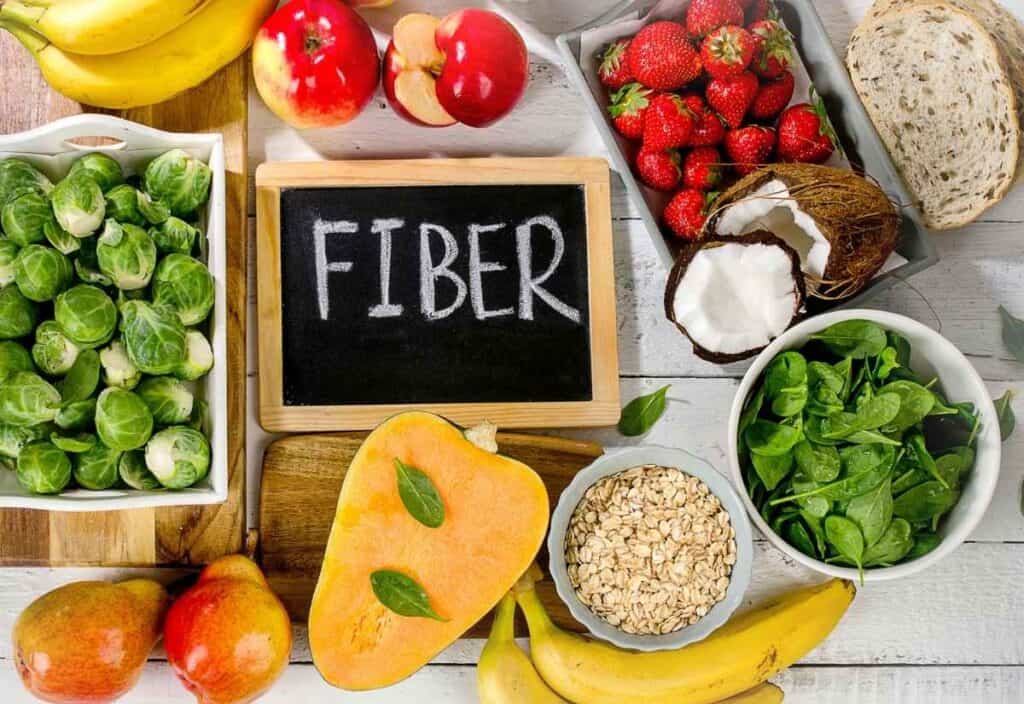
Fiber has become the nutrition story of 2026. After years of protein dominating grocery aisles, restaurant menus and social media feeds, a rival macronutrient has taken hold, one that most Americans are critically short on and that the food industry is moving fast to capitalize on.
This post may contain affiliate link(s). As an Amazon Associate, I earn from qualifying purchases. See Disclosures.
The numbers are stark. Nearly 1 in 3 Americans consumes fewer than 20 grams of fiber per day, far below the recommended 14 grams per 1,000 calories. Zero percent of respondents said they do not want or need to increase their fiber intake, indicating strong receptivity despite knowledge, cost and access barriers. The Dietary Guidelines for Americans 2025-2030 underscore why that gap matters: federal nutrition guidance now explicitly states that high-fiber foods support a diverse microbiome and calls on Americans to prioritize fiber-rich whole grains.
Why fiber, why now
The trend has a name: “fiber-maxxing,” which involves maximizing daily fiber intake through whole foods like vegetables, legumes and whole grains. It took hold on social media before moving into mainstream food culture and then into boardrooms. Fiber emerges as one of the biggest health-focused food trends after years of protein-heavy marketing, with gut health and appetite control driving much of the interest. Consumers increasingly view fiber as an accessible way to support digestive health, which has helped move the ingredient further into mainstream food conversations.
The Johns Hopkins Center for a Livable Future draws a direct comparison to protein-maxxing in 2025, where a consumer behavior pattern that began online went on to rewrite product development priorities across the industry. The distinction with fiber is that it responds to a documented nutritional deficiency rather than an aspirational goal.
GLP-1 medications change what people need from food
The rise of GLP-1 weight-loss medications compounds the pressure. A recent survey found that Americans are increasingly open to GLP-1 treatment, with more than 26% describing the medications as a legitimate option for a chronic condition or a reasonable next step when lifestyle changes fall short. As appetite decreases and portion sizes decline among this growing user base, demand increases for foods that deliver more nourishment in smaller amounts.
Fiber increasingly fits into that conversation, with fiber-rich foods naturally supporting GLP-1 hormone production in the body. The effects of the macronutrient last for hours after eating and extend feelings of fullness beyond the meal itself. Combined with fiber’s established role in digestive health and satiety, that connection has made it a growing focus alongside protein for manufacturers developing functional beverages and snack products.
Brands and retailers move
The fiber trend moved from prediction to product brief in early 2026. PepsiCo launched Smartfood FiberPop and SunChips Fiber in March, with FiberPop delivering 6 grams of fiber per serving and SunChips Fiber providing 3 grams. “We’re at a pivotal moment as awareness of fiber’s importance accelerates, much like the rise of protein,” said Tara Glasgow, PepsiCo chief science officer. “By introducing delicious, fiber-containing snacks across our portfolio, we’re helping shape a future of snacking.”
Kraft Mac & Cheese launched PowerMac at major retailers nationwide in April 2026, delivering 17 grams of protein and 6 grams of fiber per serving. Nestlé Waters entered the beverage side with Maison Perrier French Kiss, a prebiotic sparkling water launched in February 2026, carrying 6 grams of fiber and less than 1 gram of added sugar per can. The launches point to a broader industry consensus: fiber is no longer a niche health claim but a mainstream product mandate.
A real deficiency meets a commercial moment
Americans have fallen short on fiber for decades; current dietary guidelines recommend 25 grams of fiber per day for women and 38 grams for men, yet most adults consume less than half of those amounts. What has changed is the context around that deficiency. Protein built a generation of product innovation by attaching itself to a consumer aspiration. Fiber is doing something different: it is converging with a social media movement, a pharmaceutical development and a genuine public health gap at the same time. For food brands paying attention to all three, the commercial case is already written.
Disclaimer: These statements have not been evaluated by the Food and Drug Administration. The contents of this article are for informational purposes only and do not constitute medical advice. The content presented here is not intended to be a substitute for professional medical advice, diagnosis or treatment. Always seek the advice of a qualified healthcare provider with any questions you may have regarding a medical condition or dietary changes. Reliance on any information provided by this article is solely at your own risk.
Jennifer Allen is a retired professional chef and long-time writer. Her work appears in dozens of publications, including MSN, Yahoo, The Washington Post and The Seattle Times. These days, she’s busy in the kitchen developing recipes and traveling the world, and you can find all her best creations at Cook What You Love.