
The can of wine sitting in a cooler at a trailhead parking lot used to get a specific look. Not quite embarrassment, not quite apology, just the quiet acknowledgment that you knew what the bottle people thought, and you had decided not to care. For a long time, they had a point, but then the wine inside the can got genuinely good, and the conversation changed.
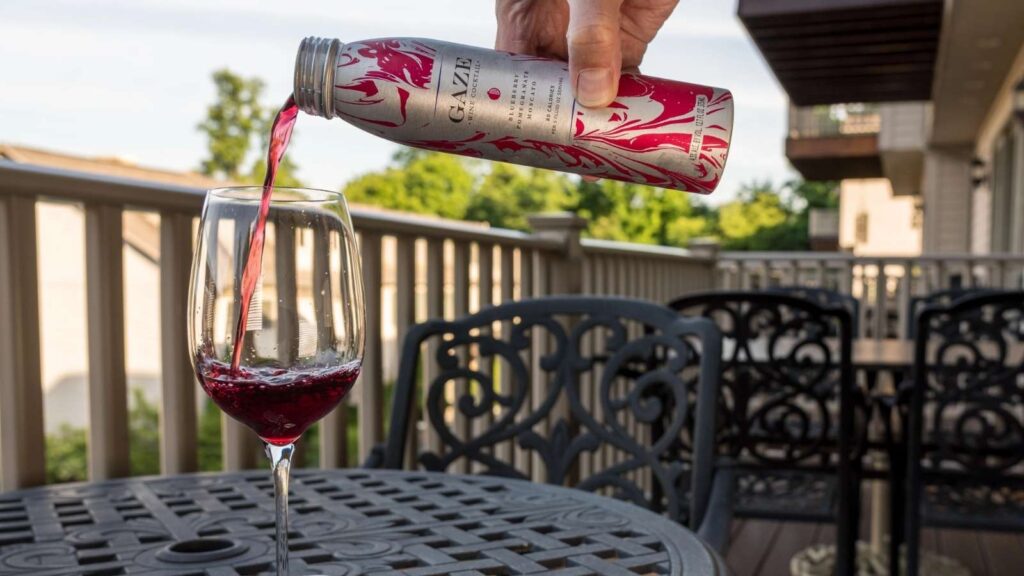
The producers behind that change are not who most people would expect. Small-appellation labels, sommelier-founded brands, Oregon pinot noir from Willamette Valley vineyards; the names showing up in cans now have nothing in common with the mass-market blends that built the category’s bad reputation. That gap between eras is exactly what the sales data is starting to reflect.
The numbers tell a different story
Wine-based RTDs grew close to 14% in U.S. off-premise dollar sales in the first quarter of 2026, even as core wine contracted 8.3% in volume over the same period. Millennials now account for 31% of U.S. wine drinkers, surpassing baby boomers at 26%, and Gen Z’s share climbed from 9% to 14% in just two years. These are consumers who grew up without the stigma, and their buying habits are showing up in the data in a serious way.
The stigma had a reason and a shelf life
The early versions of canned wine were not good, and their reputation matched the product honestly. Mass-market blends, off-flavors from cheap liner technology, no sense of where the wine came from or who made it. They were convenience plays, not quality ones, and the people who tried them once and moved on were not wrong to do so.
What changed is that better producers started paying attention. Low-intervention wines from small appellations in southern France, coastal Chile and the Greek islands followed the early craft entrants. Regional AVAs started appearing on the back panel, the same transparency markers that earn credibility on a bottle. None of those decisions has anything in common with the category that built the bad reputation.
What changed inside the can
The quality leap was not just about who was making the wine. The engineering caught up too. A peer-reviewed study confirmed that aluminum packaging maintains acceptable wine quality for wines consumed within six months, precisely how this category is made, shipped and drunk. The tin-contact flavor issues that defined early canned wine are largely solved problems. The science just took a while to confirm what producers had already figured out in practice.
What followed was a credibility cascade that still plays out. Fine-dining beverage directors started recommending canned wines to their guests by name, while domestic airlines started adding them to economy-cabin service. These are not marketing developments, but decisions made by professionals who stake their reputations on what they pour and recommend, and canned wine kept passing the test.
Aluminum also has a meaningfully lower overall carbon footprint than glass, which matters to exactly the demographic driving the category’s growth.
The occasion was always the point
Nobody brings a bottle of Burgundy to a kayak trip. The can was not invented to replace the bottle. It was built for the moments when the bottle was always the wrong answer: the hike, the beach, the outdoor show, the flight, the rooftop, the picnic where glass is banned. Single-serve, no corkscrew, chills faster than a bottle, fits in a jacket pocket. For those occasions, the can is simply the right product, and the bottle never was.
Younger consumers have built their drinking habits around those occasions in a way that older generations simply did not. The occasion shapes the format choice, and for a growing share of the moments when people actually reach for wine, the can fits better than anything else on the shelf.
Where the category goes next
The wine industry has spent years trying to solve a single problem: how to reach consumers who drink differently, in different places, with different expectations than the generation before them. A corner of it already did. Producers who treated the can as a serious vessel are now the ones with the growth story, and the gap between them and the rest of the category is only getting harder to ignore.
Jennifer Allen is a retired professional chef and long-time writer. Her work appears in dozens of publications, including MSN, Yahoo, The Washington Post and The Seattle Times. These days, she’s busy in the kitchen developing recipes and traveling the world, and you can find all her best creations at Cook What You Love.