
Most American travelers think of Champagne in France or prosecco in Italy when they picture sparkling wine. Few would expect England, a country better known for cider and beer, to produce bottles that stand out in major competitions. Yet in the rolling Malvern Hills of western England, about three hours from London, a vineyard just claimed gold at the London Tasting Awards, a bold reminder that English sparkling wine is no longer a curiosity but a serious contender.
English sparkling wine is still a surprise to many. Britain has never been known as a wine powerhouse, and its cool, damp climate once seemed better suited to orchards than grapevines. However, over the last decade, English sparkling wine has been winning top awards, competing directly with Champagne in blind tastings. Much of the success comes from southern counties such as Sussex and Kent, where chalky soils and cooler conditions echo those of France’s Champagne region. I didn’t expect to find sparkling of this quality in the Malverns, a region not usually linked with fine wine, so the gold medal came as a genuine surprise.
A big personality among the vines
The unexpected success story belongs to Marlbank Vineyard, where owner Jeremy Macklin has seen his work rewarded in 2024 with a gold medal at the London Tasting Awards. Macklin’s approach is refreshingly personal: he doesn’t rely on slick marketing teams or outsourced tours. Instead, he leads visitors himself, walking them row by row through the vines and sharing stories of setbacks and triumphs along the way.
When I joined him in the vineyard, it felt less like a scripted tour and more like being let in on a personal journey, full of humor, grit and deep pride in the land. He laughed as he talked about fruit flies and the damp English climate, but quiet determination ran beneath the jokes. Growing sparkling wine in England means waiting for 1,200 growing degree days: the accumulated warmth a vineyard needs each season for grapes to ripen fully. It’s a constant challenge in the Malverns, where unpredictable weather makes every season a gamble.
A harvest in hours
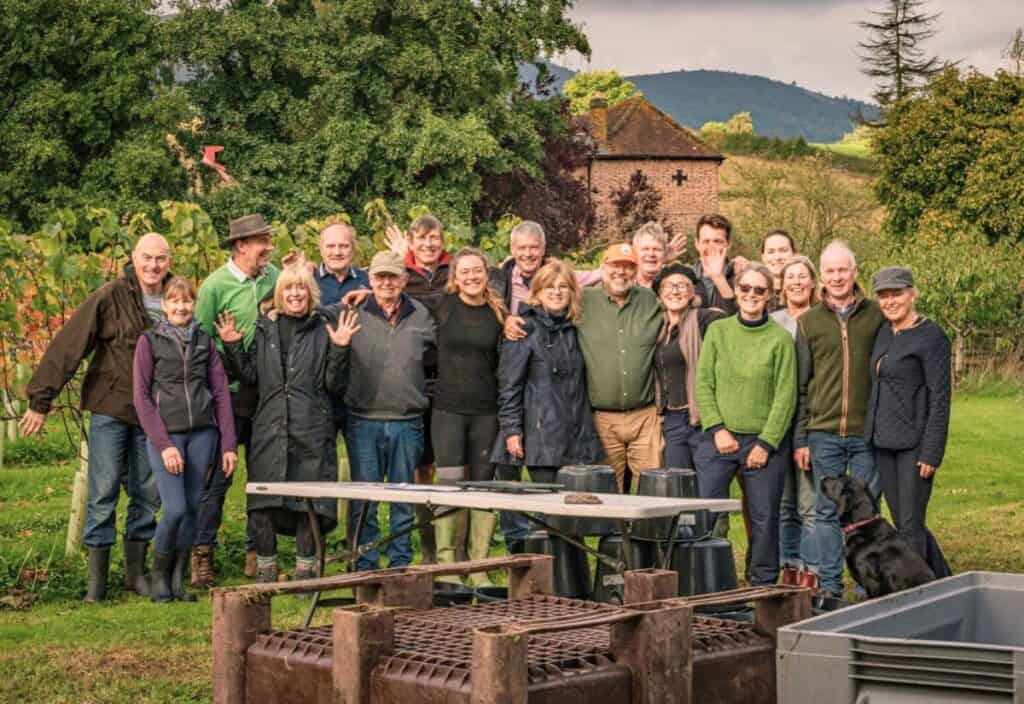
Marlbank produces just 1,550 bottles of sparkling each season, proof that its modest output is part of its charm. “Every vine matters,” Macklin likes to say. The harvest lasts about four hours, with family and friends working in five teams of three, weighing each row to track yields over time.
Many of the same crew return each year. Relatives and friends work together, moving easily through the rows as talk and laughter become part of the routine. The labor is far from the scale of Napa or Bordeaux, but it’s more personal and precise. Each bottle carries the mark of that shared effort.
A vineyard with room for celebration
Macklin’s vineyard also shows his playful side. When he asked friends in France and Italy what they regretted most about their wine estates, he expected answers about soil, spacing or equipment. Instead, they all admitted they wished they had created a space to celebrate among the vines. Macklin took the advice to heart.
Today, Marlbank Vineyard has its own gathering spot in the middle of the vineyard, designed for sitting down with family and friends, pouring a glass and watching the sun slip behind the Malverns.
6 vineyards; 1 vision
Marlbank is part of the Malvern Hills Vineyards, a collective of six estates: Three Choirs, Chase End, Bromesberrow Place, Foxbury Fields, Marlbank and Two Beacons. They work together to raise the region’s wine profile, cultivating 14 grape varieties across 35 hectares and producing an impressive range of still and sparkling wines.
The collaboration is unusual for such a small corner of the English countryside. Instead of competing for visitors, the vineyards joined forces, believing that strength lies in presenting the Malverns as a destination. For travelers, the benefit is obvious: a day or weekend in the Malverns can include multiple tastings, each with its own character, history and backdrop. Some estates lean into traditional winemaking styles, while others experiment with new techniques. Marlbank, with its gold medal and Macklin’s hands-on tours, has become the emblem of what the collective wants to achieve.
The Malverns’ moment
Across the Malvern Hills, winemakers like Macklin prove what this landscape can produce with patience, craft and adaptability. Their success is reshaping how people view English wine and where it can thrive.
For Americans planning a trip to Britain, expect to find world-class and award-winning sparkling wine in the Malvern Hills. At Marlbank Vineyard, the harvest lasts only hours, the owner pours the wine himself, and a gold medal now glitters on the shelf; it’s exactly the kind of surprise worth seeking out.
Correction Oct 9, 2025: We mistakenly published that English sparkling wines need 1200 degree days, but Jeremy Macklin informed me that it should be 1200 growing degree days. The correction was made on the article.
Mandy Applegate is the creator behind Splash of Taste and seven other high-profile food and travel blogs. She’s also the co-founder of Food Drink Life Inc., a unique and highly rewarding collaborative blogger project. Her articles appear frequently on major online news sites, and she always has her eyes open to spot the next big trend.