
On a dark beach, a guide raises a hand and everyone stops, and then a few yards up the sand, a female turtle drags herself out of the surf and starts to dig. No flash, no lights, no one moves closer than the guide allows; she lays, buries the nest and hauls back to the water. That is one way to watch a turtle nest, while the other, sold on beaches around the world, is a bucket of hatchlings, a paid release at noon and a phone in every hand.
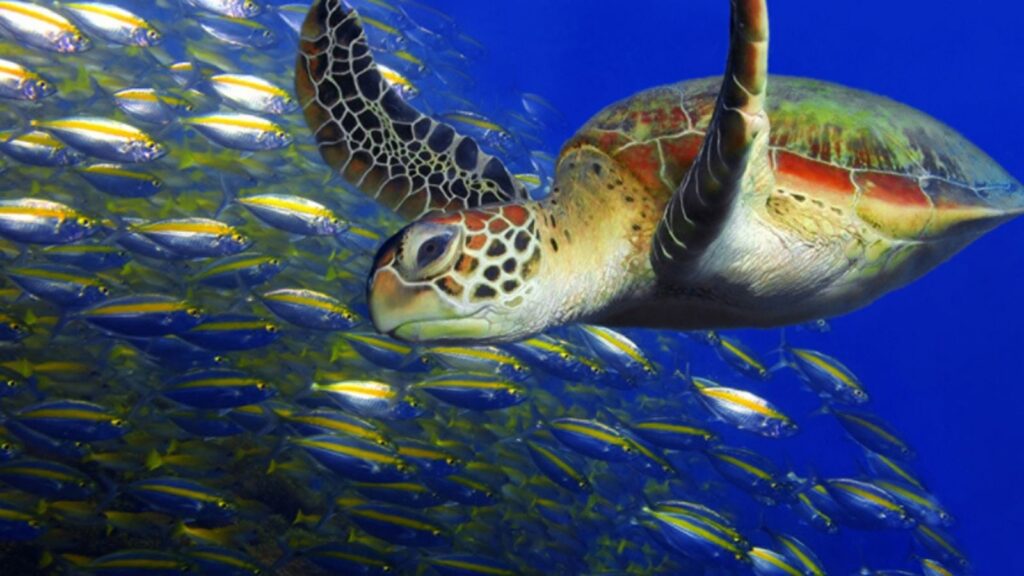
How you watch a turtle nest decides whether you help protect it or add to its trouble. Nesting seasons are running now from the Caribbean to the Indian Ocean to the Pacific, and American travelers who want a real wildlife moment are booking them in growing numbers. The packaged, hands-on version is the one most operators push, because it is the easiest to sell and the easiest to mistake for conservation.
Americans do not have to leave the country to prove the appetite is real. Florida fills its beaches every summer with people hoping to watch turtles come ashore, and 2025 showed what these animals can do when left alone. Green turtles logged their second-highest season on record and leatherbacks set a new statewide high, after three hurricanes had torn across the state the year before and washed away nests. They came back anyway.
The places that let travelers watch them nest run along a spectrum, from the cleanest wild viewing to the hardest calls about where conservation ends and spectacle begins, and a few of them are worth the airfare.
Oman, where the desert meets the tide
Few Americans picture Oman as a turtle destination. On the Arabian Sea coast, the Ras al Jinz Turtle Reserve protects a major green turtle nesting site, where around 20,000 females come ashore across a season that peaks from May through September. The government reserve controls access tightly. Visitors watch under the guidance of trained guides at a distance on night and dawn walks, and sleep in eco-tents at the site rather than crowding the sand. The eggs stay where they are laid. Everything about the place is built around the turtles, not the guest.
The Maldives resort that keeps a biologist on staff
A reserve is built to protect turtles while a resort is built to sell rooms, which is what makes the ones that take it on worth noticing. At Six Senses Laamu in the Maldives, turtle work is not a guest activity bolted onto a spa menu. A biologist from the Olive Ridley Project has been based on the island since 2018, monitoring nests and identifying individual turtles by their facial scales rather than handling them.
A 2026 study found hawksbill nesting has fallen sharply across the Maldives, with fewer than 50 confirmed nests over seven years, down from historical counts in the hundreds. The biologist is there to count and track, not to put on a show for guests.
Nevis, where the turtles belong to the whole Caribbean
Where the Maldives work is recent, another resort has been at it for two decades. On Nevis, the Four Seasons Resort has worked for 20 years with the Sea Turtle Conservancy, which calls itself the oldest sea turtle research organization in the world.
This July, the team tagged and released two turtles, Sandy and Lega-Sea, whose tracks anyone can follow online. Satellite tags on 28 turtles nesting in Nevis showed them traveling as far as nearly 1,700 miles and crossing 29 national zones, some with legal turtle fisheries. The turtles that nest on Nevis do not stay there, so no single island can protect them alone. Nevis itself still permits a legal turtle harvest in season, and the resort and its scientists work against that, not around it.
David Godfrey, who directs the Conservancy, is blunt about what separates real conservation from a photo op. Avoid anywhere that lets tourists handle hatchlings, he said. Many resorts, “particularly in Mexico,” charge visitors to release captive hatchlings, holding the animals back rather than letting them go so someone can profit from the moment. Hatchlings evolved to erupt from the sand together, in the dark, for safety in numbers. Released one at a time in daylight, he said, they are essentially fed to waiting predators. On Nevis, viewing is wild nesting only, guide-led and hands-off.
Borneo, where good conservation gets complicated
Godfrey’s test is easy to apply at the extremes and harder in the middle. Off Sabah in Malaysian Borneo, Selingan Island is located inside a government marine park where rangers wake guests when a female comes ashore and lead them to watch at a distance, with no touching.
Selingan also collects clutches to a protected hatchery and lets visitors watch releases, which sounds close to what Godfrey warns against. The difference is who runs it and why. Managed relocation by government scientists on a beach with heavy predation is not a roadside tank operation charging tourists to hold hatchlings.
The same test travels to the Caribbean. In Trinidad, Grande Rivière draws up to 300 leatherbacks a night at its peak, on a beach David Attenborough filmed for “Blue Planet II” and introduced through the local conservationist Len Peters. It is believed to be the second-largest leatherback nesting beach in the world, after Gabon. Trinidad law makes it a protected area, so viewing runs only by permit and with a trained guide, and Mt. Plaisir Estate Hotel sits on the sand as the property that arranges access.
The stakes reach past any one beach. Hawksbills are hunted across the Caribbean for their shells, which is why they are critically endangered, and leatherbacks are caught and killed by the thousand in commercial longline fisheries. The turtle in front of you may belong to a dozen other countries at once, and the way one island treats it reaches all of them.
The souvenir worth taking home is not a photo of a hatchling in your palm. It is knowing what to look for on any beach: distance over contact, wild nests over holding tanks, a trained guide over a paid handler. Learn to tell the two apart, and you stop being a threat to the thing you came to see. No resort can hand you that at check-in.
Mandy is a luxury travel, fine dining and bucket-list-adventure journalist with expert insight from 47 countries. She uncovers unforgettable experiences around the world and brings them to life through immersive storytelling that blends indulgence, culture and discovery, and shares them with a global audience as co-founder of Food Drink Life. Her articles appear on MSN and through the Associated Press wire in major U.S. outlets, including NBC, the Daily News, Boston Herald, the Chicago Sun-Times and many more.