
Your cruise may start at noon on paper, but embarkation day runs on a tighter clock than it looks. Cruise lines set their own arrival windows, baggage rules, and departure routines, while federal entry requirements add another layer. The safest plan is to follow the instructions for your exact sailing instead of assuming your last cruise’s routine will work again.

Your Arrival Time Matters
Royal Caribbean tells guests to arrive during the terminal slot selected during app check-in. Early arrivals cannot begin boarding, while late arrivals may have to wait for a later group.
MSC is stricter about its assigned window. Guests who arrive before their slot opens may be asked to wait outside the terminal. Arriving after the slot closes may lead to denied embarkation, and MSC says check-in and boarding close two hours before departure.
The Federal 60-Minute Rule Is Not Your Boarding Time
Federal regulation adds a separate deadline behind the scenes. Under 19 CFR 4.64, the appropriate official for a commercial vessel departing the United States for a foreign destination generally must send the passenger departure manifest to Customs and Border Protection no later than 60 minutes before departure.
That does not give passengers a universal 60-minute boarding window. Cruise lines can require earlier check-in. Royal Caribbean, for example, says guests who did not complete check-in in advance must finish it at the pier at least two hours before the published sailing time.
Luggage Tags Carry Key Routing Details
Royal Caribbean says its luggage tags are specific to the ship, sailing date, stateroom, and deck number. If you do not have yours, generic tags are available at the pier.
MSC puts its luggage tags in the cruise ticket. They include the passenger’s name, ship, cabin number, departure date, and port. The line says labeled bags handed to designated staff are sent to the cabin.
Closed-Loop Cruises Have a Narrow Passport Exception
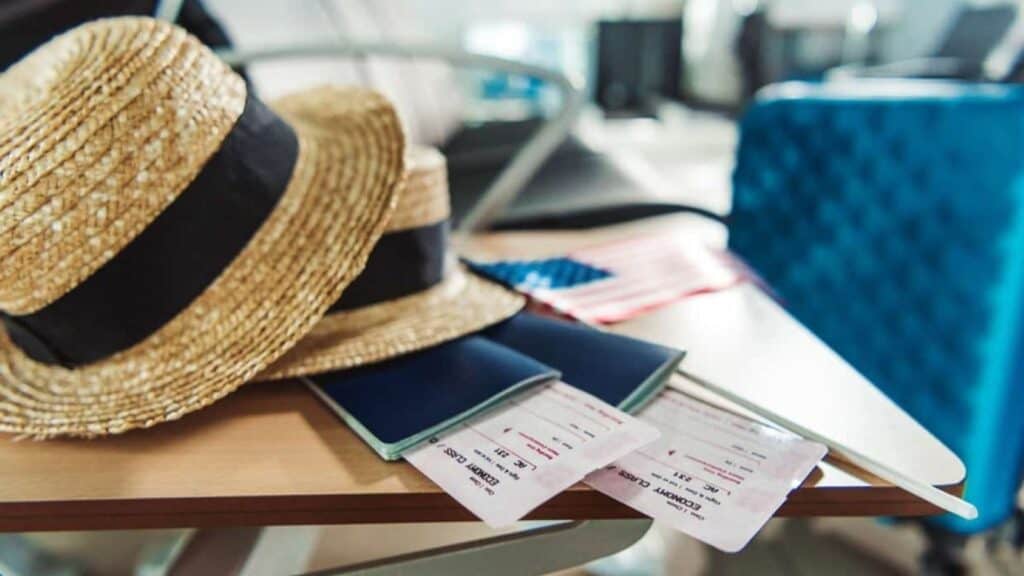
U.S. citizens traveling entirely within the Western Hemisphere on a cruise that leaves from a U.S. port and returns on the same ship to the same U.S. port may use qualifying proof of citizenship plus government-issued photo identification instead of a passport. The federal exception itself calls for government-issued photo identification and does not add a REAL ID-compliance requirement.
That exception does not guarantee a passport-free trip. The U.S. Department of State says a cruise company may require a passport book even when U.S. Customs and Border Protection or a foreign border agency does not. It also recommends carrying a passport book in case an emergency forces you to fly home from abroad.
Self-Assist and Regular Departure Work Differently
Royal Caribbean’s Self-Assist Early Departure lets you keep your luggage in the cabin overnight and carry it off yourself. No luggage tags are required, but wheelchair assistance is not available for that option.
Regular Departure uses tagged luggage placed outside the cabin the night before. Guests wait until their assigned number is called, then collect their bags in the terminal. MSC uses a similar assisted and self-assist split. It warns that leaving before an assisted departure time can mean your luggage is not ready, and in many ports you may be asked to wait onboard rather than in the terminal.
The Ship Must Be Cleared Before You Leave
Disembarkation does not start simply because the ship has docked. MSC says self-assist passengers can leave once local authorities clear the ship. Celebrity also notes that a ship has to be cleared by local authorities before passengers leave and that immigration checks may still apply.
In U.S. ports, MSC says passport holders typically use facial recognition while birth-certificate travelers go through manual inspection. The line also recommends allowing at least five hours between the ship’s arrival and a departing flight as a general guideline.
Checked Bags Have a Night-Before Deadline
Royal Caribbean’s regular departure process requires guests to tag their bags and leave them outside the stateroom by the specified time, while keeping passports, travel documents, and valuables with them.
MSC tells assisted-disembarkation guests to put luggage outside the cabin before midnight. Those bags receive numbered tags tied to a designated departure time. Self-assist guests keep their luggage with them until morning.
The Best Cruise Habit Starts Before the Pier
Experience helps on a cruise, but it can also create false confidence. A routine that worked on your last sailing may be wrong for the next port or line. The better habit is to treat every booking as a fresh set of instructions and verify the details again before travel day. That habit matters more than memorizing a universal embarkation checklist.