
This October, the fall festivals worth planning a weekend around aren’t just about famous foliage or postcard towns. The ones drawing crowds center on coffin races up mountain streets, 2,000-pound pumpkins launched across lakes and caterpillars climbing strings to forecast winter. These traditions are so specific they could only exist in one place on the map, and they open the doors in fall.
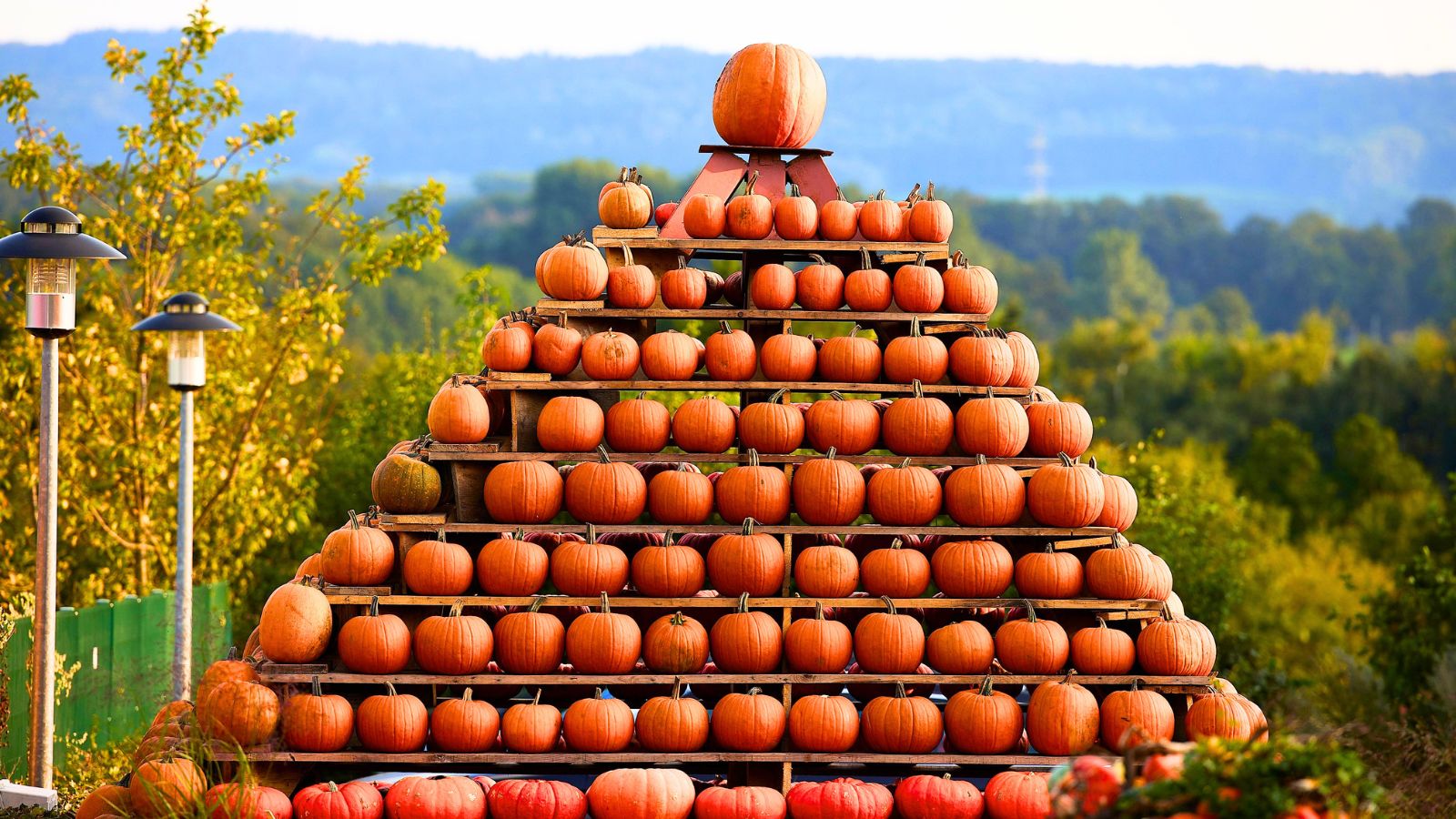
Airbnb’s fall travel data has a name for it: “lore-tripping,” the practice of seeking out towns with a weird backstory over towns with a famous one. The appeal is measurable, and the timing is right. Some of this fall’s most interesting weekends belong to places most travelers couldn’t find on a map last year, built around traditions worth knowing the story behind or worth seeing to believe.
Weekend getaways are on the calendar for 60% of travelers this fall, more than any other season. Among Gen Z, 90% say small towns and under-the-radar destinations appeal to them for fall travel, and nearly half the destinations trending in Gen Z searches are small towns rather than major cities.
Festivals where the backstory doubles the experience
Fire ants were a genuine crisis in East Texas by 1982, an invasive species spreading across the state at 20 to 30 miles a year, killing livestock, destroying crops, shorting out electrical equipment. Counties set up quarantine zones. People ran for state agricultural commissioner on platforms of fire ant eradication.
Amid all that, a group of locals in Marshall, Texas, decided to name their new fall festival after the enemy because it sounded absurd and had a ring to it. Over 30,000 people showed up that first year, and the 44th annual FireAnt Festival hits downtown Marshall on Oct. 10 with a chicken chunkin’ contest, a fire ant calling competition and a gurning contest, a formal competition for ugliest face.
A few states east, the stakes in Banner Elk, North Carolina, are meteorological. The Woolly Worm Festival has run every third weekend of October since 1978, pitting 2,000 woolly bear caterpillars against each other in elimination races up a 3-foot length of string. The winner earns the right to predict North Carolina’s winter: each of the worm’s 13 body segments corresponds to one week of the season, black for cold and snowy, brown for mild.
Saturday’s champion takes home $1,000, and visitors can buy a worm and enter it in the races. The Oct. 17-18 festival draws more than 20,000 people to Banner Elk, with no prior experience in competitive caterpillar racing required.
According to the Manitou Springs Chamber of Commerce, the town’s annual coffin races trace back to a local legend: a young woman who came to Manitou Springs in 1889 hoping the mineral springs would cure her illness, asked to be buried atop Red Mountain when she died, and was.
In 1929, after years of harsh winters and hard rains, a rainstorm sent the young woman’s coffin racing down the mountainside. In 1995, the town decided to recreate it. Teams of five race 195 yards up Manitou Avenue, one rider atop a coffin-shaped contraption and four runners alongside, competing for Best Emma, Best Coffin and Best Entourage. The 32nd annual runs Oct. 24.
For 24 years, the New Hampshire Pumpkin Festival drew crowds to Keene, eventually drawing 80,000 people in a single day and setting a Guinness World Record for most lit jack-o’-lanterns displayed simultaneously: 28,952 in 2003. The festival outgrew the town, moved to Laconia and rebuilt with new energy.
A 34-foot glowing pumpkin tower now anchors Veteran’s Square, joined by laser shows, dancing witches, a Pumpkin Express train and a costumed pet parade. The Laconia Pumpkin Festival runs Oct. 23-24, with free admission, and the jack-o’-lanterns are best after dark.
2 October spectacles that became beloved traditions
Growers spend the summer raising Atlantic Giants to over 2,000 pounds, hollowing them out, fitting them with paddles or small motors and sending costumed competitors racing across a lake. The West Coast Giant Pumpkin Regatta has run every October since 2004 on the Lake of the Commons in Tualatin, Oregon, 13 miles outside Portland. About 20,000 spectators watch from shore for free, with races Oct. 18 at noon and 2 p.m. The night before, a pumpkin weigh-off at a local brewery opens the weekend.
Indiana’s Parke County holds 31 historic covered bridges, more than any other county in the country. In 1957, a group of local women organized a three-day festival to help tourists find them, and that festival now runs 10 days, spans 10 communities and draws about 2 million visitors.
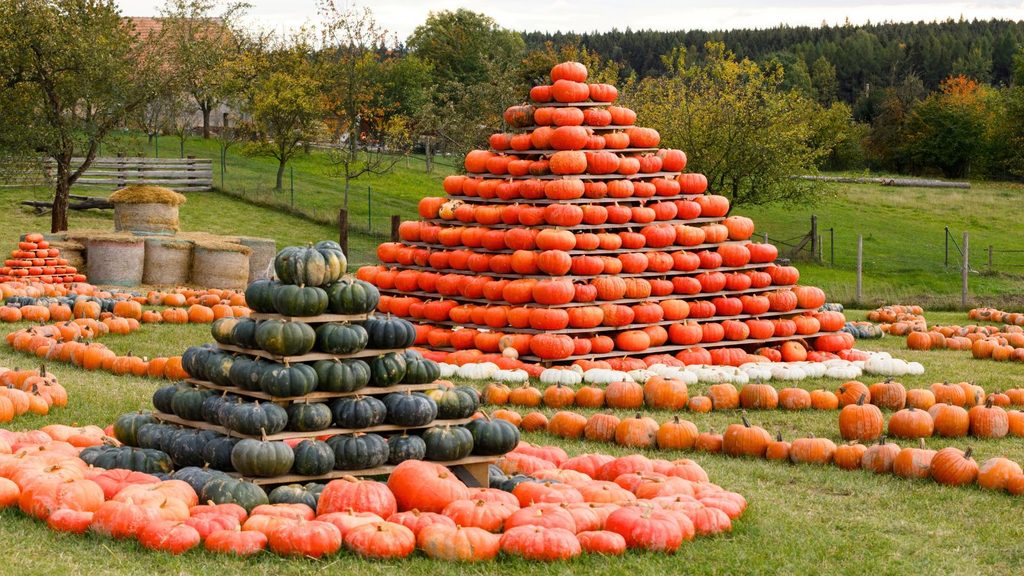
Each town has its own specialty: one does canal boat tours and roast hog, another has an 1872 covered bridge standing beside a one-room schoolhouse from the same era. The 2026 Parke County Covered Bridge Festival runs Oct. 9-18, admission-free countywide. The distance between what those women started in 1957 and what arrives every October now is its own kind of spectacle.
Authenticity precedes the audience
Small towns have always known something that big tourism infrastructure tends to forget: the stranger and more specific a thing is, the harder it is to replicate anywhere else. That irreproducibility is exactly what makes it worth traveling for. The lore-tripping trend Airbnb is tracking this fall isn’t a new behavior so much as a correction, as travelers recalibrate toward places that didn’t build themselves around being visited. Those places are more interesting, and they’ve been there the whole time.
Jennifer Allen is a retired chef turned traveler, cookbook author and nationally syndicated journalist; she’s also a co-founder of Food Drink Life, where she shares expert travel tips, cruise insights and luxury destination guides. A recognized cruise expert with a deep passion for high-end experiences and off-the-beaten-path destinations, Jennifer explores the world with curiosity, depth and a storyteller’s perspective. Her articles are regularly featured on the Associated Press Wire, The Washington Post, Seattle Times, MSN and more.