
You heard the bass before the person carrying it came into view. Boom boxes turned music into something physical: big speakers, chunky buttons, cassette doors, and enough weight to make “portable” feel generous. If you owned one in the 1980s, the memories are not just about what you played. They are about how much work it took to play it loud.
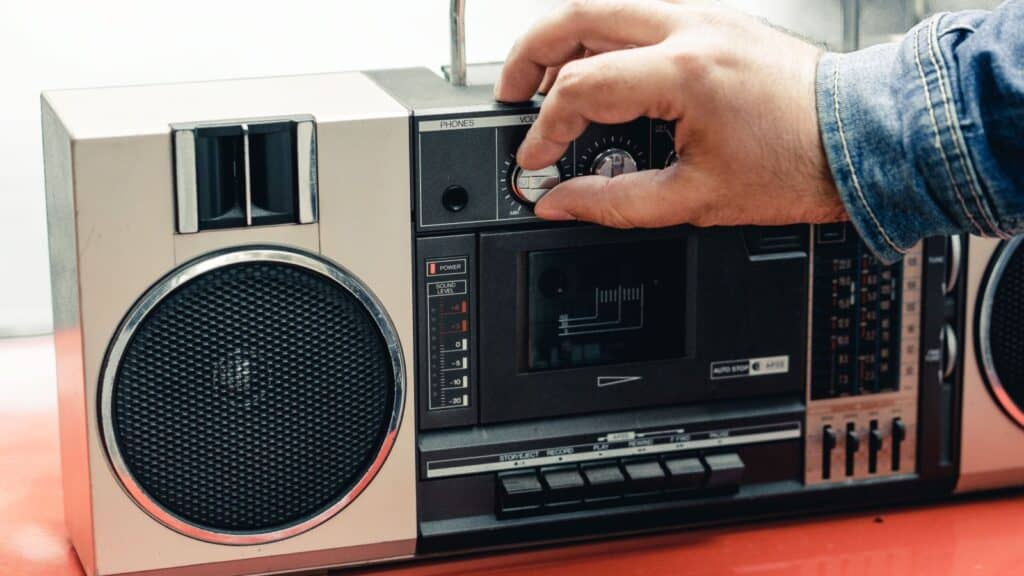
The Shoulder Carry
Boomboxes had handles, but the classic move was to rest one against your shoulder and keep walking. HISTORY notes that teens commonly carried them that way despite the weight. Pop culture gave the machine another unforgettable pose in Say Anything…, where Lloyd Dobler holds a portable stereo over his head outside Diane’s window. Carrying one around felt less like slipping earbuds into your pocket and more like bringing the whole stereo system with you.
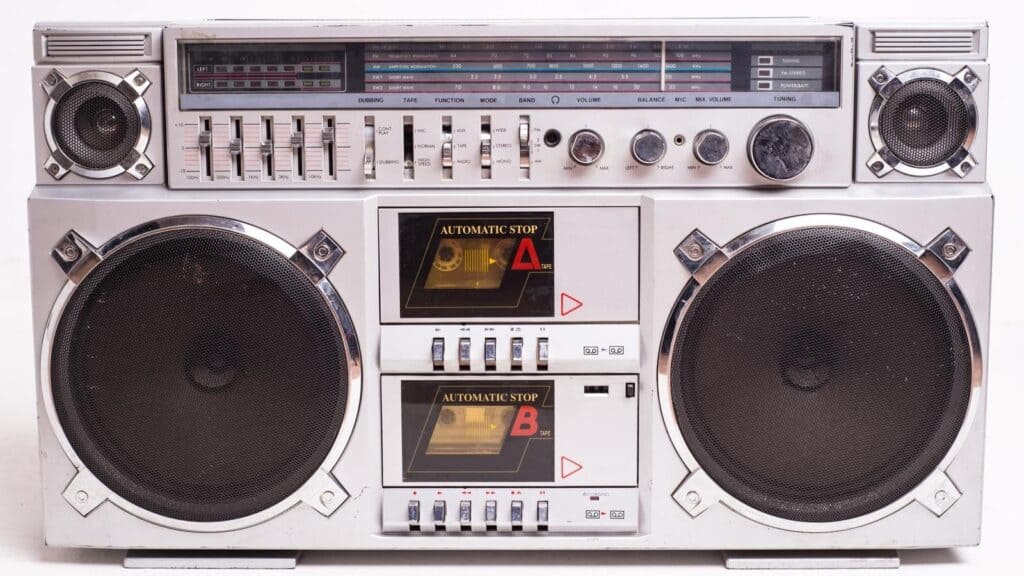
2 Tape Decks Changed Everything
A second cassette deck felt like a serious upgrade. Double-deck boom boxes let you dub one cassette onto another, and Smithsonian notes that the feature helped people copy and circulate music. You could also tape songs from the radio, which made a blank cassette feel like a project waiting to happen. Every copy was handmade in the simplest sense: press the right buttons, watch the tape turn, and hope nobody interrupted the song.
The D-Battery Commitment
Cordless freedom came with a price. Large boom boxes could chew through stacks of D cells, and the numbers got wild fast. Smithsonian Magazine notes that boom boxes could be powered by up to 20 D-cell batteries. That meant portability depended on having fresh batteries ready. Wall power suddenly looked attractive if you wanted to save them.
Those Graphic Equalizer Sliders
Rows of little sliders made the front panel look wonderfully technical. Yamaha explains that graphic equalizers divide sound into frequency bands, with sliders used to boost or cut each range. On a boom box, that meant you could fiddle with different parts of the sound until the music felt right to you. Knowing exactly what each slider did was optional. Moving them around was part of the fun.
The Antenna Dance
Radio reception could turn listening into a small engineering exercise. Philips support guidance for its Soundmachine models tells users to extend, incline, and turn the telescopic antenna for better FM reception. That will sound familiar if you remember changing the antenna angle and moving the boom box around for a clearer station. One tiny adjustment could improve the signal, while the next could send you searching again.

Cardboard, Sidewalks and Breakdancing
Boom boxes became closely tied to breaking and early hip-hop culture because they made it possible to bring the beat outside. Smithsonian describes the machines as integral to breakdancing and street dancing. You did not need a built-in sound system to turn a patch of sidewalk into a place for music and dance.
The Biggest Box Had Bragging Rights
Bigger machines were hard to ignore. HISTORY reports that buyers gravitated toward larger boom boxes for more bass and that big models became status symbols. Big models could also mean a heavier load and a bigger battery appetite, but that was part of the appeal. A giant box with oversized speakers looked like serious equipment before you even pressed play.
When Music Took Up Space
A boom box made listening visible. Your music occupied real space, needed real power, and could become part of whatever was happening around you. Modern listening is easier to carry and easier to keep private, but the old machines asked you to commit to the experience. Maybe that is why people remember the weight, the buttons and the batteries almost as clearly as the songs.