
Grenada rewards travelers who choose a destination for its food. The small Caribbean nation and its sister island, Carriacou, pack an unlikely range of cooking into a single week: a beach shack reached only by boat, a hilltop set menu, a Levantine deck above a bay and a restaurant over a marina of yachts. The two islands sit a short flight apart, close enough to fly to the smaller one for lunch and be back the same afternoon.
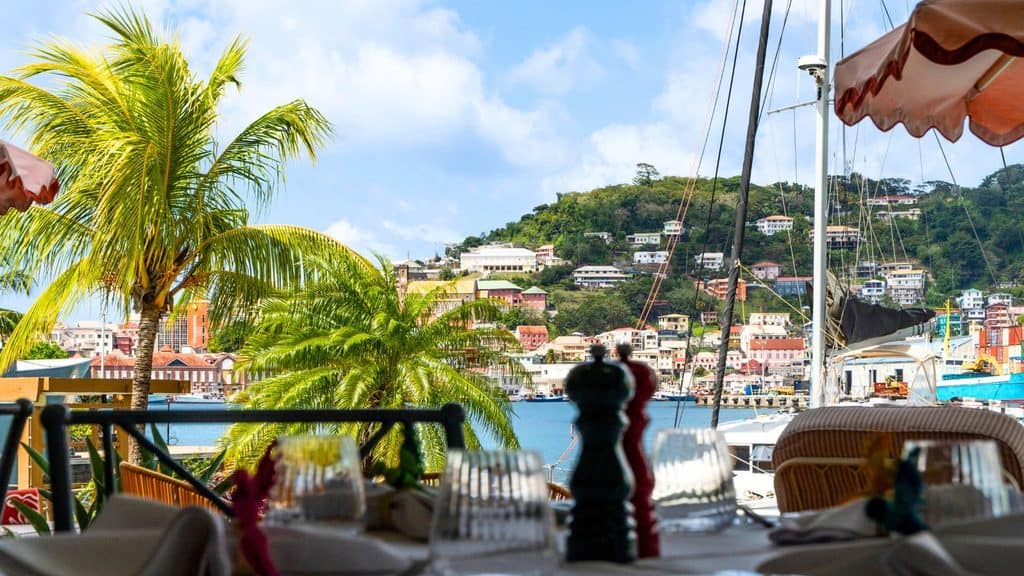
The cooking changes character from one meal to the next, from Creole beach grills to Mediterranean plates over a working marina. The welcome rarely wavers between them. Grenadians with no connection to a guest’s hotel still say hello in the street, and service keeps island time, unhurried at every table, so a day built around two or three meals never feels rushed. Prices swing just as widely, from a few dollars for a rum punch on the sand to the pricier tables up the hill and at the marina.
Food becomes the reason to go
Food is increasingly the reason Americans choose a destination at all. A recent survey found that 61% of respondents chose a place for its food or restaurant scene, though the sample was limited to people who had dined at a hotel restaurant within the past five years.
Nearly half said they spend more time researching where to eat and drink than any other part of a trip. Reservation data pointed to the same trend, with U.S. travelers dining at hotel restaurants up 13% from a year earlier.
A beach bar reached by boat
Tim’s sits on Anse La Roche, a Carriacou cove with no road access, so guests arrive by water, often on a day boat that stops to snorkel and swim with turtles along the way. Lunch comes loaded: lobster alongside grilled chicken and sausage, with fried plantain and cheese-topped grilled breadfruit. Diners eat at long communal tables, with a small Union Jack strung overhead and the sea just steps away.
The chef who left the resort
Dexter’s trades the beach for a hilltop above the coast. Chef Dexter Burris runs the restaurant, having cooked at the luxury Calabash resort before opening his own place. The format is fixed: a set run of courses served with a sunset view over the sea, white cloths and gold-colored cutlery.
Dinner for two, including a lobster main, comes to about $65 per person. Vegetarians aren’t an afterthought; the kitchen prepares a dedicated main course on request: a cheese-gratin-topped bake. The one catch is the hill, steep enough to need a taxi each way.
Levantine food on a Grenadian headland
Brisa Mar fits few expectations of the Caribbean. The restaurant occupies a lantern-lit deck on Quarantine Point, above Morne Rouge Bay, where the kitchen serves Levantine mezze, baba ghanoush, muhammara and beetroot hummus, as the lights come on across the water. It bills itself as a fusion spot, though the small plates read as squarely Eastern Mediterranean, a hillside counterpoint to the beach bars down on the sand.
Dinner at the yacht marina
Chez Louis, above Port Louis Marina, is the most polished of the group. Large yachts line the harbor, superyachts among them, and the kitchen turns Mediterranean, built around a charcoal grill and a raw bar, with plates meant for sharing.
Shared starters open the meal, including a beetroot salad and seasonal vegetable tempura. Prices are in Eastern Caribbean dollars; a plate listed at 68 Eastern Caribbean dollars is about 25 U.S. dollars. The standout is the simplest order, the meatballs, with a house tiramisu close behind.
The beach bars between the resorts
Grand Anse Beach strings the island’s main resorts along a single stretch, with casual bars on the sand in between. 61° West pours generous cocktails and cooks local plates like conch and callaloo a few minutes’ walk from the design hotels. Alternatively, Coconut Beach, a French-Creole shack, fills with locals and strong rum punch after dark. At 61° West, the ice cream comes in local flavors, including nutmeg and Grenadian chocolate.
Getting there from the US
JetBlue and Delta both serve Grenada from the United States, with seasonal nonstop routes, so timing matters. Carriacou is a 20-minute flight or two-hour ferry from the main island. Even so, Grenada still feels like a place that has not been overrun.
A busier island, and where to begin
Visitor numbers are climbing: over this year’s August carnival, arrivals reached 11,299, up 20% on 2025, with foreign visitors up 24%. The place to begin is Carriacou, where a boat ride past deserted sandbars ends with a lobster lunch on a beach no road reaches, the week’s most distinctive meal.
Mandy is a luxury travel, fine dining and bucket-list-adventure journalist with expert insight from 47 countries. She uncovers unforgettable experiences around the world and brings them to life through immersive storytelling that blends indulgence, culture and discovery, and shares them with a global audience as co-founder of Food Drink Life. Her articles appear on MSN and through the Associated Press wire in major U.S. outlets, including NBC, the Daily News, Boston Herald, the Chicago Sun-Times and many more.