
A piece of vintage kitchenware worth several hundred dollars could be sitting in an American thrift store or estate sale right now, priced like junk. Vintage Fire-King glassware and CorningWare have active collector markets with real, documented resale prices, and the pieces that command them look almost identical to the ones worth pocket change. Knowing which is which takes about five seconds if the right details are checked.
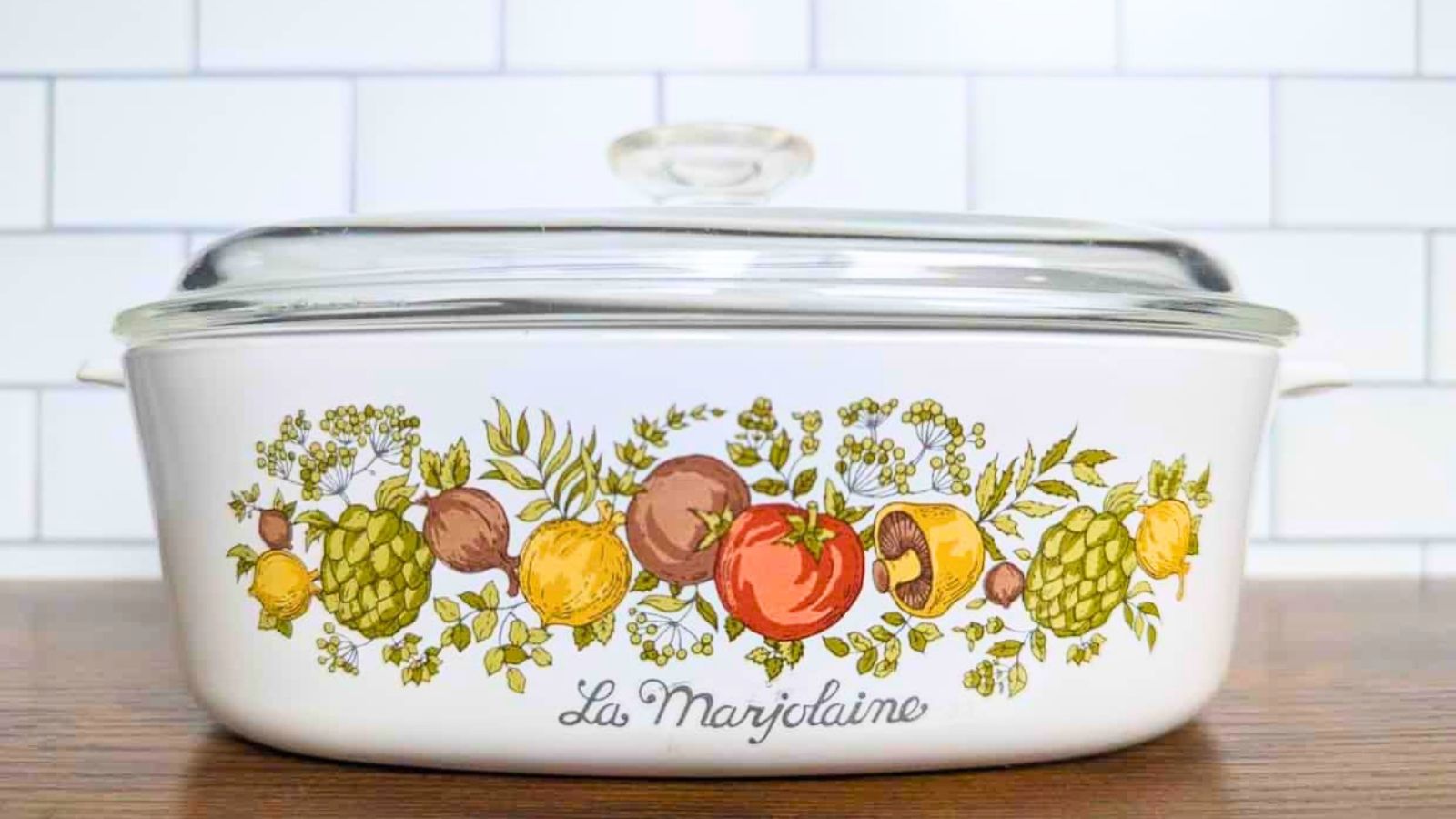
Fire-King launched in 1942, and CorningWare followed in 1958; both became affordable, everyday kitchen staples rather than collectibles. Fire-King was distributed through grocery stores and handed out as promotional premiums across the country. CorningWare went viral a few years ago when screenshots showed pieces listed for thousands of dollars, but those were asking prices, not sold prices. The real numbers are more specific, useful and in some cases still surprising.
What Fire-King is actually worth
Anchor Hocking introduced Fire-King out of Lancaster, Ohio. Its Jade-ite line, that dense, opaque green glass, was built for American diners, hospitals and cafeterias, not for display cases. The mugs were notably heavier and thicker than standard home pieces, designed to withstand drops, stacking and commercial dishwashers without complaint.
The American manufacturer distributed Jade-ite through grocery stores and as promotional giveaways, which put it on tables across the country. Practical, cheap and utterly ubiquitous, Jade-ite has since become a serious collector category, with antiques appraiser Dr. Lori Verderame estimating the general range at $50 to $500 for good-quality individual pieces.
Plain Jade-ite D-handle mugs, with no embellishment beyond the color itself, sell for $15 to $30 each, and sets of six or more regularly exceed $100. Complete sets of nesting bowls and rarer serving pieces can reach $250 to $1,000 for scarce patterns and complete examples, though many sets trade lower depending on pattern and condition. A Jade-ite ball pitcher is considered a holy grail piece among collectors, with authentic examples selling for $400 or more even in imperfect condition.
The Philbe pattern predates the Fire-King name entirely. Anchor Hocking produced it from 1937 to 1938, and it is closely associated with the brand and actively collected alongside it. A single Philbe mug sold on eBay in May 2024 for $449.
The real sleeper in the Fire-King category is the advertising mug. Anchor Hocking produced white milk glass mugs for major American companies, including Harley-Davidson and Burger King, as promotional items never sold in stores. Individual Harley-Davidson mugs typically sell for $50 to $100, though values vary by brand, logo condition and rarity. A set of six or more pushes $500 to $700.
Identifying genuine vintage Fire-King starts at the bottom of the piece. Earlier pieces typically read “FIRE KING OVEN WARE” in block or script lettering, often accompanied by the Anchor Hocking anchor-and-H logo, though markings varied across production periods. The bottom mark is the starting point, not the final word.
What collectors actually pay for CorningWare
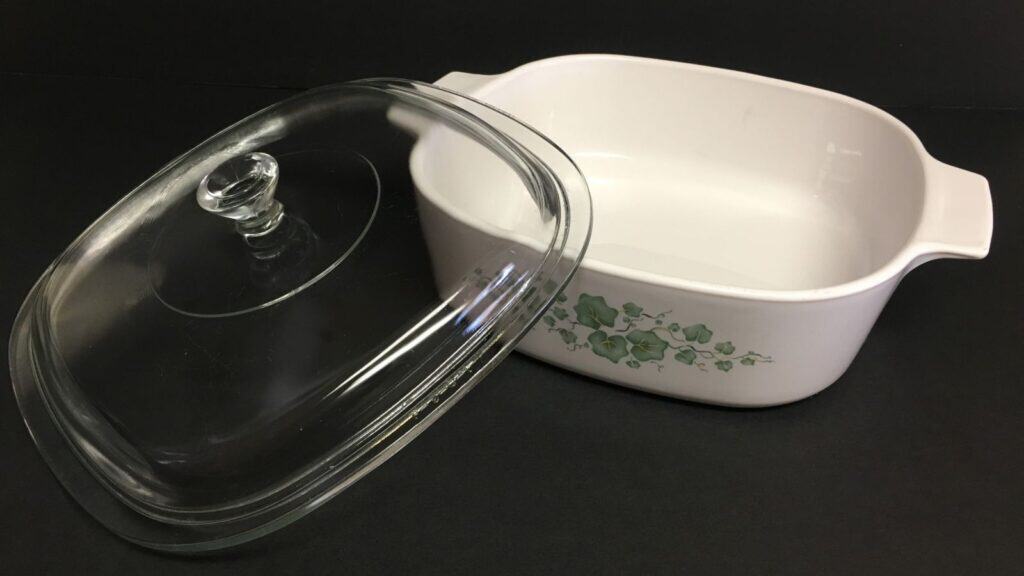
CorningWare’s collector moment arrived a few years ago when social media posts circulated showing pieces listed for $10,000, $25,000, and more. What went unmentioned was that those were asking prices, and asking prices on eBay listings are not what buyers actually paid. Completed sold-listing data tells a sharper story, and for most of the patterns sitting in American kitchens right now, a more modest one.
The Blue Cornflower, with its small blue flowers on white, was produced continuously from 1958 through 1988 and is the piece most American households grew up with. Individual pieces sell between $15 and $36, with a median around $23, based on 41 recent completed sales. Common, but worth pulling from a box before it disappears into a donation bin. The real money is in the rarer patterns.
The Wildflower, with its orange and yellow flowers, was produced in limited quantities from the late 1970s into the mid-1980s and is one of the most sought-after patterns among collectors. Large casserole dishes, 3-quart and above, with original lids in excellent condition can sell for $200 to $500; smaller pieces in comparable condition generally sell for $100 to $200.
Common Wildflower pieces without lids sell considerably lower. The Black Starburst, also called the Atomic Star and produced in very limited quantities, is the pattern collectors actively chase. Individual pieces in good condition sell for $100 to $300, and pristine larger pieces can exceed $500. Complete sets have crossed $2,000.
Original lids can significantly increase a piece’s value. Because those lids broke and were lost over decades of use, a casserole dish with its original matching lid commands a meaningful premium over the base alone. A matching lid by itself sells on its own merit.
One distinction separates collectible CorningWare from pieces with almost no resale value. The original production, made under Corning Glass Works through approximately 2000, used Pyroceram, a glass-ceramic that could travel from freezer to oven to stovetop without cracking. Under new ownership, stoneware production began around 2001, producing heavier, fully opaque pieces that were not stovetop safe and of little interest to collectors. The material and production period matter more than any single date.
How collectors identify what they have
Genuine Pyroceram CorningWare typically reads “CORNING WARE” as two words on its base, accompanied by the Corning Glass Works flame-in-flask logo, though markings varied across generations. Later stoneware often reads “CorningWare” as one word, a useful clue but not the only one to check. Fire-King pieces generally carry “FIRE KING OVEN WARE” in block or script, often alongside the Anchor Hocking anchor-and-H, with markings that changed across production periods. The bottom of the piece is always the best place to start.
Pyroceram also has a faint translucency that stoneware does not. Held up to a bright lamp, genuine Pyroceram lets light pass through; stoneware remains completely opaque. That test is a useful field indicator, and combined with the bottom mark, pattern identification and a check for chips or cracks, it gives a reasonable picture of what a piece is before cross-referencing against sold listings.
From there, searching completed and sold listings on eBay by pattern name alongside the brand name shows what buyers have actually paid, not what sellers are hoping for. The data is current and specific.
The ones worth keeping an eye on
The resale market for mid-century American kitchenware has matured significantly over the past decade, with established collector communities, dedicated price guides and auction records that document what specific pieces actually sell for. As that information becomes more widely available, the price difference between what thrift stores charge and what collectors pay tends to compress, a pattern already visible in adjacent categories like vintage Pyrex. The collectors who have been working this market longest will tell anyone who asks the same thing. The best time to pay attention was 10 years ago; the second best time is now.
Jennifer Allen is a retired professional chef and long-time writer. Her work appears in dozens of publications, including MSN, Yahoo, The Washington Post and The Seattle Times. These days, she’s busy in the kitchen developing recipes and traveling the world, and you can find all her best creations at Cook What You Love.