
An analysis of more than 53 million shopping transactions across 17,000 snack products found that Americans are increasingly asking artificial intelligence what to eat between meals. The finding, from Conagra Brands and research firm Circana, describes a change in the first step of a purchase.
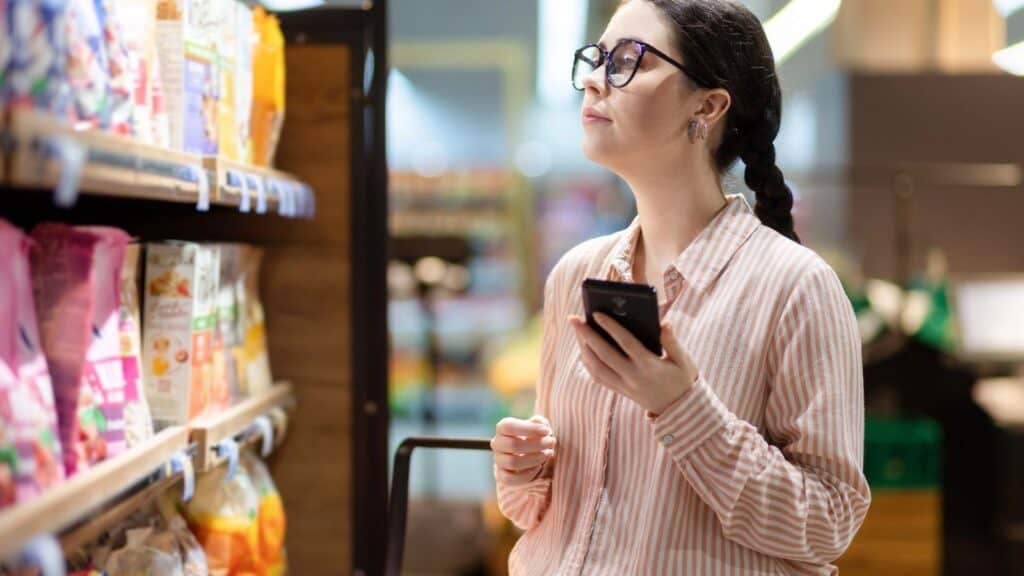
AI snack shopping starts with a need, such as more protein or more fiber, rather than with a brand name. That reordering matters to anyone who sells food. A shopper who types “high-protein snack” into a chatbot never sees the shelf, the end cap or the package.
What the transaction data shows
Conagra, the maker of Slim Jim meat sticks and Angie’s Boomchickapop popcorn, released the findings in its second annual Future of Snacking report. Rather than searching for a specific product, shoppers are asking AI for snacks that meet particular needs, Bob Nolan, Conagra’s senior vice president of growth science, told Reuters. He pointed to cookies and salty snacks as categories that have struggled: “That’s why some of the traditional categories have been under pressure.”
The report covers a snacking market worth $198.2 billion in annual retail sales, according to Circana figures cited in Conagra’s release. The company said it combined the transaction analysis with retail sales, eating occasions, search activity, restaurant menu trends and AI conversations to understand why people choose a given snack, not just which ones sell. It did not publish how many shoppers use AI to choose snacks, so the report does not include the size of the change.
Conagra is also a snack maker reporting on its own category, and several of the trends it highlights line up with products it sells. The numbers come from Circana, an independent research firm, but the framing is the company’s.
Protein first, then fiber
Snacks sold for specific benefits, including protein, energy, digestion and hydration, reached $19 billion in retail sales, up 12.7% from the prior year, according to the report. High-protein snacks alone generated $12.1 billion. Conagra said shoppers now want products that pair protein with fiber, probiotics, collagen or hydration rather than protein alone.
“Snacks are playing a bigger and more personal role in consumers’ lives,” Nolan said in the release, describing a shopper who wants a protein boost one day and a comforting indulgence the next.
A query for protein and fiber does not require a package to answer it. Azifa, the Ethiopian lentil salad dressed with homemade mustard, lemon and jalapeno, is the kind of answer a chatbot can return in a sentence: lentils for protein and fiber, a sharp dressing for the tangy flavor younger shoppers want and an ingredient list the shopper already recognizes.
The ingredient list gets read
Conagra said consumers are examining ingredients more closely. Snacks with recognizable ingredients, simpler formulations and fewer artificial additives represent about $69.4 billion in annual snack sales and products with more specific nutrition claims such as lower sugar or digestive health account for another $71.7 billion. Products made with avocado oil grew 82% in volume over three years as demand for seed-oil-free options rose, and grass-fed meat snacks reached about $720 million in annual sales.
The report does not say whether AI tools are reading the label for the shopper or whether the shopper is reading it more carefully because of what the tool suggested. Either way, the front of the package is losing some of its pull, which makes reading the label a more useful skill than it was a few years ago.
Indulgence with a job to do
Health claims are only part of the story. Conagra found that shoppers increasingly expect one snack to deliver both a treat and a benefit instead of choosing between them. It also found demand for bolder flavors, driven by younger consumers, particularly Gen Z, ranging from sweet-and-spicy combinations to tangy and briny snacks. Chili lime already represents roughly $1 billion in annual sales and sweet chili approaches $400 million. Elevated comfort flavors such as chocolate peanut butter and cookie butter grew 6.4% in a year.
The frozen-dessert end of that trend has already moved into home kitchens. Strawberry cottage cheese chocolate clusters, blended berries and cottage cheese set in dark chocolate, are built on the same bargain the report describes: something that reads as dessert and carries protein.
How much AI is actually in the cart
Conagra’s report measures what people buy. Other data measures how they get there. In a July 2026 survey of U.S. consumers, 42% said they had used AI assistants for online shopping, and traffic referred to retail websites by AI tools grew 62% year over year that month, according to Adobe Digital Insights. Adobe’s figures cover online retail broadly, not grocery alone, and they do not track what happens in a store aisle after a chatbot conversation.
The two datasets share a shopper who arrives already knowing what they want. For a packaged-food company, that is the risk Nolan described: the brand has to answer a question it never heard asked. For the home cook, the same query can land on a recipe. Ask for a high-protein dip with a short ingredient list, and a cottage cheese ranch dip, three ingredients blended in five minutes, fits the prompt as well as anything in the chip aisle, without a label to decode.
The snack shelf is not disappearing. The report describes a $198 billion market growing faster than food overall. What is changing is who, or what, decides which part of it a shopper ever sees.
Shruthi Baskaran-Makanju is the founder of Urban Farmie, where she shares globally inspired vegetarian recipes drawn from cooking in more than 65 countries. A former agriculture and food systems consultant, she writes about how people shop, cook and eat.