
Artificial intelligence now takes over the supply chain, and your next meal could taste better because of it. Major players use automation to streamline sourcing, production and delivery, integrating AI to make faster and more accurate decisions. This level of precision minimizes delays, reduces waste and raises the bar for food quality across the board.
This post may contain affiliate link(s). As an Amazon Associate, I earn from qualifying purchases. See Disclosures.
Leading chains now rely on AI not just for logistics but to shape the entire customer experience. These systems respond in real time to consumer demand, location data and user behavior, allowing brands to adapt faster and serve more consistently at scale.
Smart technology improves food safety
AI helps grocery retailers better forecast product demand, reducing waste from overstocking and unsold goods. Beyond inventory planning, companies adopt integrated platforms that combine blockchain and AI to monitor product movement with greater accuracy. These tools offer full-chain visibility, helping uphold food safety standards and trace goods in real time.
Systems like IBM’s Supply Chain Intelligence Suite can flag potential risks by analyzing data from various points, including storage temperatures and transportation logs. Companies also use image recognition and smart sensors to detect spoilage or defects before items reach store shelves. In contamination cases, these technologies allow teams to quickly identify and isolate affected products, tightening recall efforts and minimizing disruption.
Redefine freshness and flavor
Artificial intelligence changes how suppliers source ingredients by improving traceability throughout the food system. From the point of harvest to store shelves, AI makes it easier to track produce accurately and transparently, boosting consumer trust. Algorithms now help suppliers and retailers factor in shifting customer behavior, seasonal trends and market activity when ordering stock. These insights help businesses secure ingredients at the right moment while maintaining freshness and relevance.
AI speeds up order processing
Food distributors increasingly turn to AI to boost efficiency and cut operational costs. One standout example is Choco, which has launched a fully autonomous AI system that processes sales orders without manual input. Its Autopilot feature evaluates each incoming order, checks it for accuracy, and either processes it immediately or flags it for human review. This shift eliminates the need for back-office verification, freeing sales teams to focus more on customer relationships rather than data entry. It’s a major step toward streamlining how food moves through the supply chain, from purchase to delivery.
AI transforms recipe development
Menu development now leans on AI not just for analytics but for real-time adaptation. As demand shifts due to ingredient shortages, regulatory changes or consumer trends, AI tools step in to recommend replacements that preserve taste and quality. These systems help food producers reformulate recipes by swapping synthetic or restricted components with natural, approved alternatives that still deliver on taste.
Some producers use AI to engineer entirely new versions of familiar foods. Through molecular analysis and flavor modeling, AI helps replicate the texture, taste and performance of items like dairy using plant-based or lab-cultured ingredients. The result? Food that meets modern dietary, environmental and labeling standards while staying surprisingly close to the original.
Quality control gets smarter
AI-driven tools raise the bar for quality control in the food supply chain. Smart labels with QR codes give consumers real-time access to data on food origin, nutritional content and freshness, adding transparency at the point of purchase. Inside the packaging, embedded sensors track temperature and oxygen levels, letting AI systems detect spoilage or safety risks before products reach the shelf.
On the production side, AI-powered robotics manages complex packaging tasks with greater speed and accuracy. This level of automation reduces errors, improves consistency and ensures tighter quality control from factory to consumer.
AI behind the counter
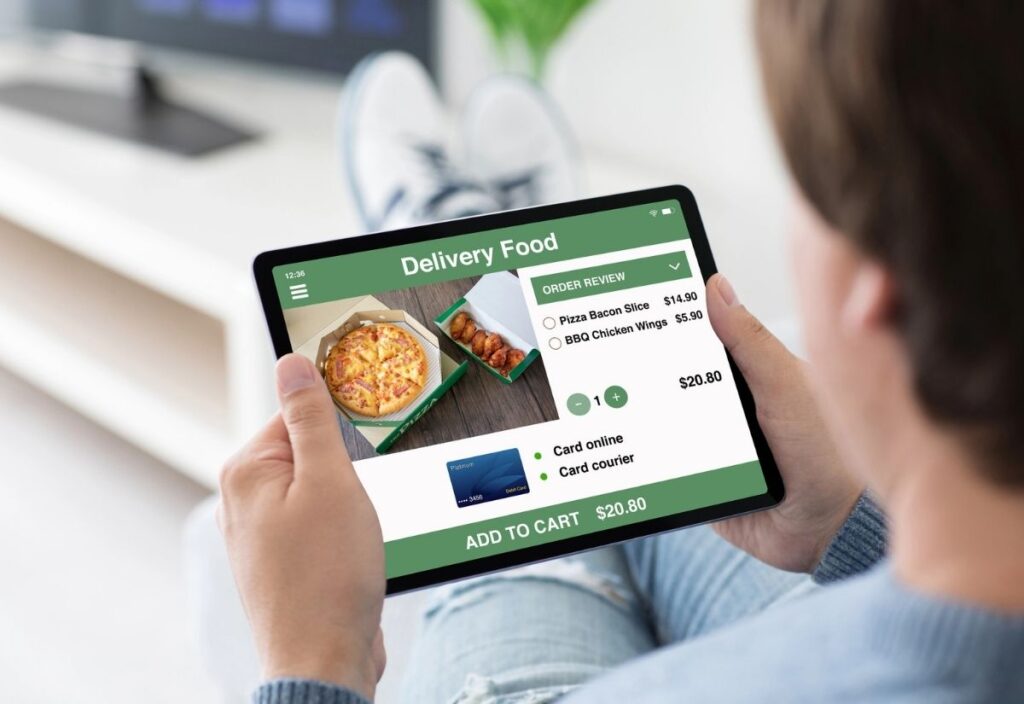
Taste, consistency and freshness are getting a major upgrade as restaurants turn to AI for more control in the kitchen and beyond. Major brands lead the push with systems designed to improve everything from order flow to delivery timing. Yum! Brands, which owns Taco Bell, Pizza Hut and KFC, has launched an AI software suite called Byte by Yum! that streamlines digital ordering, coordinates food preparation and manages delivery logistics.
Uber Eats now uses AI to optimize delivery routes and customize menu suggestions. Serve Robotics’ autonomous sidewalk robots handle deliveries in select Los Angeles neighborhoods and restaurant partners, offering a glimpse into limited-scale automation without human drivers.
Smart systems take over
AI in the food supply chain is no longer limited to operations behind the scenes. It now plays a visible role in how food is sourced, prepared, packaged and delivered. These technologies help make meals smarter, safer and more aligned with shifting consumer and environmental demands. While adoption may vary and some tools are still in development, the impact is already clear. Artificial intelligence is no longer a new concept in food, but a present force transforming the industry.
Mandy Applegate is the creator behind Splash of Taste and seven other high-profile food and travel blogs. She’s also a co-founder of Food Drink Life Inc., a unique and highly rewarding collaborative blogger project. Her articles appear frequently on major online news sites, and she always has her eyes open to spot the next big trend.