
Ask three people how to build a proper hot dog, and you might start an argument, because where you’re standing decides the rules. This summer, that argument has spread well past sports bars, landing on real restaurant menus and picking up genuine culinary respect right in the middle of National Hot Dog Month.
Hot dogs have quietly powered American summers for over a hundred years, but nobody talked about them like this before. Now there’s a real debate about what belongs on one, and where you’re standing decides the answer. That’s exactly why this July feels different.
The numbers behind that conversation are hard to ignore: Americans eat about 7 billion hot dogs between Memorial Day and Labor Day, roughly 818 every second all summer. July alone accounts for 10% of annual retail hot dog sales, and on the Fourth of July, the country puts away an estimated 150 million hot dogs in a single day. Analysts now put the U.S. hot dog and sausage production industry at $26.4 billion in 2026, with premium versions leading the growth.
Chicago and New York can’t agree on one thing
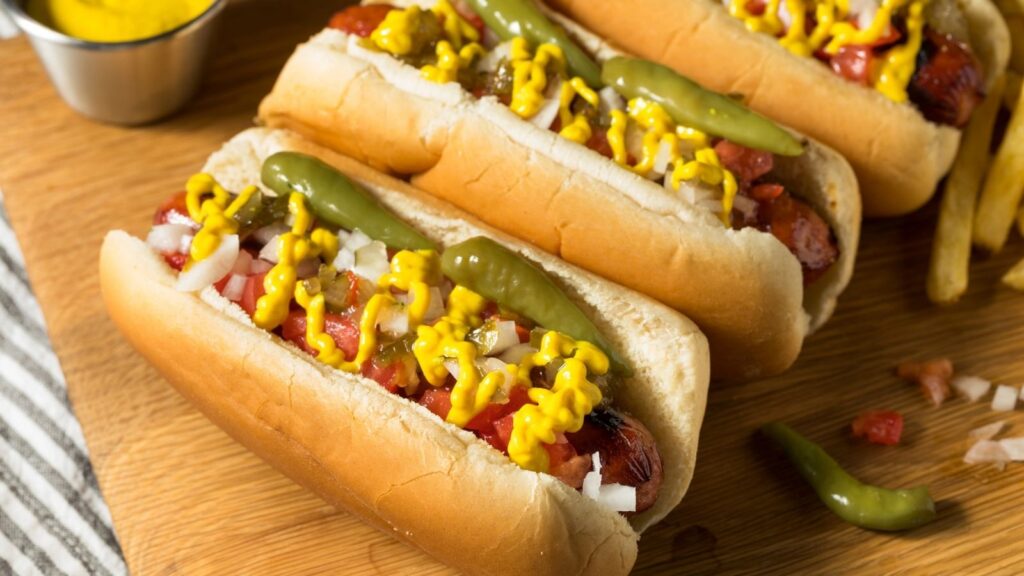
Chicago treats its hot dog like scripture. The build is exact: an all-beef frank on a poppy seed bun, yellow mustard, chopped onion, tomato, a pickle spear, sport peppers and celery salt. Ask for ketchup, and you’ll get a look, because in Chicago, skipping it isn’t a preference; it’s the law of the land.
New York goes the opposite direction. An all-beef frank, mustard and a choice of sauerkraut or onion sauce, served fast off a cart. It’s built for a city that’s been eating lunch on the move since the push-cart vendors of the 1890s, and it doesn’t apologize for keeping things simple.
Tucson’s Sonoran dog gets its own trail
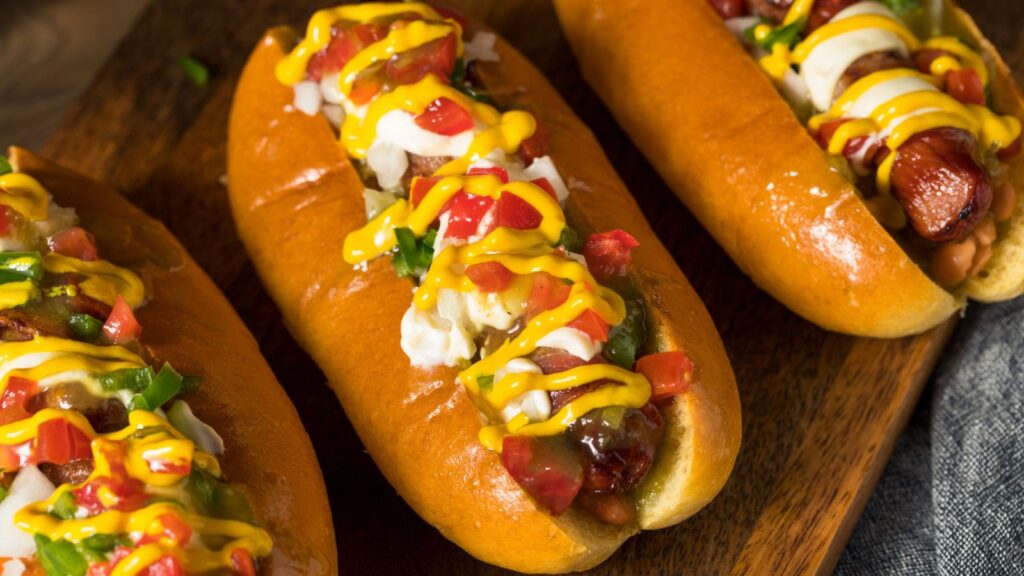
Tucson might be the most food-forward stop on the regional hot dog map right now. The Sonoran dog started in Hermosillo, Mexico, and crossed the border into Arizona, where it never left. Picture a bacon-wrapped, all-beef frank in a soft bolillo bun, piled with pinto beans, tomato, onion, mustard, mayonnaise and jalapeno salsa.
In February 2026, Visit Tucson launched the Sonoran Dog Trail, a self-guided app that points locals and visitors to the city’s best stops, including a James Beard America’s Classics winner. It’s one more reason Tucson holds onto its UNESCO City of Gastronomy title.
That same ambition is showing up on menus far from any hot dog cart. At Lefty’s West End Tavern in Greenville, South Carolina, one signature frank stays on the menu year-round, and a second changes every month to riff on a different ballpark hot dog. In May 2026, the feature was a Sonoran dog inspired by the Arizona Diamondbacks.
So next time someone hands you a hot dog, look a little closer. There’s a good chance somebody put more thought into it than you’d expect.
Jennifer Allen is a retired professional chef and long-time writer. Her work appears in dozens of publications, including MSN, Yahoo, The Washington Post and The Seattle Times. These days, she’s busy in the kitchen developing recipes and traveling the world, and you can find all her best creations at Cook What You Love.