
The picture most people carry of a wine trip is fixed: rolling rows in Napa or Sonoma, a cellar in Bordeaux, a Tuscan hillside at golden hour. It is a lovely picture, but it is increasingly out of date. Americans are pouring billions into wine travel, and a growing share of that money is leaving California behind for colder, stranger and older places most people could not find on a wine map.
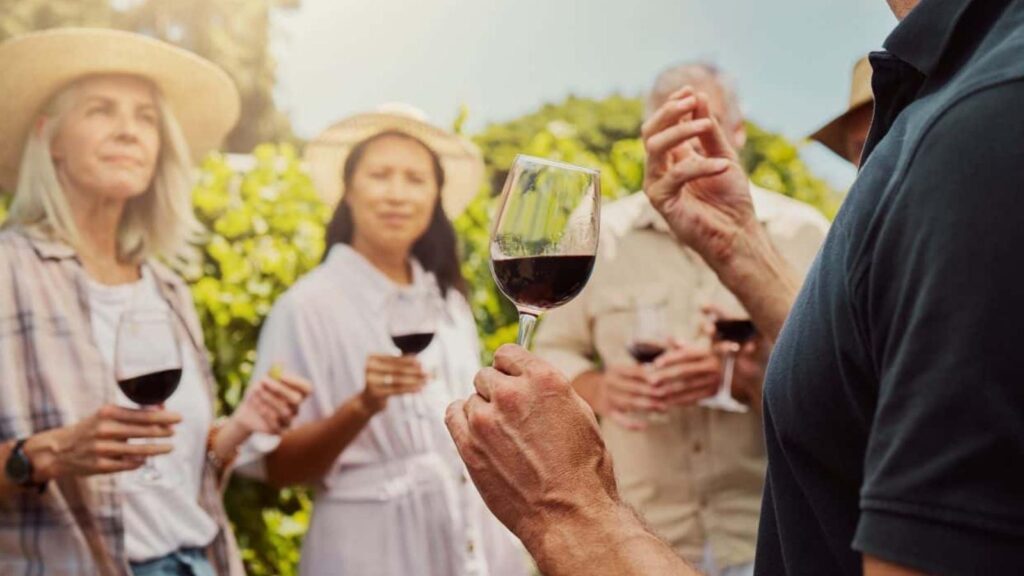
The map of where wine happens has quietly redrawn itself, and the new coordinates surprise even people who thought they knew wine country. Part of the change is what travelers now want from a trip. Fewer people are content to sip behind a tasting bar; they want to walk the rows, see how the wine is actually made and eat where it is poured. There is a quieter paradox in it, too. People are drinking less wine and traveling more to stand in the places it comes from, treating the vineyard as somewhere to understand a bottle, not just buy one.
The numbers behind that shift are not small. Seventy-four million visits to U.S. wine country and about $14.13 billion in tourism spending flow through the industry each year, and a rising share now points somewhere other than the usual valleys, toward countries most travelers could not have placed on a wine map five years ago.
Where wine was born, 8,000 years ago
Start in Georgia, the small Caucasus nation with a fair claim to being the birthplace of the whole craft. Winemaking here stretches back more than 8,000 years, and the method that defines it is still in daily use. Grapes ferment inside qvevri, large egg-shaped clay vessels buried underground, a tradition UNESCO added to its list of intangible cultural heritage. The wines that emerge, often amber, textured and nothing like a supermarket bottle, have made the country a magnet for travelers who want their wine with several thousand years of history behind it.
The world’s largest cellar sits in Europe’s least-expected corner
Moldova, wedged between Romania and Ukraine, is one of Europe’s fastest-growing destinations, with international arrivals up 62% in the first half of 2025 compared with pre-pandemic levels. The draw is partly underground. Outside Chișinău, the Mileștii Mici cellars hold the largest wine collection in the world, with tunnels of bottles running for miles and tastings that start around $90.
A Champagne house bet on Kent, and the frontier kept moving north
The clearest sign that the climate is rewriting the map is who is planting where. Champagne Taittinger opened Domaine Evremond in Kent in late 2024 and released its first English sparkling wine the following spring, the first time a Champagne house has built an English estate from the ground up. The site was chosen for chalk soils and south-facing slopes that echo Champagne itself.
The frontier runs further north still. Sweden has grown from two commercial vineyards 15 years ago to roughly 40 today, helped by southern temperatures that have climbed about 3.6 degrees Fahrenheit over three decades, and the world’s northernmost commercial vineyard now sits in Telemark, Norway.
In Kenya, a wine cellar in a water tower
Africa’s wine story reaches well beyond the established estates of South Africa. In Kenya’s Laikipia highlands, Segera Retreat keeps its cellar inside a converted water tower, where a private tasting or a dinner among the bottles is arranged on request rather than ordered from a list, often steps from where elephants pass at dusk.
Further west, Dakar has built a small but serious wine-bar culture, and Ethiopia pours tej, a honey wine with a history all its own. The industry is taking notice. The continent’s biggest travel trade show added a dedicated wine tourism program for 2026.
What the numbers say comes next
None of this is a niche curiosity any longer. The first Global Wine Tourism Report, published in 2025 by Geisenheim University with the UN World Tourism Organization and partners, drew on responses from 1,310 wineries across 47 countries and found that tourism now generates around a quarter of total winery revenue.
Wine drinking is softening worldwide, yet visits to wineries are doing the opposite, and producers are building for it. Hotels and resorts increasingly stage the experience themselves rather than leave it to the vineyards. W Algarve, in southern Portugal, is launching a sommelier-led dinner series with the centuries-old Douro producer Van Zellers, making the wine itself the reason to book the trip.
There is a short-lived advantage in all of this. The regions that feel improbable now, a clay vessel buried in Georgia or a vineyard inching up the Swedish coast, are on the same path Napa walked 50 years ago, from curiosity to crowded. The travelers paying attention are the ones going while these places are still discoveries rather than destinations, before the maps catch up and the prices follow.
Mandy is a luxury travel, fine dining and bucket-list-adventure journalist with expert insight from 47 countries. She uncovers unforgettable experiences around the world and brings them to life through immersive storytelling that blends indulgence, culture and discovery, and shares them with a global audience as co-founder of Food Drink Life. Her articles appear on MSN, Yahoo and through the Associated Press wire in major U.S. outlets, including NBC, the Daily News, Boston Herald, the Chicago Sun-Times and many more.