
Want to try composting but your small space just won’t allow it? More apartment residents are folding food-scrap sorting into everyday cleanup rather than treating composting as something only homes with yards can do. With more than a third of U.S. households renting, apartment composting is poised to redefine how the country handles food waste.
This post may contain affiliate link(s). As an Amazon Associate, I earn from qualifying purchases. See Disclosures.
Sustainable Packaging Coalition research states that 35.9% of the sampled U.S. population had access to composting programs in October 2025, up from 27% in 2020. The increase suggests apartment residents now have more options for composting through curbside collection and drop-off programs instead of relying solely on backyard systems.
Collection programs make composting possible
For many apartment residents, composting begins with the means from outside their homes. Sustainable Packaging Coalition found that 17.8% of the sampled population had access to curbside or drop-off programs that accept only food waste, while 18.1% were also allowed to include some compostable packaging.
The Environmental Protection Agency, or EPA, says people who do not have room to compost on-site can use a local municipal or community composting program that offers collection service or a designated drop-off location. For renters, this creates a practical way to move scraps out of the home without managing a full compost system indoors.
Reliable pickup or drop-off can turn composting from a good intention into something residents can keep doing. In apartment buildings and dense neighborhoods, that kind of access lowers the effort and makes the habit easier to maintain.
Sealed storage keeps kitchens workable
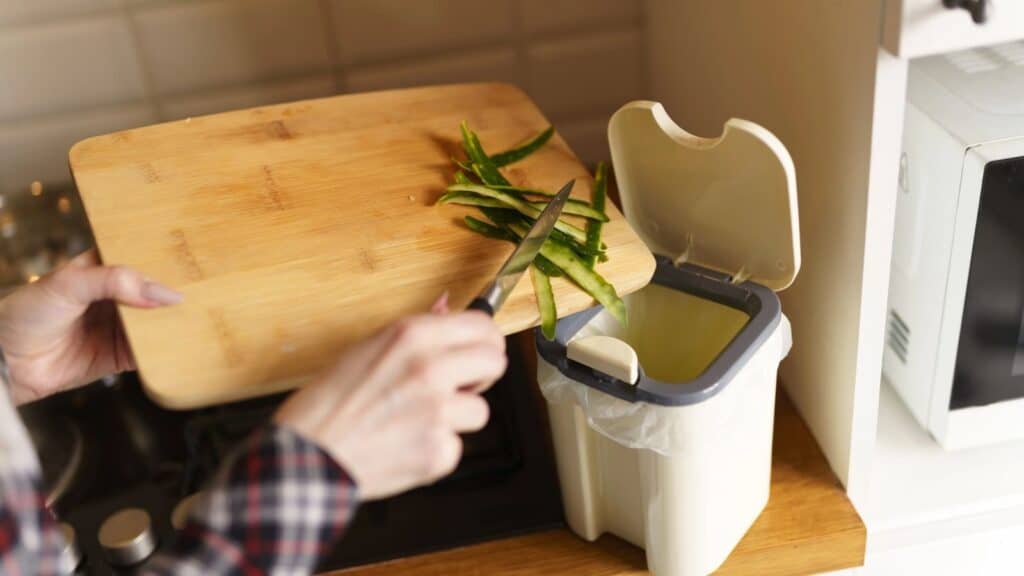
Once collection or drop-off is available, the main at-home solution is storage that fits the apartment. Scraps can be kept in a closed container on a counter, under a sink or in the fridge or freezer, which offers several manageable ways to keep food waste in a smaller home.
Those storage options help control odor, reduce pests and keep scraps contained between pickup days or drop-off trips. A sealed bin helps maintain order in the kitchen, while a fridge or freezer can make the process easier for beginners.
For residents who have avoided composting because they pictured a messy setup, the routine can be far simpler than expected. In many apartments, it can be as basic as collecting scraps in a lidded container and taking them out on a regular schedule.
Indoor systems depend on the scrap type
Apartment composting also works better when the setup matches the kind of scraps a household actually produces. EPA says indoor worm bins work for fruit and vegetable scraps, tea bags without staples, coffee grounds, paper filters and crushed eggshells, but they should not take meat, dairy products, bones, greasy foods or pet waste.
An indoor worm bin makes the choice fairly practical in smaller homes. Households that mostly produce scraps may find it manageable, while those with a broader mix of food waste are better matched with an outside collection program that can take more materials.
Building support reduces apartment friction
Composting is easier for residents when buildings are set up to support it. In a 2025 post on multifamily food-scrap diversion, RIT’s Golisano Institute for Sustainability said resident education, simple tools like kitchen caddies and consistent signage are key to participation, and it recommended starting small and adapting over time.
For landlords and property managers, that can mean giving residents a kitchen caddy, posting easy instructions near collection areas and adjusting the program as tenants learn the system. In shared housing, composting becomes easier to maintain when the building supports the habit rather than leaving residents to figure it out on their own.
Apartment composting becomes routine
Composting will become ordinary only when it fits the homes people already have, not the ideal setup they do not. In practical terms, progress now depends less on backyard space and more on whether renters can reach a simple, dependable system where they live. When that access feels as normal as taking out the trash, composting starts to settle into daily home life.
Mandy writes about food, home and the kind of everyday life that feels anything but ordinary. She has traveled extensively, and those experiences have shaped everything, from comforting meals to small lifestyle upgrades that make a big difference. You’ll find all her favorite recipes over at Hungry Cooks Kitchen.