
Foodies love Barcelona. It is a full-on flavor adventure — think sizzling tapas, spirited markets, creamy cheeses, ocean-fresh seafood and a drizzle of olive oil on just about everything. It’s one of my favorite foodie cities, and the best part? You don’t need a two-week itinerary or a degree in gastronomy — you just need an appetite and a little curiosity.
This post may contain affiliate links that may earn us a commission. For more information, see our Disclosures.
Market hop and snack like a local
In Barcelona, markets aren’t errands. They’re events. Wander the aisles, try what’s handed to you and follow the scent of sizzling chorizo. This is where Catalan flavors live and breathe. They are living, pulsing epicenters of food, and sure, there are tourists, but that just adds to the urban vibe.
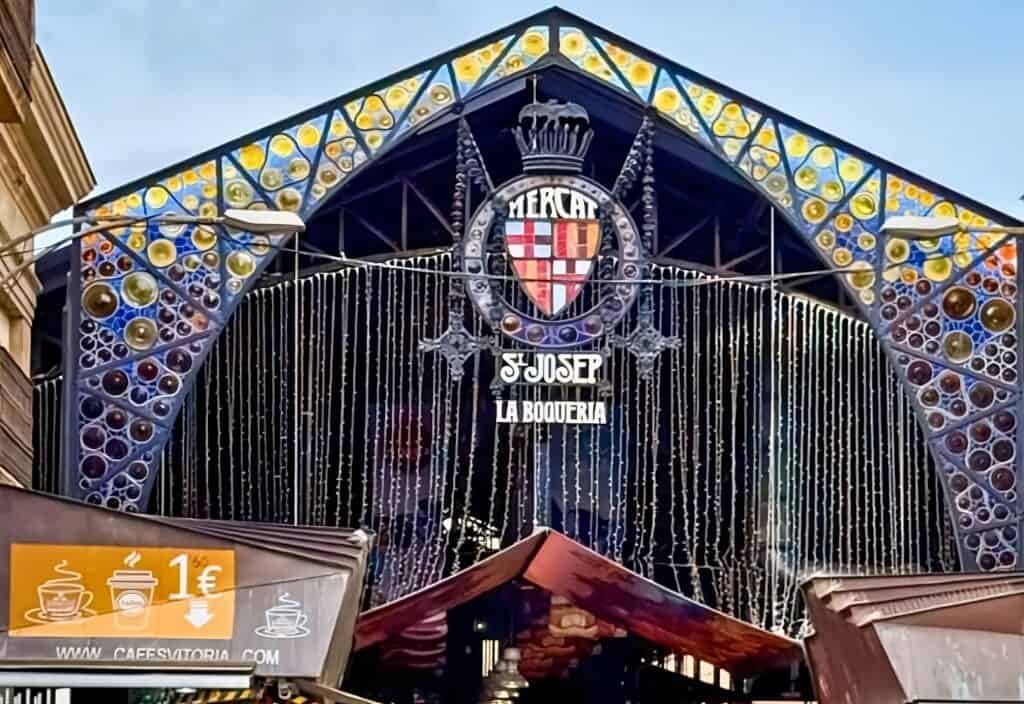
Mercat de la Boqueria
One of Europe’s most famous food markets right off La Rambla, Mercat de la Boqueria has been serving up bold flavors since the 13th century. Locals love it, chefs swear by it — and yes, it’s crowded. Home to several counter-style tapas bars perfect for a quick bite, locals pull up for a quick tapa and a chat, often standing shoulder-to-shoulder with chefs on their midday break. It’s fast, flavorful and as local as it gets.
So far, this is my favorite European market — the dazzling colors of all the fruit and fresh juices, the serrano ham shaved fresh off the bone is enough to impress this die-hard foodie. And the seafood? It is so fresh, we watched them clean sea urchins and hand them out for 5 euros each. Or, check out the counter bars. Just pull up a stool, order whatever’s sizzling and dig in. There’s something for everyone at this market, and I didn’t get to sample nearly enough.
Pro tip: Markets usually open around 8:00 or 8:30 a.m., but it takes vendors a while to get fully set up. Aim for mid-morning — you’ll dodge the big crowds and hit the sweet spot for variety and freshness.
Santa Caterina Market
Santa Caterina Market is a few blocks away from the tourist crush — and that’s part of its appeal. Located in El Born near the Cathedral of Barcelona, it’s known for its modern architecture and undulating multicolored roof. Great for sampling cheeses, cured meats and olive oils, this market offers a more relaxed vibe than La Boqueria and is less touristy.
Inside, you’ll find a mix of traditional stalls, a full supermarket and even a restaurant — all wrapped into one colorful, open space. The market manages to blend the everyday with the exceptional. You can browse fresh-cut jamón one minute, then sit down to a quiet, thoughtfully plated lunch the next. It’s that mix — vibrant but unhurried — that gives Santa Caterina its local charm.
El Nacional
Less market, more multi-course experience. Step inside El Nacional and you’ll find a sleek, upscale multi-space dining venue near Passeig de Gràcia that offers a curated take on Spanish regional cuisine. Housed in a restored industrial building with stunning Art Deco design, it includes multiple bars and restaurants under one roof — from seafood to tapas to grilled meats. It’s a great option for a sit-down lunch that still gives you variety and style.
I wandered through each section like I was browsing a gourmet gallery — one moment eyeing a plate of grilled octopus, the next debating which bar had the most tempting vermouth selection. Tapas, seafood, grilled meats — it’s like a choose-your-own-adventure for your palate. Bonus: it’s all sourced with care and served with serious flair.
Pro tip: Vermouth is a local specialty. This isn’t the spirit that you make martinis with. Instead, it’s a rich, fruit-forward fortified wine and it’s well worth seeking out.
Taste tradition
Many of Barcelona’s oldest bakeries still use time-honored methods and ingredients, their storefronts filled with the scent of sugar and butter. These places aren’t about nostalgia — they’ve simply never stopped doing what they’ve always done. Cafes and pastry shops remain part of the city’s daily rhythm, serving pastries and drinks that locals swear by and visitors quickly come to crave.
Granja Viader
Granja Viader is a breakfast classic near La Rambla, open since 1870. It’s still family-run and full of vintage charm, with marble tables and the kind of atmosphere that makes you want to slow down and sip slowly. I slid into a corner table one morning and barely glanced at the menu — the scent of chocolate alone was convincing enough.
Try the thick hot chocolate — it’s practically pudding — and melindros made for dunking. And if you’ve ever had a Cacaolat, Spain’s beloved chocolate milk, you’ve got Granja Viader to than. This is the kind of place where locals chatted over pastries, with a steady hum of quiet conversation in the background. It felt like the kind of place where mornings are meant to begin — unhurried, sweet and just a little bit indulgent.
La Colmena
Step into La Colmena and you’re stepping into pastry history. Founded in 1849, it’s one of Barcelona’s oldest bakeries, still using traditional recipes passed down through generations. Known for handmade Catalan pastries like panellets, neules and turrón, it’s a go-to spot — especially around the holidays — for festive sweets like roscón de Reyes.
The display cases are stacked with golden rounds, sugared twists and delicacies with names you might not pronounce but absolutely want to try. I walked in for “just one thing” and left with a paper bag full of almond-studded sweets I swore I’d save for later. (Spoiler: I didn’t.)
Caelum
Tucked into a quiet street near the Cathedral, Caelum isn’t your average pastry shop. Almond cakes, candied fruit and a rotating lineup of pastries steeped in history fill the cases. Housed in a former Jewish bathhouse, the space is now a warm and inviting café with exposed stone walls that date back centuries, offering a tangible connection to Barcelona’s layered past. What makes it truly special? The sweets — all convent-made by nuns from monasteries across Spain.
Head downstairs and you’ll find the tea room — quiet, dimly lit and removed from the buzz of the street above. It feels like you’ve stepped into a private little hideaway. It’s the kind of place where time slows down, tea is poured gently and nobody’s rushing you out the door. For a few quiet minutes, it’s just you, your tea and a pastry that tastes like it came from another time.
Granja Dulcinea
A cozy, old-world granja popular for churros con chocolate, Granja Dulcinea has been operating since the 1940s and still holds onto its charm. Located right off Carrer Petritxol — a narrow, sugar-scented street lined with sweet shops — this spot has long been a favorite, even of Salvador Dalí. That alone should tell you it’s got character.
It’s part of a tradition that’s uniquely Catalan: the granjas, old-fashioned dairy cafés where you go not just to eat, but to indulge. Dulcinea serves up the kind of thick, rich hot chocolate that begs for dunking, and the churros come golden and crisp, with just the right hit of sugar. I found myself caught up in the warmth of it all — both the cup in my hands and the atmosphere around me. The scent of cocoa hung in the air like a blanket, and every surface — from the marble counter to the faded walls — carried a kind of comforting stillness.
Michelin-star moments
Spain has once again raised the bar — with 291 Michelin-starred restaurants across the country (plus one in Andorra), as reported by MICHELIN Guide. It’s clear that this region continues to shine as one of the world’s most exciting food destinations — a place where culinary craft meets culture, and where even first-time diners can feel like insiders at the table. And Barcelona? It’s right in the thick of it.
No matter what city I’m in, I always try to enjoy a meal at a Michelin restaurant, and Spain’s offerings were just too many to ponder. Here’s where I dined, and if I had to pick just one to return to, it’d be Mercer Restaurant.
Oria
Located in the sleek Monument Hotel and helmed by chef Martín Berasategui, Oria offers contemporary Mediterranean cuisine with refined Basque roots. The space itself is minimalist yet striking — clean lines, soft lighting and just the right amount of drama. This Michelin-starred spot leans into culinary innovation with seasonal ingredients that sing on the plate. The tasting menus are elegant, featuring everything from melt-in-your-mouth seafood to delicately prepared meats. Not fussy or over-the-top — just thoughtful and deeply satisfying. Every bite lands with quiet confidence.

Caelis
Inside Hotel Ohla Barcelona is one of the few Michelin-starred restaurants in Barcelona that offers a full vegetarian tasting menu — a thoughtful touch for plant-based foodies navigating the fine dining scene. Caelis is known for its bold creativity and beautifully executed tasting menus. Chef Romain Fornell blends French technique with Spanish ingredients in ways that feel fresh but rooted.
Menu options include a multi-course experience or a more accessible “Caelis Menu” for lunch, so you don’t have to commit to a long evening to enjoy what’s on offer. The open kitchen adds a sense of theater — I sat near the front once and felt like I had a backstage pass to a culinary performance.
Pro tip: Ask for a table with a view of the kitchen for a front-row seat to the culinary magic.

Mercer Restaurant
Recognized with a prestigious Michelin Key for its exceptional hospitality and culinary excellence, I had a stunning multi-course tasting menu at the flagship Mercer Restaurant at the Mercer Hotel in the Gothic Quarter. Executive chef Xavier Lahuerta is at the helm. He’s known for refined techniques and a love for seasonal, local ingredients. Sommelier Luis Roig hosted our dinner, and afterwards, the chef came out to talk to us for a few minutes, which was a lovely, personal touch.
The menu is a modern take on Catalan cuisine, where innovation and tradition meet in an intimate setting. We followed dinner with a cocktail in the bar area, a cozy spot that’s perfect for before or after dinner drinks. The mixologist crafted amazing drinks — balanced, inventive and just the right finish to a really memorable night.
Dining at Mercer Restaurant is like stepping into a time capsule — Roman stonework, medieval arches and dishes that balance bold flavor with elegant restraint. When I walked in, I felt the calm and serenity of the space. It was kind of like history itself had slowed down to make room for dinner.
Dine with a view
You know that feeling when a great meal is made even better by what you see just beyond your plate? That’s what dining in Barcelona can be like. At some restaurants, the views aren’t just backdrops — they’re part of the experience. Rooftop terraces, skyline-toasting wine bars and quiet balconies make every sip and bite just a little more memorable.
360º Terrace at Barceló Raval
If you’re looking for a view that stretches across all of Barcelona, the 360º Terrace at Barceló Raval delivers. Perched high above the Raval neighborhood, this rooftop bar wraps the entire top floor of the hotel, offering sweeping cityscapes from every angle. Come at golden hour for cocktails and skyline watching — the Sagrada Família, Montjuïc and the Mediterranean all make an appearance.
The vibe is more laid-back than luxe, but the drinks are polished and the setting feels cinematic. Tasting menus and à la carte options offer plenty of ways to explore, especially if you’re curious but not looking for anything too formal. It’s the kind of spot where you kick back with cava, snack on olives and feel like you’ve got a front-row seat to the city’s rhythm.
Terrace of Sercotel Rosellón
One of the most iconic rooftop views in Barcelona doesn’t just come with a drink — it comes with a direct look at the Sagrada Família. Terrace of Sercotel Rosellón offers an unbeatable panorama of Gaudí’s masterpiece from a relaxed, modern terrace. The vibe here is effortlessly chill. Light bites, chilled cava and a view that makes you sit back and stare for a minute. It’s the kind of place where you forget about your to-do list and just let the city unfold around you — rooftop dining as it should be.
Why Barcelona wins over foodies
Because the food isn’t just good — it’s everywhere. Tapas are all over the place — from corner bars to upscale restaurants, offering everything from crispy patatas bravas to salty anchovies paired with a splash of vermouth. Barcelona strikes this incredible balance between honoring tradition and welcoming fresh ideas. You might be standing at a counter nibbling jamón on toast, then hours later sitting down to a plate that looks like art and tastes like the sea. That’s the rhythm here — unfussy one minute, fine-dining finesse the next.
The city thrives on contrast — casual bites and polished tasting menus, old-school markets and trend-forward wine bars. And the best part? You don’t need a car or a plan. The neighborhoods are compact and walkable, so you can wander from one eatery to the next, guided by your appetite and whatever scent catches you first.
Cava, sangria and Spanish wines add color to the table, pairing beautifully with everything from jamón to grilled octopus. And the seafood? It’s pulled straight from the Mediterranean — grilled squid, mussels, prawns and more, served so fresh they almost taste like the sea. You walk, you snack, you walk some more — and that’s the joy of it. The city rewards curiosity and rewards it fast.
Pro tip: Skip the restaurants with big photo menus out front — they’re usually tourist traps. Trust your nose and the crowds of locals instead.
Before you loosen your belt
Have you ever found yourself grinning mid-bite, already excited about what you’ll try next? That’s what Barcelona’s restaurants offer. Forget the food snobbery and rigid itineraries — Barcelona isn’t asking you to follow rules, but is inviting you to follow your cravings. From flaky pastries tucked behind old shop windows to tapas bars where the energy hums louder than the music and posh Michelin-starred eateries where food is art, the city feeds you in ways that go far beyond the plate. Here, every bite comes with a story — so come hungry, stay curious and don’t be surprised if you start planning your next meal before you’ve even finished the first one.
Jennifer Allen, retired chef turned cookbook author, blogger and traveler, shares her adventures and travel tips at All The Best Spots. Living at home with her family — and the cats that rule them all — her work has been featured in The Washington Post, Seattle Times, MSN and more.