
Biophilic design is gaining ground as designers strive for health-driven living spaces. Natural light, raw materials and greenery have moved from decorative extras to essential elements that shape restorative and modern interiors. The rise of this approach underscores a growing demand for homes that deliver both wellness and style.
This post may contain affiliate link(s). As an Amazon Associate, I earn from qualifying purchases. See Disclosures.
Wellness-focused real estate is bringing cultural and economic significance to the movement. Architects and planners are weaving these principles into urban projects, pointing to a future where entire cities reflect biophilic values.
Biophilic design in focus
Nature has always shaped human well-being, and design today reflects that bond through biophilic design. The concept, rooted in the Greek words “bios,” which means life, and “philia,” or affection, highlights our innate drive to connect with nature and living forms.
This attention to wellness-oriented interiors shows a cultural shift towards healthier living. As designers place nature at the center of their work, homeowners welcome these choices with enthusiasm.
Homes embracing nature
Biophilic design is gaining widespread visibility on platforms such as Pinterest. Homes often incorporate oversized windows, skylights and glass doors that extend the view outside. These features bring in natural light and strengthen residents’ connection to the outdoors.
Some designers also introduce layers of texture with marble, rattan, wool and linen, which creates interiors that feel both grounded and welcoming. As Vanessa Champion, editor and founder of The Journal of Biophilic Design, observed, “If Biophilic Design had been implemented in our built environment 20 years ago, our cities and towns would look so different, and we would not be in a back-footed position trying to heal the environment.”
Wellness benefits indoors
Enhanced well-being and mental health are among the most recognized benefits of biophilic design. Exposure to elements such as sunlight, greenery and water features has been linked to reduced stress, improved mood and sharper cognitive function.
Physical health benefits extend the case further. Natural light helps regulate natural body rhythms, easing sleep patterns and lifting symptoms of conditions such as seasonal affective disorder. In healthcare spaces, access to outdoor views and natural materials has even been linked to faster patient recovery times.
Global momentum
Biophilic design is expanding beyond private homes into offices, schools and hospitals, showing its relevance across various sectors. Each setting adapts the approach in its own way, proving that the movement resonates far beyond residential interiors.
Corporate campuses use greenery and daylight strategies to support focus and raise productivity. These design choices give workers healthier surroundings and reflect how employers now value wellness as much as efficiency.
Healthcare facilities also rely on natural materials and outdoor views to ease recovery. Cities add parks, green corridors and biophilic architecture into planning, creating environments that support both personal well-being and collective urban community health.
Design strategies that work
Biophilic design comes alive through practical choices that are both intentional and inviting. These strategies demonstrate how simple design changes can bring daily comfort and foster a deeper connection to nature.
Natural light focus
Large windows and skylights do more than brighten a space; they support mood and productivity by regulating natural body flow. Designers often pair these openings with reflective surfaces or light shelves to distribute daylight deeper into interiors, reducing the need for artificial lighting and creating a healthier indoor environment.
Raw and organic materials
Materials such as wood, stone, clay and bamboo add texture and authenticity that people instinctively respond to. These choices not only look natural but also carry sustainable advantages, since many can be sourced responsibly and help reduce greenhouse gas emissions. When used together, they create interiors that feel grounded, timeless and connected to the earth.
Greenery as design
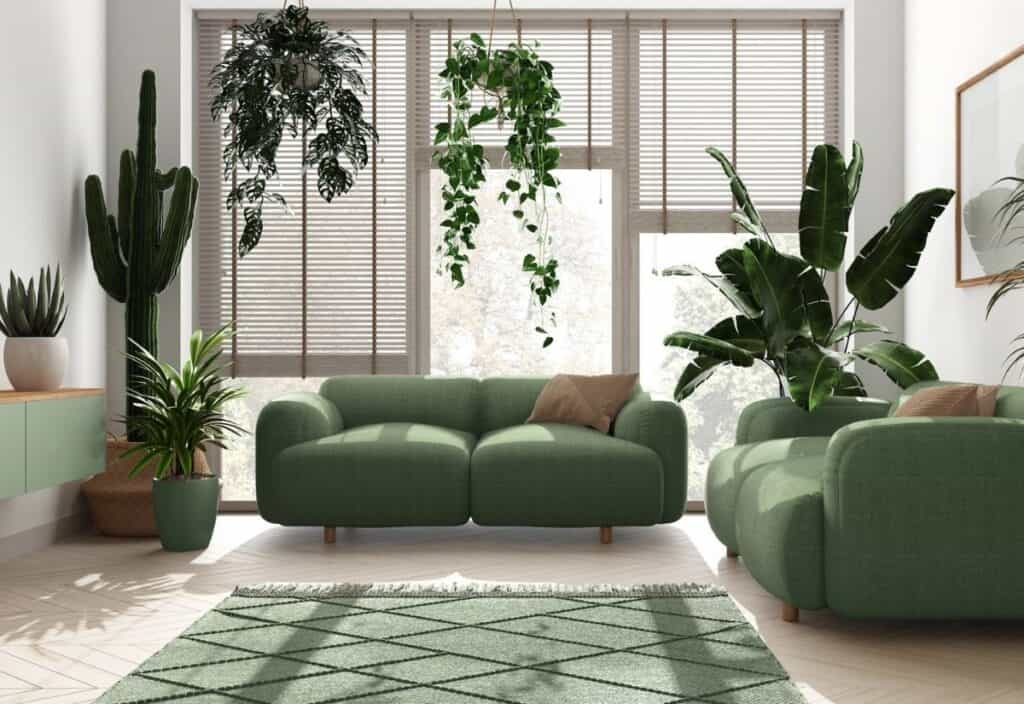
Plants have moved beyond decorative accents to become central design features. Vertical gardens, moss walls and cascading vines improve air quality while softening architectural lines. Designers also pair greenery with water features or natural scents to engage multiple senses and strengthen the bond with nature.
Curves and layers
Curved furniture and rounded finishes balance sharp architectural edges and bring a sense of flow to interiors. Layered textures, such as wool rugs, rattan chairs and linen curtains, add comfort and warmth while mirroring the tactile diversity of outdoor landscapes. These elements shape spaces that invite people to slow down, unwind and feel at ease.
A natural path forward
Biophilic design has moved from niche to mainstream toward wellness-centered spaces. Designers, homeowners and healthcare leaders are aligning around the value of bringing nature into everyday environments, which underscores its widespread relevance. This shows how interiors can be restorative and stylish, creating healthier spaces that echo our instinctive need for nature.
Zuzana Paar is the creator of Sustainable Life Ideas, a lifestyle blog dedicated to simple, intentional and eco-friendly living. With a global perspective shaped by years abroad, she shares everyday tips, thoughtful routines and creative ways to live more sustainably, without the overwhelm.