
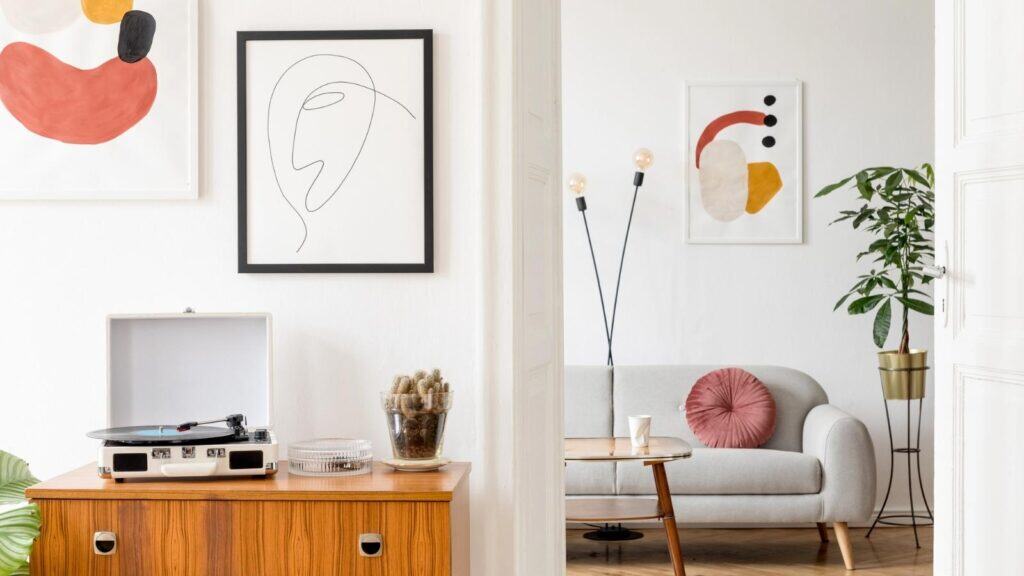
Art is becoming one of the quickest ways for households to update a room without taking on a larger home project. A well-placed piece can brighten a blank wall, finish a bedside corner or add character to a space. For many Americans, buying art now feels more doable than waiting on new furniture, custom work or a full redo.
This post may contain affiliate link(s). As an Amazon Associate, I earn from qualifying purchases. See Disclosures.
The United States remains the world’s largest art market, with sales reaching approximately $26 billion. Meanwhile, the global market grew 4% to an estimated $59.6 billion, and transaction volume reached 41.5 million. For renters, new homeowners, budget-conscious families and homeowners seeking a visual update without a full redesign, these figures provide a broader context for a category that continues to draw significant buying activity.
Small art makes the easiest start
For many households, the easiest way to start buying art is to start smaller. Dealers with turnover below $250,000 experienced the largest increase in sales at 17%. A recent report from Art Basel and UBS indicates that 44% of dealers’ buyers were new to their businesses, while the share of sales to new buyers rose to 38%. These figures suggest that art remains an accessible starting purchase rather than a category limited to established collectors.
Smaller pieces also suit the walls that many homes leave open. Buyers should measure before they shop, noting that low ceilings and crowded walls can make a piece feel much larger at home than it did in a gallery, which is why a smaller work often fits more comfortably in bedrooms, desk areas and entry spaces.
Measure first, then place
Good placement starts before the art comes home, as a piece that looks right in a store or on a screen can feel too large once it sits against a wall with windows, trim, switches or vents. Measuring the wall’s height and width first gives buyers a clearer sense of what will fit and helps them avoid a piece that feels oversized in the room.
Proportion plays a key role, as art placed above a sofa, bed, console or desk usually looks best when it spans about two-thirds of the width of the furniture below it, a guideline that helps the piece look properly scaled. Hanging height also affects how naturally the art sits in the room. On a blank wall, placing the center of the piece at about 57-60 inches from the floor usually keeps it at a comfortable viewing level. Above furniture, the bottom edge should sit a few inches above the surface so it does not feel detached from the rest of the setup.
Prints and photos keep costs lower
For first-time buyers, prints offer an accessible entry into collecting, as Artsy notes they are often more affordable than other works by the same artist. They can also work well in smaller rooms and tighter wall spaces where a large piece would be harder to place.
Prints, photography and works on paper remain active parts of the market, with millennials identified by Art Basel and UBS Survey as the most active collectors in these categories. For ordinary homes, that matters because these formats carry steady demand and give buyers a practical starting point without treating paper-based art as a second-tier option.
Simple framing finishes the room
Framing can elevate a space without becoming elaborate, especially when a small grouping shares one detail, such as a matching frame finish or mat style. Repeating that element across two or three pieces can make lower-cost art look more intentional and cohesive.
Not every piece has to go straight on the wall. Placing one larger piece above a table and leaning smaller framed works on the surface gives renters and frequent redecorators a lower-effort way to bring art into the room without another round of measuring, nails and patching.
Art leads room updates
More households may stop treating art as the last thing they buy for a room, especially as it becomes one of the easiest ways to update your home. With prints, photos and simple framing within reach, art is starting to move ahead of larger furniture purchases in the home budget. For many rooms, the first visible change may no longer be a new sofa or rug, but a piece on the wall.
Zuzana Paar is the creator of Sustainable Life Ideas, a lifestyle blog dedicated to simple, intentional and eco-friendly living. With a global perspective shaped by years abroad, she shares everyday tips, thoughtful routines and creative ways to live more sustainably, without the overwhelm.