
You grab a can of tomatoes, thinking it’s a safe, boring choice because tomatoes are tomatoes, right? But one night your sauce tastes bright and balanced, and the next it’s oddly flat or watery, even though you swear you bought the same thing. That’s because a can of tomatoes isn’t a single, uniform product; two cans sitting side by side on the shelf can look nearly identical and still behave completely differently once they hit the pan.
This post may contain affiliate link(s). As an Amazon Associate, I earn from qualifying purchases. See Disclosures.
Canned tomatoes vary because of the type of tomato used, how ripe it was when packed, what it’s packed in and how it was processed. These differences affect flavor, texture and the amount of cooking time your dish needs. Once you understand why canned tomatoes vary, choosing the right kind becomes easier.
Tomato varieties matter
One of the biggest reasons canned tomatoes behave differently is because of the type of tomato inside the can. Most canned tomatoes are made from either Roma-type tomatoes or round, juicier varieties.
Roma tomatoes are naturally meatier, with fewer seeds and less water. That makes them ideal for sauces, because they break down smoothly and concentrate as they cook. San Marzano is a specific variety of Roma tomato, often used in canned tomatoes.
San Marzano-style tomatoes are known for balanced sweetness, lower acidity and dense flesh. Since these tomatoes have sauce-friendly traits, they cook down more evenly than standard canned tomatoes.
Round tomatoes, on the other hand, contain more juice and a higher water content, which can make sauces thinner and less predictable. Tomatoes with more natural sugar taste less sharp. Watery tomatoes tend to stay loose or require longer cooking.
“I always stock up on several cans of whole San Marzano tomatoes. You can make the simplest, most authentic-tasting pasta sauce with olive oil, garlic and a big can of San Marzano tomatoes. My pantry is never without a few cans.”
— Casey Rooney, Get On My Plate

Pack style
Even when the tomatoes themselves are similar, what they’re packed in and how they’re cut can completely change how they behave in a recipe. The packing liquid and cut style affect everything from cooking time to final consistency.
Tomatoes packed in puree tend to create thicker, more cohesive sauces right away. The puree adds body and helps everything cook evenly. Tomatoes packed in juice release more liquid as they heat, which can be helpful in soups and stews, but it means extra simmering time if you’re aiming for a rich sauce.
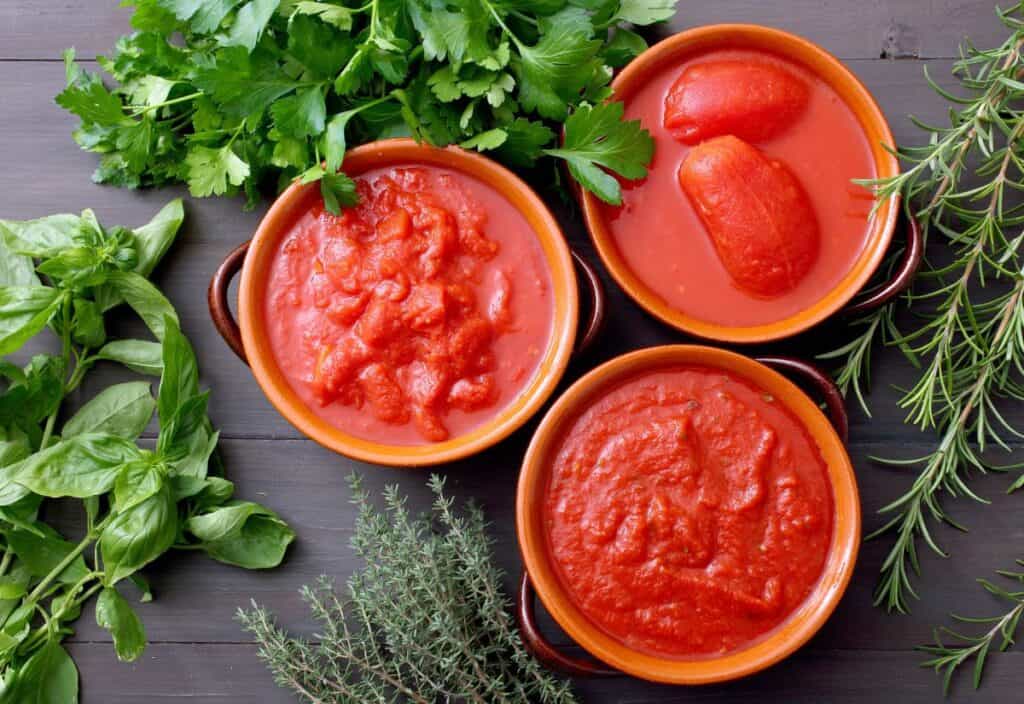
Cut style is another important factor. Whole tomatoes are usually the most versatile, because you control how much they break down as you cook them. Crushed tomatoes are finely chopped tomatoes packed in tomato puree, which have a smooth, thick texture that will break down further as they cook.
Diced tomatoes are the most unpredictable. They are treated with calcium chloride, an additive that is used to keep the pieces intact. This keeps the tomatoes from breaking down, keeping them firm.
Additives and acidity
If you’ve ever opened a can of tomatoes and noticed a sharp, sour or slightly metallic flavor, you’re not imagining it. This flavor difference is due to acidity and additives.
Citric acid is commonly added to canned tomatoes to make them shelf stable. It’s added for food safety, not taste, but it can still affect flavor. Extra acidity can make tomatoes taste brighter, but it can also push them into sour or bitter territory if the balance is off.
The tinny taste people sometimes notice isn’t from the can itself. That flavor results from high acidity interacting with the tomato’s natural compounds. This flavor can also be more noticeable in lower-salt products. No-salt-added products are useful when you want full control over seasoning. But without any salt to balance acidity, these tomatoes can taste harsher straight from the can.

Choosing the right can
Once you know the factors that affect flavor and texture, choosing canned tomatoes becomes straightforward. The key is matching the can to the recipe.
For long-simmered sauces
When making marinara sauce, look for whole tomatoes or crushed tomatoes packed in puree. Roma or San Marzano-style tomatoes work especially well here because their dense flesh breaks down smoothly over time. Avoid diced tomatoes, which tend to stay firm and resist melting into the sauce.
For quick weeknight pasta
Choose crushed or whole tomatoes, which you can quickly break up with a spoon. These start with a softer texture and cook down fast, giving you good flavor even without a long simmer. Tomatoes packed in puree help create body without extra reduction.
For soups and chili
Diced or chunkier crushed tomatoes can be a good choice for chili, since you want pieces that hold their shape. Tomatoes packed in juice work well here, adding liquid without making the dish feel thin. In longer-cooked soups, the firmness of diced tomatoes is an advantage.
For casseroles and baked dishes
Avoid anything overly juicy. Whole or crushed tomatoes packed in puree are less likely to release excess liquid as they bake. This helps prevent soggy casseroles and keeps the flavor concentrated.
The one rule
The simplest way to avoid frustration with canned tomatoes is to stop treating them as interchangeable. Matching the can to the job solves many common problems before they start. You also don’t need the most expensive tomatoes for every meal. In many cases, a basic, inexpensive can is exactly right. Choose tomatoes that work with your recipe, not against it.
Anne Jolly is a seasoned writer and creator of the Upstate Ramblings blog, which explores America’s unique food culture. Her work on culinary trends and food traditions has appeared in major publications, including MSN, Fortune, The Mercury News, The Seattle Times, St. Louis Post-Dispatch and Education Week. When not writing, she experiments with new recipes and discovers local food gems in upstate New York.