
Cottagecore and cool canning are redefining the summer preserving craze through vibrant farmers’ markets, social media flair and DIY kitchen confidence. And, they’re trending again on TikTok and other channels. The evolution from nostalgic preservation to a personal, style-driven ritual shows how home canning has become a form of self-expression tied to identity and visual storytelling.
This post may contain affiliate link(s). As an Amazon Associate, I earn from qualifying purchases. See Disclosures.
As more people embrace the process for its soothing flow and creative reward, tasks like peeling fruit, boiling jars and labeling each batch take on new meaning. Here’s how the practice has grown into a cultural statement where aesthetics, sustainability and creativity meet.
Cottagecore comfort
The cottagecore aesthetic exploded in 2020, driven by a collective longing for simplicity, warmth and control during unpredictable times. The term has nearly 2 million videos on TikTok and over 6 million posts on Instagram, with HomeGoods’ cottagecore collections regularly drawing eager crowds. With its dreamy visuals of cottage gardens, handwritten letters, sourdough starters and pantry shelves lined with homemade jams, the aesthetic offers comfort through beauty and routine.
Canning fits seamlessly into this narrative because it provides a hands-on, deliberate process that aligns with the visual and emotional appeal of the cottagecore lifestyle. The appeal goes deeper than the jars themselves, reflecting a desire for meaningful rituals and domestic creativity. Beyond preserving fruits and vegetables, the act became a way for people to reclaim a sense of agency and create something beautiful during a time marked by instability.
That shift deepened the cottagecore moment, turning food preservation into a daily ritual rooted in beauty and care. Millennials are embracing this lifestyle by learning traditional skills like cooking from scratch, baking and making sauces. As the visual storytelling of cottagecore began intersecting with digital expression, this soft-focus tradition opened the door for a more curated, confident take, paving the way for cool canning.
Canning comeback
Canning saw an unexpected resurgence during the early days of the COVID-19 pandemic, when panic buying and supply chain disruptions prompted people to rethink their food access methods. Research shows that as global supply chains faltered, the crisis exposed the vulnerability of our food systems to external shocks, reinforcing the importance of strengthening household-level food security. Against this backdrop of uncertainty, preserving fruit and vegetables at home quickly became a practical and empowering solution.
In the wake of that shift, people turned to the internet for guidance, building an active ecosystem of shared knowledge and visual storytelling. Online communities exploded across platforms, like TikTok and Instagram, where tutorials, troubleshooting tips and aesthetic posts turned everyday canning into a social and creative ritual. That DIY momentum didn’t just endure; it evolved, transforming canning from a pandemic-era necessity into a defining feature of cool canning, where empowerment meets style in every sealed jar.
Inside the modern jar
Canning is getting a modern upgrade as home cooks turn to pickled fruits, spiced syrups and blends that go far beyond jam. These jarred staples reflect what today’s kitchens prioritize through bold flavors, practical storage and less waste.
Pickled vegetables and fruit
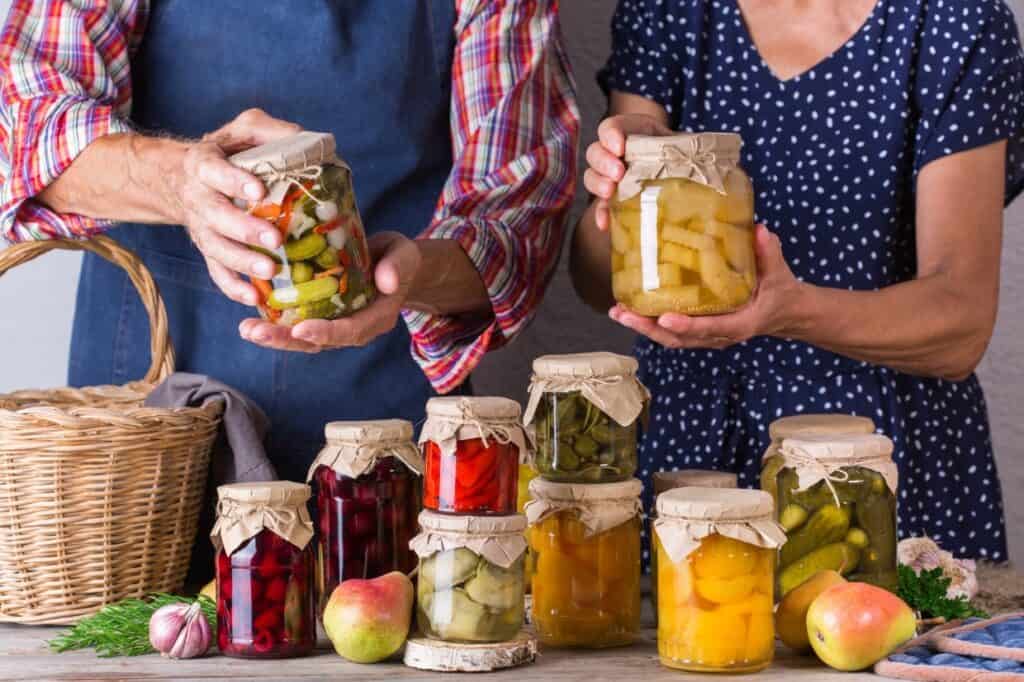
Crisp produce has carved out a prominent spot in the modern pantry, fueled by renewed interest in bold flavors and preservation techniques. Bright jars filled with spicy green beans, lemon-laced radishes, vibrant cucumbers and pickled cherries or peaches deliver a sharp bite with acidic balance. The method enhances flavor and shelf life, giving new purpose to overripe fruit and surplus vegetables that might otherwise go to waste.
Fermented foods
Traditional styles like kimchi and sauerkraut now inspire creative blends using beetroot, carrot or turmeric for added color and tang. These jars bring variety to the table while delivering natural probiotics that may support gut health. For best results, home cooks are advised to start with produce that is fresh and free of damage, as cracks or bruises can invite bacteria.
Drinking vinegars
Shrubs, or drinking vinegars, combine fruit, sugar and vinegar into tart syrups used for drinks or marinades. They offer a low-waste way to repurpose overripe fruit and trimmings while adding a sharp, refreshing twist to recipes. Most rely on distilled white or cider vinegar with 5% acidity to ensure safe storage. Some pickled fruit or chutney recipes use lemon juice for balance and proper acidity.
Jars of identity
Cool canning reflects a broader shift in how people connect food, aesthetics and digital culture. What once quietly simmered on the back burner is now front and center, where homemade jam speaks to values as much as taste. Whether it’s posted on TikTok or shared at a neighborhood swap, each jar tells a bigger story. And as summer continues, home canning remains a meaningful practice that resonates across kitchens and communities.
Mandy Applegate is the creator behind Splash of Taste and seven other high-profile food and travel blogs. She’s also co-founder of Food Drink Life Inc., a unique and highly rewarding collaborative blogger project. Her articles appear frequently on major online news sites, and she always has her eyes open to spot the next big trend.