
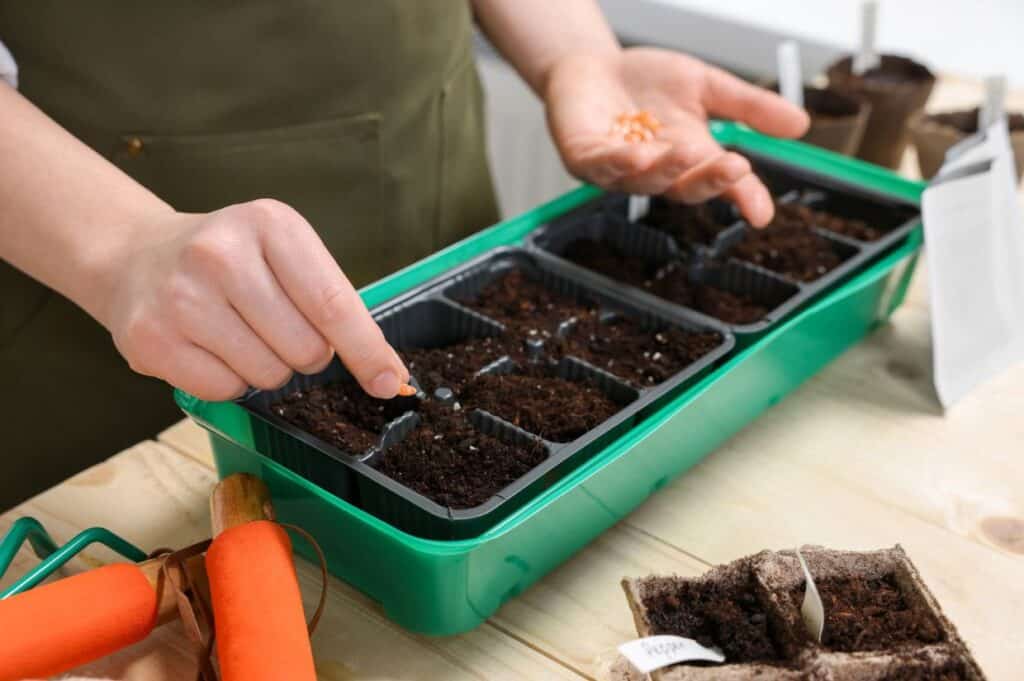
Garden optimism runs high, but spring rewards strategy more than enthusiasm. As indoor planting season ramps up in March, copying a viral seed-starting schedule can throw off timing when local frost windows and daylight hours follow their own rules. With temperatures, light levels and regional patterns all in play, early-season success depends on syncing crops with real conditions before a single seedling reaches the garden bed.
This post may contain affiliate link(s). As an Amazon Associate, I earn from qualifying purchases. See Disclosures.
Plants follow different growth timelines, with some putting on size in a few short weeks, while others move at a slower, steadier pace. Those built-in patterns determine which varieties can transition outdoors sooner and which require extra indoor development to stay productive through the season.
Hardiness zones guide planting
Many gardeners across the country start seeds indoors as late winter turns toward spring. Checking a plant hardiness zone should come before setting up trays and lights because a schedule that works in one region can fail in another.
The United States Department of Agriculture Plant Hardiness Zone Map sets the national standard for understanding winter temperature ranges. It divides North America into 13 numbered zones based on the average lowest temperatures recorded each year. Zone 1 covers the coldest areas, while Zone 13 marks the warmest. Each zone spans 10 degrees Fahrenheit and includes two subzones separated into five-degree ranges.
While the chart does not set exact dates for starting seeds indoors, it offers a climate baseline. Gardeners can use that temperature data, along with local frost dates, to select more accurate indoor planting timelines. Planning around regional cold patterns can reduce setbacks and support stronger early growth.
Frost windows set the schedule
Before putting plants in the ground, gardeners need to know their area’s average last and first frost dates. These dates set the boundaries of the local growing period and guide planting decisions.
The last frost defines the point in spring when the risk of cold damage drops to typical seasonal levels. Planting after the average last frost date remains one of the most important steps for a productive spring garden. Gardeners also use this date to plan indoor seed starting so seedlings reach transplant size once outdoor conditions become suitable.
The first frost typically arrives in early fall and brings the main growing period to a close, and it can damage crops that lack cold tolerance. Knowing the average first frost date allows gardeners to time final harvests and prepare beds before temperatures fall further.
Temperature guides planting order
Vegetable planting does not follow one calendar because cool-season and warm-season crops grow under different temperature needs. Crops that thrive in cooler weather go into the ground first, often several weeks before the average last frost date in a given area.
Cool-season vegetables tolerate low temperatures and rely on mild conditions to develop properly. Many need that early chill to form edible parts before summer heat slows growth or reduces quality. Gardeners often plant kale, Brussels sprouts, asparagus, carrots and broccoli early in spring so the crops can mature before sustained warmth arrives.
Warm-season crops require a different approach because they depend on higher soil and air temperatures and should be planted only after the last frost date has passed. Most complete one growing cycle between late spring and late summer, which makes proper timing essential for dependable yields.
Proper lighting supports seedlings
Light plays a central role in indoor seed starting because plants use it to produce the energy needed for steady growth. When daily exposure falls short, seedlings weaken, stretch or stall before they ever reach the garden.
Late winter and early spring often bring limited daylight in many regions. Sunlight through windows rarely provides the strength or duration required for healthy development. As a result, indoor starts may lack the structure needed for successful transplanting.
Most seedlings need 16 to 18 hours of bright light each day to grow well. Hydroponic lettuce and herbs perform best with about 12 to 14 hours daily, while flowering houseplants typically require 14 to 16 hours to support steady growth and bud formation.
Strategy rewards patient gardeners
Indoor planting works best when gardeners approach it as risk management rather than seasonal excitement, grounding each decision in temperature patterns and realistic timing. Those who study climate data and frost windows are not delaying progress but protecting young plants from preventable setbacks. In the end, growers who treat planting as a strategy instead of guesswork often see steadier growth, stronger harvests and fewer costly do-overs.
Zuzana Paar is the creator of Sustainable Life Ideas, a lifestyle blog dedicated to simple, intentional and eco-friendly living. With a global perspective shaped by years abroad, she shares everyday tips, thoughtful routines and creative ways to live more sustainably, without the overwhelm.