
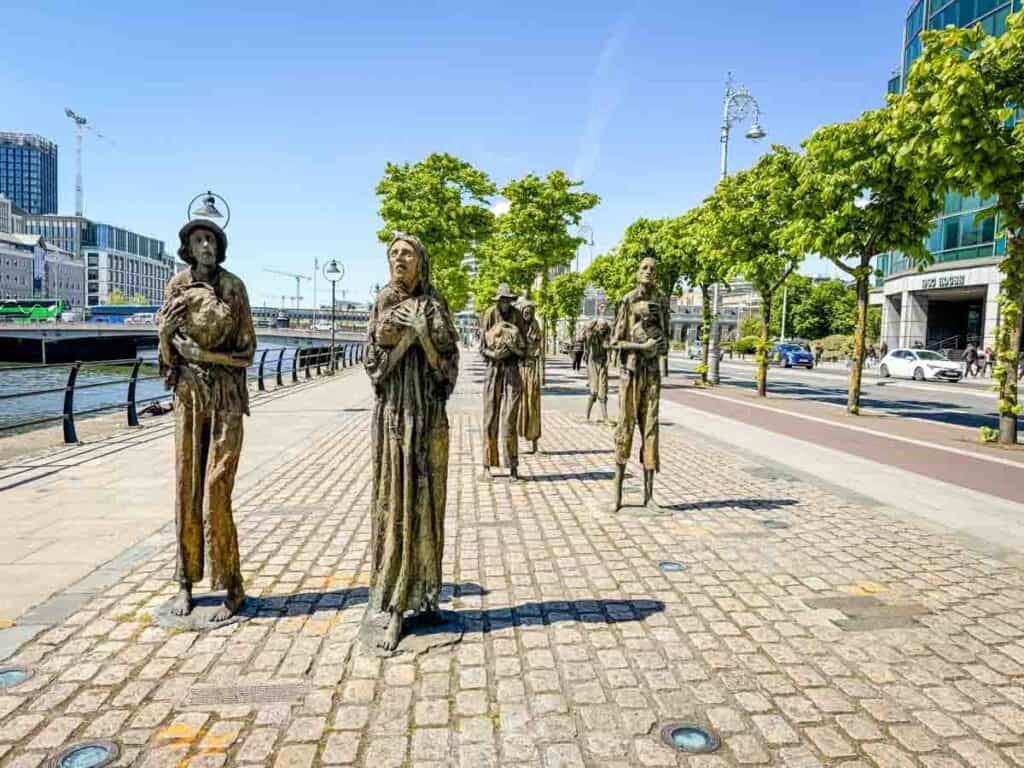
The Famine Memorial marks the end of the National Famine Way, a 165-kilometer trail retracing the path of thousands who walked from Roscommon to Dublin in 1847. Life-sized bronze sculptures of starving men, women and children stand along Dublin’s River Liffey, confronting passersby with the harsh reality of Ireland’s Great Famine. When I was in Dublin, we didn’t walk the whole trail, but we saw the memorial sculptures beside the river, and it was a poignant reminder of a crisis that forced millions to flee or face starvation.
This post may contain affiliate links that may earn us a commission. For more information, see our Disclosures.
Irish sculptor Rowan Gillespie designed the figures to tell this story in public view, and they’re near EPIC The Irish Emigration Museum. This trail connects the Great Hunger to the wider story of Irish migration around the world. Visitors who walk the trail, or even part of it, step into the history that shaped Ireland’s people and its future.
A tribute etched in bronze
The Famine Memorial brings one of Ireland’s darkest chapters into full view. It remains one of Ireland’s most haunting historical landmarks. Unveiled in 1997, the six bronze sculptures by artist Rowan Gillespie represent the devastating impact of the Great Famine, which from 1845 to 1849 led to mass starvation and emigration.
The figures walk silently toward the river, their hollow eyes and tattered clothes echoing the hardship of more than a million lives lost or displaced. The trail starts in Strokestown, marking the start of the National Famine Way, which extends across Ireland’s landscape and history. This route transforms public space into a living story of endurance and migration.
In recent years, the memorial has drawn steady reflection and recognition. Its stark figures and prominent location continue to engage those exploring Ireland’s famine history. Through its solemn design, it connects public art with cultural memory, anchoring the past in the present.
The Famine Memorial Trail: Tracing the journey
Stretching 103 miles from Strokestown in County Roscommon, the National Famine Way retraces the 1847 journey of 1,490 evicted tenants, often referred to as the “Missing 1,490,” who walked to Dublin in search of passage to Canada. The trail also commemorates the over 1.5 million lives disrupted by hunger and migration.
Today, the path draws walkers, cyclists and visitors seeking more than just scenery. Bronze shoes along the route mark key moments and honor the children affected by the famine. Interpretive panels and digital guides help travelers understand the lives behind each step, from rural Roscommon to the city’s docklands.
This experience of loss and resilience connects Dublin to the National Famine Way. It gives modern Ireland a direct line to its past, not through textbooks but through the act of walking. The trail builds understanding with every mile, anchoring memory in movement.
A walk through memory and meaning
Every step on Dublin’s Famine Memorial Trail places you in the path of history. This trail is a call to remember and reflect. Beneath your feet lies a powerful narrative shaped by hunger, survival and movement.
City noise fades as the bronze figures along the trail draw focus to a quiet, enduring message. Their stillness stands in contrast to modern movement, creating space for reflection in the middle of daily life. The Famine Memorial Trail turns public space into a historical encounter, urging visitors to consider the story beneath their feet.
Why this walk matters
Along the trail, art and memory converge to tell the story of a nation reshaped by hardship and migration. The path goes beyond quiet reflection and invites visitors to walk through Ireland’s famine story as it comes to life.
The trail connecting people to history, reminding us to care for the world around us. This connection between public space and historical narrative turns the trail into a living classroom. It centers memory outside museum walls, where the past feels immediate and human.
For many, the experience resonates even deeper, echoing family histories tied to departure and survival. The trail sparks questions that linger well beyond the walk. What compels people to leave everything behind? What does survival mean when faced with uncertainty and loss?
The sculptures remain silent, yet their message endures. They speak without words, reminding each passerby of the strength and sorrow carried across generations.
Planning your visit
Custom House Quay marks the finish point of the Famine Memorial Trail and is just a short walk from Dublin city center. Each stretch of the trail reveals a deeper layer of Ireland’s famine story, no matter how far you go. For those interested in extending the journey, resources and maps are available through the National Famine Way and at EPIC The Irish Emigration Museum.
The trail welcomes visitors year-round and is easy to navigate. Wear sturdy shoes, plan your time and take in the experience at your own pace.
What to take away
Sculpted figures lining Dublin’s River Liffey don’t speak, but they hold a nation’s memory. The Famine Memorial Trail leads visitors through a powerful tribute to those who endured hunger, loss and forced migration. Art, landscape and history converge to make each step part of a story that shaped modern Ireland. The experience leaves an impression long after the final step, whether taken in the heart of the city or on the quiet paths beyond. This isn’t just a journey but an invitation to remember.
Jennifer Allen, retired chef turned traveler, cookbook author and writer, shares her adventures and travel tips at All The Best Spots. Living at home with her family — and the cats that rule them all — her work has been featured in The Washington Post, Seattle Times, MSN and more.