
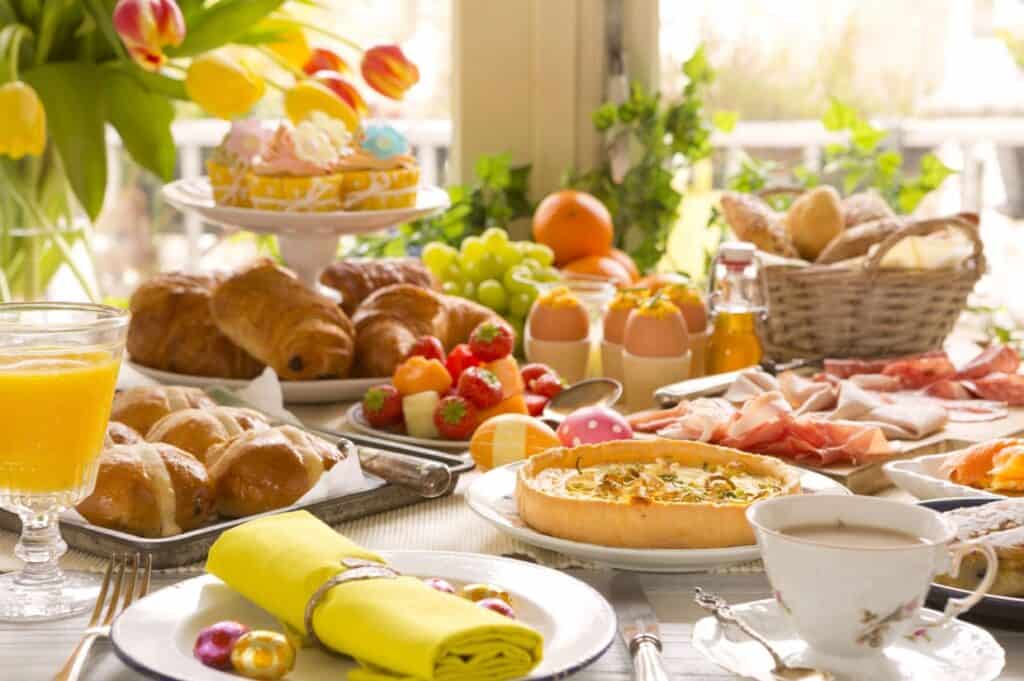
Easter brunch gets a head start this year as hosts work ahead of the clock. Consumers planned to spend $23.6 billion on Easter in 2025, with food ranked as the second most popular purchase at 89%, keeping meals at the center of the celebration. As schedules tighten and gatherings become more relaxed, make-ahead recipes and low-effort setups take the pressure off the kitchen and put hosts back at the table.
This post may contain affiliate link(s). As an Amazon Associate, I earn from qualifying purchases. See Disclosures.
In Easter 2025, 58% of consumers said they intended to cook a holiday meal, keeping at-home gatherings central to the occasion. To keep things manageable, hosts line up overnight prep, rely on oven-baked items and ready-to-serve cold additions and set out batch drinks for self-serve, keeping everything moving without constant check-ins from the kitchen.
Simpler hosting takes priority
Easter brunch menus lean toward simpler dishes that require less preparation instead of large, labor-heavy spreads. Shoppers were expected to spend about $7.4 billion on food for the holiday in 2025, reinforcing how central shared meals remain. For a smoother setup, many hosts now choose dishes that can be prepared ahead of time to avoid last-minute pressure and keep the day on track.
Gatherings also become smaller and more flexible, allowing hosts to spend more time with guests instead of staying tied to the kitchen. This approach reduces food waste and keeps costs predictable, helping hosts to manage a full kitchen throughout the morning.
Prep-ahead dishes lead menus
Menu choices that can be completed in advance prevent a buildup of tasks just before guests arrive, with egg-based dishes standing out as a dependable option because they hold their structure after refrigeration. Overnight egg strata benefits from resting time, which helps the mixture set evenly before baking, while tater tot breakfast casserole can be assembled the night before and baked as a single dish, making it easier to portion for groups.
French toast casserole follows the same format, with prep done ahead and a single bake before serving, while quiches and savory tarts can be fully cooked in advance and reheated quickly. Muffins and scones add flexibility because they keep well for a day and require little attention, and sheet pan pancakes offer a low-effort approach, with one pan producing multiple servings that can be portioned quickly.
Cold additions help round out the table without extra prep time. Fruit salad with citrus dressing, yogurt parfait trays and simple green salads can go directly on the table when guests arrive.
Batch drinks ease group service
Preparing beverages in advance allows hosts to step away from mixing individual drinks during the gathering while offering a range of choices that cover different preferences. Mimosa setups work well with chilled juice, with sparkling wine added just before serving. Sangria and fruit punch benefit from early preparation, giving flavors time to settle ahead of the meal.
Nonalcoholic options offer the same flexibility, with infused water made using citrus, herbs or berries prepared ahead and placed within easy reach. Mocktails add variety, using balanced combinations of juices, syrups and sparkling mixers to create drinks that feel as considered as traditional ones. These choices keep drink service moving without requiring hosts to manage it throughout the event.
Cooking shifts away from morning
With most of the menu prepared ahead, Easter morning no longer centers on full meal prep or starting recipes from scratch. The oven now drives the schedule, with dishes reheated or finished in sequence, which reduces the need to manage several burners or monitor multiple cooking processes at once.
Many hosts shift away from constant chopping and mixing and instead focus on checking doneness, rotating trays and moving dishes into serving position. This approach allows food to be served as it is ready rather than waiting for the full menu to be completed. It also keeps the flow steady and avoids bottlenecks in both the kitchen and dining area.
Prepared options support hosts
Retail and food service providers expand ready-to-cook options for Easter brunch, giving hosts more ways to reduce prep without cutting variety. Many grocery stores offer fully cooked items such as quiches, breakfast casseroles and sliced ham packaged for direct reheating.
Pre-sliced meats remove the need for carving during the gathering, while prepared sides such as salads and fruit trays come portioned and ready to plate. These options allow hosts to combine store-bought and homemade dishes.
Bakeries and delis also adjust how they package and sell holiday items. Many offer preordered pastry assortments, bread bundles and brunch packages for pickup ahead of Easter. Advance ordering makes it easier to secure these items early, reducing last-minute shopping and keeping the day more organized.
Convenience guides Easter hosting
Home-cooked meals remain central to Easter brunch, but hosts find ways to prepare them more efficiently without giving up quality. The shift points to a more practical approach, where time, cost and time with guests are balanced through planning and selective shortcuts. Retailers continue to expand flexible, mix-and-match options that reduce workload while allowing hosts to stay present and engaged with guests instead of managing food throughout the gathering.
Jennifer Allen is a retired professional chef and long-time writer. Her work appears in dozens of publications, including MSN, Yahoo, The Washington Post and The Seattle Times. These days, she’s busy in the kitchen developing recipes and traveling the world, and you can find all her best creations at Cook What You Love.