
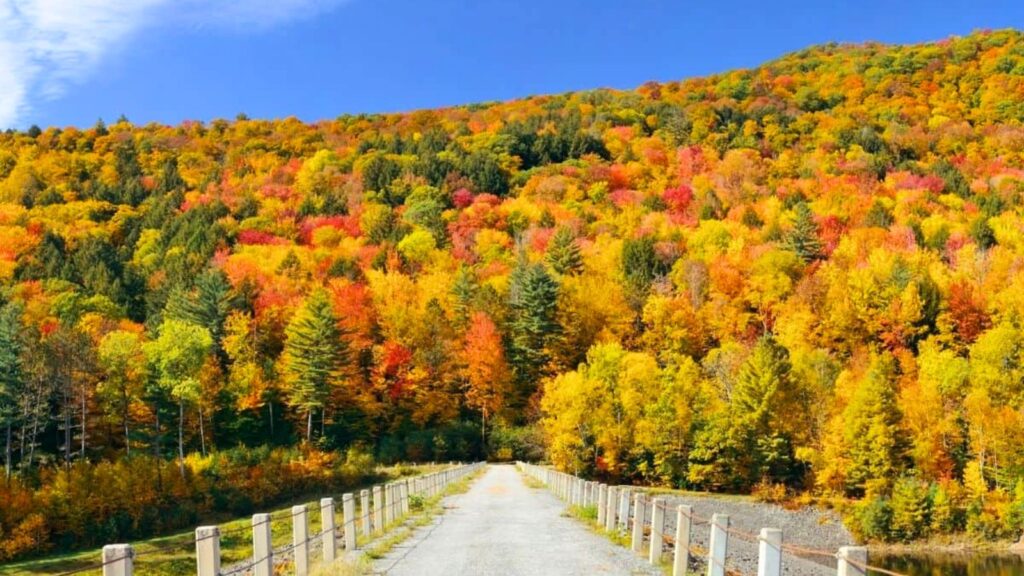
A strengthening El Niño could scramble America’s fall foliage calendar this year. Vermont’s classic fall color show could keep leaf peepers guessing longer than usual, the Great Lakes region may end up glowing brighter than most years and the Smoky Mountains could see a wetter fall than the forecast usually calls for. This October will probably not follow the script leaf peepers know by heart.
This post may contain affiliate links that may earn us a commission. For more information, see our Disclosures.
Ocean water thousands of miles from any forest is already changing the odds for the weather that will shape this fall, warming well past its usual range in the tropical Pacific. That kind of change doesn’t always show up in the leaves first. It can show up in the moisture, the timing of the first cold snap or the extra weeks a hot, humid spell lingers somewhere it normally would have broken by now.
This fall could arrive off schedule
El Niño, the Pacific Ocean signal driving all of this, is not new on its own, but this version is shaping up to be a genuinely large one. NOAA’s latest outlook puts the odds at 90% that this fall’s event ranks among the strongest on record, with a 69% chance the October through December event exceeds the strength of previous El Niños in NOAA’s record dating to 1950.
Even at that strength, the regional effects aren’t guaranteed. But an El Niño this strong rarely leaves the foliage calendar completely untouched, which is exactly the problem for anyone trying to book a foliage trip months in advance.
New England’s color could arrive in a rush
New England still sets the calendar most people compare everything else against. A weather-driven model that tracks the season region by region currently has Vermont’s Green Mountains turning between Oct. 8-12, with New Hampshire’s White Mountains about a week behind and coastal Maine somewhere in between.
Forecasters expect the first real cold snap to reach the Northeast later than usual this year, possibly not settling in until October. However, forecasters don’t expect any outbreaks that do arrive to stick around long.
A dry spell could brighten Great Lakes color
The Great Lakes states are looking at a different kind of year entirely. A warmer-than-usual September followed by sunny days and cooler nights could help produce brighter fall color in parts of the Great Lakes and Midwest. It’s a rare case where a strange weather setup works in a leaf peeper’s favor instead of against it.
The Pacific Northwest’s slow season could speed up
Oregon and Washington typically run the country’s slowest, latest foliage calendar, holding color into late October most years in part because a mild, wet climate keeps temperatures moderate enough that the cool nights favoring vivid color arrive later than they do further east. El Niño favors warmer, drier conditions across the northern tier of the country this year, the Pacific Northwest included, which could shorten that usual slow fade if the rain that normally extends the season doesn’t show up on schedule.
The Southeast could see a wetter fall setup
Great Smoky Mountains National Park is the most visited national park in the country, and this year’s weather setup could bring a wetter fall across the Southeast. The park’s elevation diversity sends color down the mountainsides in stages, starting near Clingmans Dome in mid- to late September and reaching the valley floors by late October or early November.
El Niño tends to favor wetter conditions across parts of the Southeast, though how much of that rain lands during the weeks color is building remains uncertain. Cloudy, rainy stretches can reduce the red pigments that make peak color vivid, but the relationship between rain and a disappointing season is more complicated than it looks.
Foliage forecasting keeps getting sharper
Foliage forecasting used to lean heavily on personal memory and a good guess at repeating last year’s weather. That has changed quickly, with newer foliage models combining weather and phenology data to produce increasingly specific regional estimates. The Autumn Guide model’s own testing found its predictions landed within five days of peak color on average, though these remain forecasts rather than precise dates.
The model is expected to sharpen these regional windows again in the coming weeks as real-time weather data replaces this summer’s historical averages. That’s usually when a loose two-week range narrows into something close to an actual date.
What this means for planning your trip
The smartest move this year is treating any single date as a placeholder rather than a plan. Regional windows will keep tightening as fall gets closer, and the difference between booking now and checking back in a few weeks could be the difference between a muted weekend and the kind of color that ends up in next year’s road trip photos.
Jennifer Allen is a retired chef turned traveler, cookbook author and nationally syndicated journalist; she’s also a co-founder of Food Drink Life, where she shares expert travel tips, cruise insights and luxury destination guides. A recognized cruise expert with a deep passion for high-end experiences and off-the-beaten-path destinations, Jennifer explores the world with curiosity, depth and a storyteller’s perspective. Her articles are regularly featured on the Associated Press Wire, The Washington Post, Seattle Times, MSN and more.