
Cranberries have a short retail run each year, and supply, not shelf space or store decisions, is why it closes hard. Fresh berries are generally dry-harvested from cranberry bogs in the major growing regions, including Wisconsin and Massachusetts, during a harvest where rain and lingering moisture can delay picking for days at a time. Once the holiday cooking season winds down, fresh cranberries become difficult to find until the following fall’s harvest.
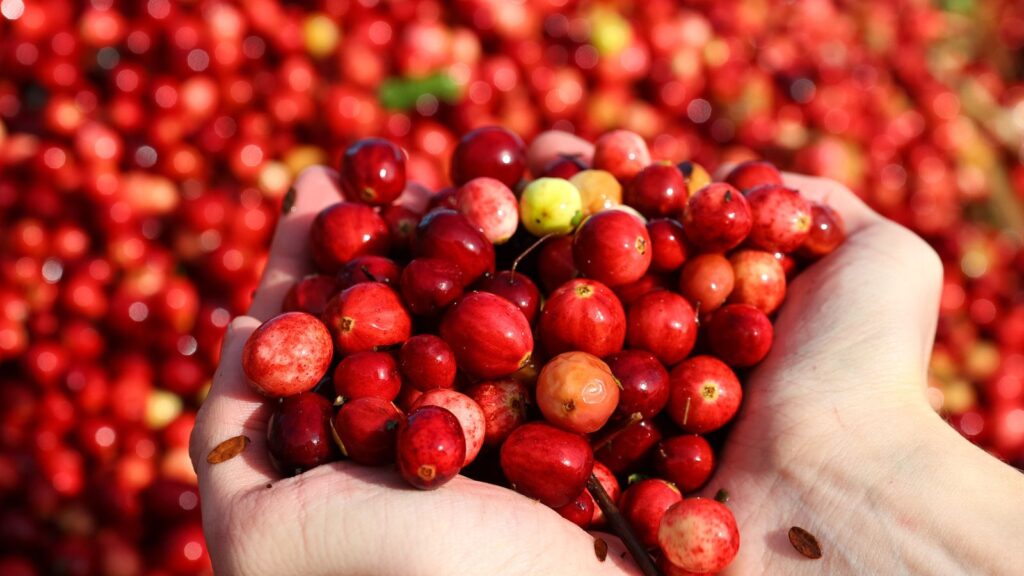
Fresh cranberries cook down into a sauce with a tartness and texture that nothing from a can can match. They fold into quick breads and muffins with a brightness dried cranberries cannot replicate, and they turn up in relishes and cocktails that simply do not work with any other version of the fruit. The supply behind that fresh bag is smaller and more tightly seasonal than most home cooks ever consider.
How a cranberry gets to the produce aisle
For 2026, USDA expects about 301,000 barrels, or roughly 4% of the U.S. cranberry crop, to go to the fresh market. Most of the crop is processed into juice, sauce, sweetened dried cranberries and other food products. The split comes down to two completely different harvesting methods, and dry harvesting is the standard for producing berries intended for the fresh market because it minimizes bruising and mechanical damage.
The bog and vines need to be sufficiently dry for dry-harvesting equipment to operate and for the berries to be handled without excess moisture. Rain and lingering moisture can delay picking until conditions improve. On a good day, self-propelled mechanical pickers comb through the vines and deposit berries into burlap bags.
When a bag fills, the operator stops, swaps it out for an empty one and keeps moving. Specialized vehicles or, in some operations, helicopters move the filled bags out of the bog before the berries are taken for grading and packing.
Industry accounts credit John “Peg Leg” Webb, a cranberry grower in the late 1800s, with recognizing that firm cranberries bounced while damaged berries did not. That observation led to the Bounce Board Separator, and cranberry farms still use versions of it today to sort fresh berries before packing and shipping.
Behind the iconic harvest photos
The iconic aerial shots of cranberry harvest capture something most people do not expect. Growers flood the bog and use water reels to loosen the berries from the vines. Cranberries contain four small air pockets that help them float, rising to the surface where workers corral them with booms and move them by conveyor or pump to trucks and receiving stations.
Wet-harvested berries go to processing because the method is more likely to cause bruising and mechanical damage. They become juice in the carton, sauce in the can and sweetened dried cranberries in the pantry. Fresh cranberries can produce a cranberry sauce with a brighter, more textured result than the commercially canned version, depending on the recipe and cooking method.
Where the fresh crop comes from
Wisconsin is forecast to account for about 61% of the U.S. cranberry crop in 2026. Its harvest typically runs from late September through October. Massachusetts, the second-largest cranberry-producing state, generally harvests from mid-September through early November. Cranberry bogs require specific soil, water and climate conditions, which limit where commercial production can be established.
Cranberry vines are perennial, and some in Massachusetts are more than 150 years old and still bearing fruit. Growers do not replant each season the way a vegetable farmer would. The fresh berries that go into a holiday relish, a loaf of cranberry bread or a cold-weather cocktail in October grew on vines tended carefully across generations of the same families.
The fresh bag disappears in December
Fresh cranberries can remain in refrigerated storage for several weeks, but they do not have the year-round shelf life of processed products. Retailers typically stock them most heavily from early October through December, with availability often tapering after the holidays. Once retailers sell through the fall harvest and reduce seasonal orders, fresh cranberries become difficult to find until the next harvest.
Canned and dried versions are available year-round because processing extends shelf life well beyond what a whole fresh berry can manage. Fresh berries have a harder ceiling, and the fresh-market availability reflects that.
Stock up before the season ends
A bag bought now freezes well for up to a year. Frozen cranberries can generally be used without thawing in sauces and baked goods, going straight from the freezer into a pot or batter. Stocking two or three extra bags during the fall means cranberries are still on hand in March for a vinaigrette, a cranberry dip, a quick chutney or a batch of scones. A little planning now is the difference between cooking with cranberries in February and reaching for the can instead.
Mandy writes about food, home and the kind of everyday life that feels anything but ordinary. She has traveled extensively, and those experiences have shaped everything, from comforting meals to small lifestyle upgrades that make a big difference. You’ll find all her favorite recipes over at Hungry Cooks Kitchen.