
America’s drinking habit is shrinking, but neighborhood bars haven’t noticed. Fewer adults raise a glass these days, yet bars that keep things simple are holding up better than the high-end ones that bet on craft. The one room that seems to be losing its crowd is the living room.
One national poll has tracked how many Americans drink since 1939, and the latest reading ties the record low, which could spell trouble for bars. The picture from industry counts and federal time-use surveys is more mixed.
A recent survey found that just 54% of U.S. adults say they drink alcohol, the same as last year and down from 62% in 2023. The survey ties the change to health: views on moderate drinking held fairly steady for about a decade before Americans grew more skeptical, and about half of adults now call one or two drinks a day bad for health.
Drinkers change what they pour
Among people who still drink, what lands in the glass is changing, too. Beer still leads at 36%, ahead of liquor at 32%, but among young adults the two are essentially tied, a sharp change from a decade ago. Nonalcoholic drinks are part of the change. About 17% of Americans swapped one in for alcohol over the past year, the first time the survey asked, and among drinkers who use them, more say they are drinking more of them than say they are drinking fewer.
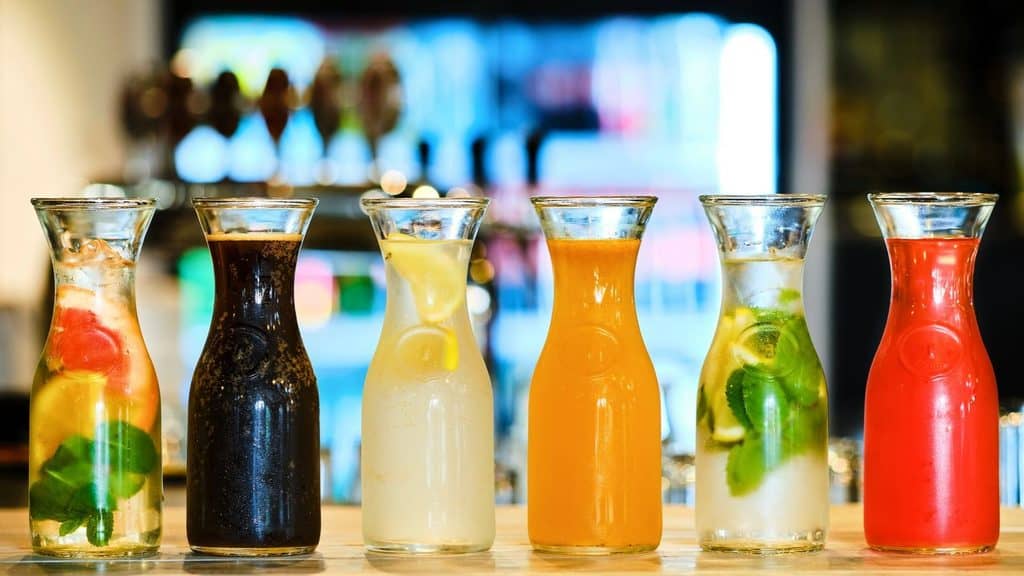
Nondrinkers also use nonalcoholic alternatives, at 14% compared with 20% of drinkers, though the survey describes the habit overall as limited. With that many options, a group of friends can order very differently from one round to the next.
Where the bars are holding up
The number of drinking places in the United States appears to be stabilizing after more than 15 years of decline, an industry analysis published in May found. The mix is changing, though: in the first quarter of 2026, the number of neighborhood bars grew 0.4% from a year earlier, and sports bars grew 5.1%, while casual nightclubs shrank 3.4% and bars in the premium category fell 26.9%.
The industry analysis does not establish why the bar types are splitting, but it offers an interpretation. The growing kinds of bars are not necessarily the ones that have leaned into craft, it points out, and the bars holding up are often higher-volume and less specialized, while the premium end of the market is under pressure.
Bars are adapting to what drinkers want, too. Low- and no-alcohol beer volume at bars is up roughly fivefold from before the pandemic, though the analysis gives no starting figure. Bars also employ more people than they used to, and the analysis offers three possible reasons: consolidation into larger concepts, more labor-intensive offerings such as cocktails and food, and the economics of running a bar under more employee-friendly labor laws. The drinking survey counts anyone who drinks at all, from monthly to nightly, and does not track where they do it, so a falling drinking rate and steady neighborhood bars need not conflict.
The living room got quieter
Entertaining at home has fallen much further than going out. In 1995, 88% of Americans said they had entertained people at home in the past year, compared with 67% in 2026, while the share who went to a bar or tavern slipped only from 52% to 49%. The comparison is between a mail survey in 1995 and a web panel in 2026, and people can answer the two differently, so the authors say the findings suggest a trend and are not a precise measure of change.
A federal time-use survey points the same way, with 30% of people socializing on an average day in 2025, down from 38% in 2015. Over the same decade, time spent playing games or using a computer for leisure rose from 25 minutes a day to 37 minutes a day. The survey notes that the fall 2025 federal government shutdown may have affected the 2025 estimates and that the effect cannot be quantified.
In the same 1995 comparison, the share of Americans who played a home video game in the past year rose from 42% to 64%, and the share who attended an exercise class rose from 18% to 32%. Hosting also asks more of a person than meeting at a bar, where someone else handles the room and the cleanup, and no one has to plan a menu. That may be one reason a night out holds up better, though neither survey asks people why.
Fewer people say they overdo it
The share of Americans who say they sometimes drink too much is 13%, a record low and far below the record high of 35% in 1989. For anyone planning a gathering, the practical step is small: put a nonalcoholic option on the table next to the usual bottles, in a glass as good as the others, and send the invitation.
Jennifer Allen is a retired professional chef and long-time writer. Her work appears in dozens of publications, including MSN, Yahoo, The Washington Post and The Seattle Times. These days, she’s busy in the kitchen developing recipes and traveling the world, and you can find all her best creations at Cook What You Love.