
A new ranking highlights which U.S. cities offer the broadest access to global flavors and culinary variety, capturing what defines America’s most diverse foodie cities today. Researchers examined 46 cuisines across 38 major cities, taking into account the variety and accessibility of different types of restaurants. From San Francisco’s flavor-packed streets to Portland’s tight-knit dining districts, the list shows how food scenes adapt to city scale and culture.
This post may contain affiliate link(s). As an Amazon Associate, I earn from qualifying purchases. See Disclosures.
While each city has its own flavor, these findings show how food culture spreads and adapts in urban America. Here’s a closer look at the cities that came out on top, and why their dining scenes stand out.
Measuring food diversity in US cities
What makes one city more diverse than another when it comes to food? To answer that, researchers at the Auguste Escoffier School of Culinary Arts analyzed 46 cuisines, from Thai and Ethiopian to Puerto Rican and Hawaiian, across 38 of the country’s largest cities. Their goal was to identify where food variety and accessibility intersect, which are core factors in defining America’s most diverse foodie cities.
The process combined data from the 2020 U.S. Census and Tripadvisor, then applied the Shannon Diversity Index to measure variety and added a density factor to reflect how accessible restaurants are in each city. That means the rankings account for both range and reach, spotlighting cities where diverse food is easy to find.
Where global flavor meets local life
Start with a craving, and these cities will do the rest. Their dining scenes mirror the cultural rhythms of daily life, not just in variety but also in accessibility. Here are the cities where global food becomes local flavor, one plate at a time.
San Francisco
With a perfect score of 100, San Francisco reflects how its compact size and high restaurant count make global cuisine unusually accessible. With a population of just over 800,000, the city crams more than 2,700 restaurants into only 47 square miles, which is an unmatched ratio of flavor per block that reflects just how densely its food scene is packed.
Cuisines from around the world are widely available across San Francisco, with many clustered closely together. This level of variety, packed into a relatively small footprint, makes it easy to sample multiple global flavors in one day. The result is a food culture that reflects diversity and everyday accessibility.
New York City
Following San Francisco’s dense and walkable food scene, New York offers a broader, more sprawling version of culinary diversity. The experience is less compact, but far more expansive, stretching across five boroughs and countless cultural enclaves.
Ranking second with a score of 92.58, New York leads the nation in the total number of restaurants, with more than 7,000 spread across its five boroughs. The city’s culinary scene sprawls across neighborhoods and cultural enclaves, offering a wide range of global flavors. While less walkable than San Francisco, New York rewards curiosity with deep, neighborhood-driven diversity shaped by generations of immigrant influence.
Seattle
Coming after the East Coast giants, Seattle takes third with a score of 91.69, punching above its weight in quality and access. With about 2,000 restaurants, the city offers a rich lineup of international flavors, like Japanese izakayas, Somali cafes and Filipino bakeries, all fit seamlessly into its compact core.
Seattle ranks among the top three for its high density factor, which means restaurants are relatively close together, making it easier to enjoy the variety without traveling far. It shares similarities with San Francisco in terms of walkability, though the experience carries its own Pacific Northwest character.
Washington, D.C.
Washington, D.C., comes in fourth with a score of 83.08, offering a globally influenced dining scene shaped by its international population and diplomatic presence. With a wide range of cuisines, most prominently Italian and Mexican after American, the city’s food map mirrors its cultural diversity and global reach.
Neighborhoods like U Street and Mount Pleasant bring this to life, serving as hubs for immigrant-owned restaurants that reflect deeply rooted traditions. D.C.’s dining landscape is not just varied; it’s purposeful, with many establishments acting as bridges between cultures and communities.
Los Angeles
Rounding out the top five, Los Angeles shifts the focus from walkability to cultural reach. Although its layout spans a broad area, the city remains geographically vast but rich in global flavor, earning a score of 82.62 as it brings the world to your plate.
The restaurant scene stretches across a mosaic of neighborhoods, each rooted in different culinary traditions. Though similar to Washington, D.C. in restaurant volume and diversity score, Los Angeles edges ahead in variety. Its vast layout means greater distances between food options, adding complexity to everyday access while offering one of the country’s most layered and distinctive food cultures.
San Jose
San Jose comes in sixth with a score of 82.43, offering a quieter but no less flavorful take on global cuisine. With nearly 1,000 restaurants serving a population of almost 1 million, the city stands out for its strong representation of Vietnamese, Indian and Mexican cuisines.
Neighborhoods like Little Saigon and East San Jose are known for family-run eateries that preserve traditional recipes and serve as gathering places for local communities. This strong community presence reinforces San Jose’s diversity score, which edges slightly higher than Los Angeles despite having fewer total restaurants. And while its density factor is on the lower end, that lower concentration allows for a more relaxed and spacious dining experience, with global flavors spread comfortably throughout the city.
Portland
Next on the list, Portland earns its spot at seventh with a score of 81.62. The city is smaller in scale but strong in access, where food carts, corner cafes and restaurant rows make sampling global cuisine feel effortless.
Portland has 1,717 restaurants that serve up a strong mix of global cuisines, ranking just behind San Jose in variety. These international flavors, ranging from Korean tofu bowls to Lebanese wraps, fit seamlessly into the city’s laid-back rhythm and compact layout. When it comes to restaurant access, Portland outperforms many larger cities, making it easy for locals to enjoy a world of options without venturing far.
Chicago
Coming in eighth, Chicago brings big-city dining with deep cultural roots and a food scene that rewards exploration. With a score of 77.99, the city’s vast size means culinary treasures are often a neighborhood affair, from Polish delis in Avondale to Indian sweets in Devon.
While exploring Chicago’s food scene may take more time, the reward is a rich tapestry of depth, tradition and local identity. Compared to smaller cities like Seattle or Portland, it still delivers a broad mix of global cuisines, but the scale of the city means diners often travel farther to reach them. That extra distance doesn’t diminish its value; Chicago’s diversity remains strong, rooted in generations of immigrant influence and neighborhood pride.
Las Vegas
Las Vegas ranks ninth with a score of 76.66 and has one of the highest restaurant concentrations in the country, second only to San Francisco. Tourists and locals alike can explore a wide range of cuisines without straying far, especially along the Strip, where everything from French bistros to Korean hot pot is within reach.
Beyond the glitz, the surrounding neighborhoods add further depth. After American fare, Italian and Chinese cuisines are the most prominent, helping to anchor the city’s consistently visible food diversity.
Boston
Rounding out the top 10 with a score of 76.36 is Boston. The city’s strength lies in how easy it is to reach its diverse range of restaurants. With many dining options clustered close together, exploring cuisines like Haitian in Mattapan or Japanese comfort food in Allston doesn’t require traveling far.
While it may offer less variety than larger cities like Chicago or Los Angeles, Boston makes up for it with convenience and highly walkable access to global flavors. Its compact layout turns casual outings into culinary discoveries, letting residents sample diverse cuisine without having to leave their own neighborhood.
Charleston
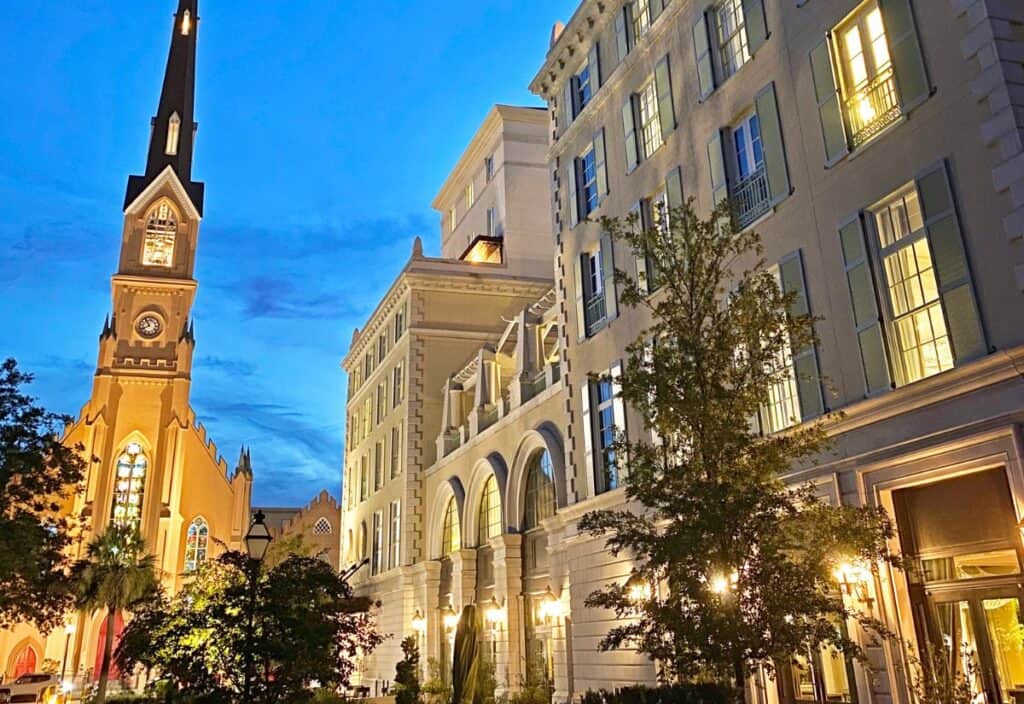
While not on the actual top 10 list, Charleston deserves a special mention. Charleston’s foodie scene buzzes with history-forward creativity, especially in its celebration of Gullah Geechee cuisine, which is rooted in West African, Lowcountry and Sea Islands traditions. You’ll find soulful classics like okra stew, shrimp and grits, benne wafers and rice dishes across the city. Visionary chefs like BJ Dennis are reviving heirloom ingredients such as Carolina Gold rice, groundnut soups and Sea Island red peas through immersive dinners that tell the Gullah story in every bite.
Amidst all this, outdoor dining stands out as a hallmark of Charleston. Take Gabrielle at Hotel Bennett, where the stylish terrace overlooks historic Marion Square and offers an elevated yet breezy Lowcountry experience with fresh, boldly flavored dishes that echo seasonal ingredients.
A nation served in many ways
As international flavors become part of daily life, these cities offer a blueprint for how culinary identity shapes the urban experience. The takeaway isn’t just about who serves the most global cuisines but about how food access reflects a city’s character. Whether in tightly packed blocks or across wide-reaching corridors, these top-ranking cities show that cultural diversity lives not just on menus but in the way neighborhoods eat, gather and connect.
Mandy Applegate is the creator behind Splash of Taste and seven other high-profile food and travel blogs. She’s also co-founder of Food Drink Life Inc., a unique and highly rewarding collaborative blogger project. Her articles appear frequently on major online news sites, and she always has her eyes open to spot the next big trend.