
Seasonal eating in America was built on real limits, and for most of the country’s history, the food calendar was simply accurate. Then refrigeration and global trade changed what was possible, and industrial food production finished the job. The habits scarcity created became far more durable than the scarcity itself, and most of what gets called a seasonal tradition today is inherited information from a supply chain that stopped existing decades ago.
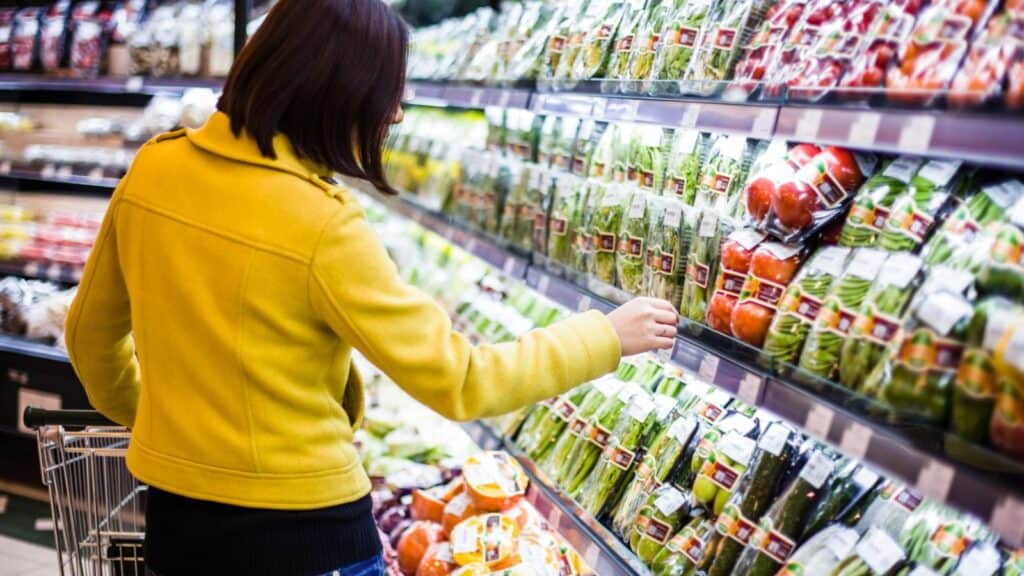
The food calendar used to represent what the harvest allowed. Fresh strawberries were generally unavailable to most Americans in February. Winter pantries leaned heavily on preserved and dried goods, and the produce aisle followed whatever the regional harvest allowed.
Season and supply lined up for most of American history, closely enough that generations of shoppers learned to trust the calendar as a map of what was actually available. Refrigeration, controlled-atmosphere storage, global trade and Southern Hemisphere harvests running opposite to ours rewrote the supply chain within a few generations. The cultural calendar never caught up.
The oyster rule that outlived its purpose
Archaeological evidence suggests people have deliberately avoided summer oyster harvests for at least 4,000 years, long before the modern “R month” rule was written down. Researchers confirmed this through fossilized evidence found on a shell ring on St. Catherines Island, off the Georgia coast.
Summer oysters carry greater food-safety risks because Vibrio bacteria thrive in warmer water, while spawning season can also affect their texture and flavor. People were avoiding them for thousands of years before either explanation was understood.
Modern aquaculture and refrigeration, backed by tighter regulation, have made year-round commercial oysters significantly safer. Commercially farmed oysters are harvested under regulated conditions, then held under strict time-and-temperature controls. That keeps the risk from warm-weather handling in check.
Triploid oysters, bred to skip the spawning cycle, also maintain their firm texture and briny flavor through the summer months. The traditional R-month rule is still a useful seasonal rule of thumb. Food safety authorities are clear, though: avoiding summer months is not a substitute for modern shellfish safety controls.
The ‘pumpkin’ that was never really pumpkin
Walk down any grocery aisle in October, and canned pumpkin is stacked high, as if the supply might vanish with the first hard frost. The anxiety is understandable, but so is the surprise when you look at what is actually in the can.
Libby’s, America’s dominant canned pumpkin brand, does not use the round orange jack-o’-lantern variety most people picture when they hear “pumpkin.” Its product comes from a proprietary tan-skinned Dickinson cultivar that looks nothing like a carving pumpkin.
The label is legally and commercially accurate; it just describes a very different squash than the one on the front porch. Dickinson is harvested once a year, canned at Libby’s plant in Morton, Illinois, and sold as a shelf-stable product throughout the year. The fall window is a retail event. The product itself has no meaningful off-season.
Eggnog and the tradition that became a calendar
Eggnog’s December window traces to celebration, not scarcity. Colonial Americans associated rich, alcoholic drinks with the holidays, and eggnog, with its dairy base and warming spirits, became a natural centerpiece of Christmas gatherings by the 19th century.
By then, the tradition was firmly enough embedded to spark a full-scale riot at West Point. In 1826, Superintendent Colonel Sylvanus Thayer banned alcohol at West Point, and cadets smuggled in whiskey to make eggnog anyway.
Every ingredient in eggnog, from eggs and cream to sugar and nutmeg, has been available year-round for generations. Commercial eggnog production clusters in the weeks around the holidays because demand spikes then, not because supply can’t support year-round production. Most stores stock it November through January and nothing more.
Cranberries, minus the fresh-only assumption
The harvest runs September through November across Wisconsin, Massachusetts, New Jersey and Oregon. Fresh berries hit grocery store shelves from October through December. Buying fresh cranberries in July is genuinely out of season. On this one, the seasonal assumption holds up.
Only about 5% of the U.S. cranberry crop is sold fresh. The remaining 95% goes to processing, most commonly juice, with sauce, dried and frozen cranberries also available throughout the year. Frozen cranberries are the most flexible year-round stand-in for fresh, working well in cooked applications from sauces and compotes to baked goods and relishes.
About 20% of all U.S. cranberry consumption happens during Thanksgiving week, which suggests the seasonal fixation is largely self-fulfilling. The product is on the shelf in March, but the cultural habit of reaching for it never developed outside the holiday window.
Asparagus and the spring that never really ended
The first thin asparagus spears at a farmers market in late April carry a particular kind of appeal. They signal that winter is done and the growing season has restarted. Michigan, the largest U.S. domestic producer, harvests from May through June, and that local crop has real meaning to anyone buying from a regional farm.
Peru accounts for roughly 30% of total U.S. asparagus imports, and in 2024, the U.S. imported 515.4 million pounds of asparagus from all sources. Mexico is the dominant supplier through the spring months, while Peru supplies the U.S. market particularly heavily outside the main Mexican production window, helping extend availability into fall and winter.
The spring feeling the vegetable carries is real. The supply gap that once tied fresh asparagus closely to the domestic spring harvest has largely disappeared from U.S. retail.
Blueberries crossed hemispheres to stay on your table
Peak domestic blueberry harvest runs June through August, and the summer association is genuine. At that time of year, domestic production is at full volume, and the fruit is at its best. The blueberry in a January grocery bag tells a different supply story, one that crosses hemispheres rather than state lines.
U.S. imports of fresh blueberries have grown sharply in recent years. Roughly two-thirds of all fresh blueberries sold in the U.S. now come from imports. Peru and Mexico anchor much of that supply, and Chile’s staggered harvest adds a third window, together covering the calendar almost continuously.
Winter and early-spring blueberry shelves now run almost entirely on imports. The domestic summer season is real and worth celebrating, and the January blueberry aisle no longer has to wait for the harvest.
What the seasonal assumptions are tracking
Every one of these assumptions formed around a real, specific condition: a spoilage risk, a harvest window, a cultural custom. None of them were arbitrary when they took hold. What changed was the supply chain behind each one, not the memory of why the belief started in the first place.
The supply moved faster than the memory did, and the old beliefs kept feeling true well after they stopped being accurate. That gap is worth noticing. Knowing where an assumption came from doesn’t mean giving up the ritual built around it. It just means the ritual is now a choice, not a limit.
Jennifer Allen is a retired professional chef and long-time writer. Her work appears in dozens of publications, including MSN, Yahoo, The Washington Post and The Seattle Times. These days, she’s busy in the kitchen developing recipes and traveling the world, and you can find all her best creations at Cook What You Love.