
Forest bathing is the wellness trend you didn’t know you were missing. It doesn’t ask for effort or equipment — just presence. It meets you where you are and gives you space to breathe. When the pace of life feels relentless, the forest offers a kind of stillness most of us didn’t realize we were craving. Curious? We’ve got everything you need to know about forest bathing.

What is forest bathing?
This post may contain affiliate link(s). As an Amazon Associate, I earn from qualifying purchases. See Disclosures.
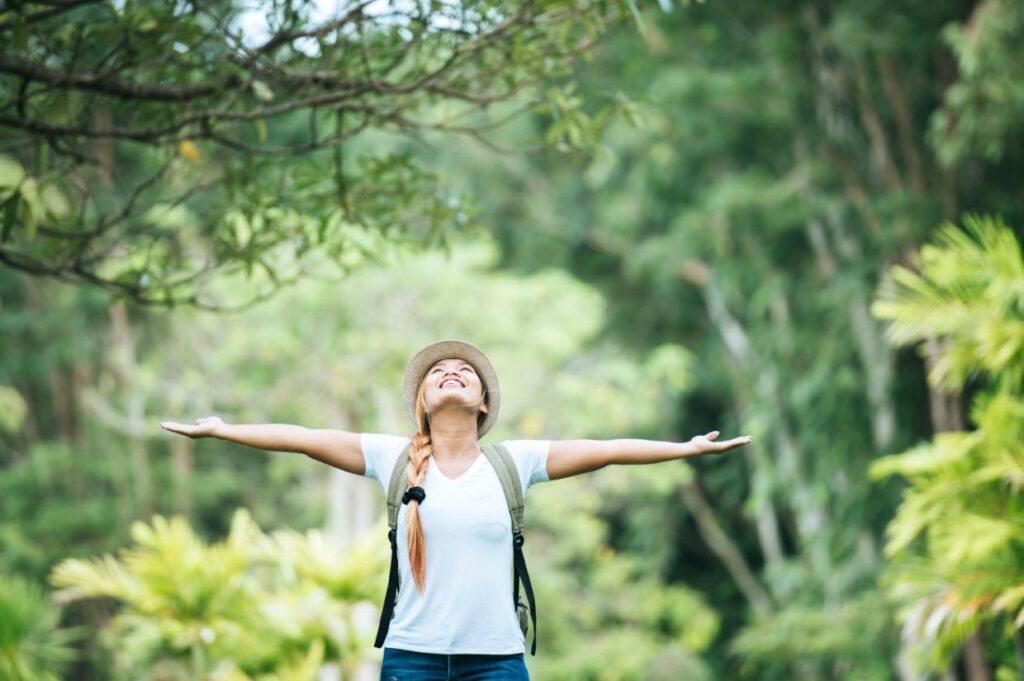
Forest bathing, known as shinrin-yoku in Japan, isn’t about hiking or working up a sweat — it’s about slowing down. The idea is to fully immerse yourself in the forest atmosphere — no phones, no distractions, just you and nature. The practice is rooted in the belief that time in the forest can lower heart rate and blood pressure while boosting mood and focus. It’s also a full-sensory experience where participants are encouraged to engage with nature through touch, smell, sound and sight. This mindful connection with the environment creates space for reflection, creativity and calm.
Where it comes from — and why it works?
In the 1980s, Japan developed a response to rising mental and physical health challenges tied to modern urban life. Heavy traffic, long office hours and dense populations create a kind of sensory overload. Many cities, in Japan and elsewhere, have become “green-poor,” lacking trees and parks that offer even a hint of nature. That’s where forest bathing stands apart. Immersing in a natural setting stimulates the senses just enough to quiet the mental noise. It eases the drive to be constantly doing and offers a moment of uninterrupted peace.

Where to forest bath?
Forest bathing doesn’t require a remote mountain or national park. Urban green spaces, wooded trails, or even a quiet grove at the edge of town can work. What matters is your presence — intentional, unhurried and fully aware. It can be practiced in any safe natural setting — even indoors. Individuals with mobility limitations or other restrictions can bring the outdoors inside. Touching a plant, listening to natural sounds or setting up a small nature corner with stones, leaves or flowers can offer a similar sense of connection. Budget travel, here we come.
According to Healing Forest, the main principles are to go in silence and go slow. Engaging the senses — listening, smelling, touching and observing — helps shift the body into a calmer state. Just two hours a week can improve mood and energy levels while reducing stress. And for those living in cities without easy access to forests, nearby parks are a practical alternative. You can even practice it in ancient cities like Luxor where ancient goroves near the Nile provide a perfect backdrop for mindfulness and rejuvenation. Forest bathing, at its core, is about mindfulness — and that can happen anywhere.
The power of doing nothing
Forest bathing is a wellness practice that asks for nothing in return. No special gear, no memberships — just time, attention and a willingness to pause. And in a culture wired for productivity, that pause is often the medicine we didn’t know we needed. Forestry England shared some tips on how to get started.
Take in your surroundings using all your senses
Notice the details — patterns on leaves, shifting light or birdsong in the distance. This is about being fully present without trying to analyze or label what’s around you. Let your attention settle on small things, and you may notice more than you expected.
Sit quietly and observe without judgment
Find a comfortable spot and stay still for a few minutes. Watch how the forest moves around you — the breeze, the insects, the shadows. The less you do, the more you see. This kind of mindful attention often reveals more forest life than expected.
Keep your eyes open
The greens and blues found in nature are known to ease tension and support relaxation. Looking at natural color and light has a calming effect on the nervous system. Let your gaze soften and take in the scene without focusing on anything in particular.
Stay as long as time allows
Try building up to two hours for the full effect, but any time spent with intention matters. The key is to stay until you feel a noticeable shift — even a small one. Regular visits help deepen the benefits over time.
One last thing before heading back to reality
Nature has long felt like background scenery — pretty, but peripheral. Forest bathing reframes that relationship. It becomes a way to slow the pace and reconnect with something quieter, yet deeply restorative. Maybe it’s less about adding time and more about shifting how that time is spent. The forest doesn’t need you to be productive — it just needs you to show up. And sometimes, that’s the most nourishing thing a person can do.
Jennifer Allen, retired chef turned traveler, cookbook author and writer, shares her adventures and travel tips at All The Best Spots. Living at home with her family — and the cats that rule them all — her work has been featured in The Washington Post, Seattle Times, MSN and more.