
The frappe has accumulated several distinct meanings across different food traditions, and each has a legitimate history. National Frappe Day this Oct. 7 celebrates a drink whose identity was shaped by a trade fair accident and decades of regional stubbornness. Boston invented the name and used it before most Americans had heard it.
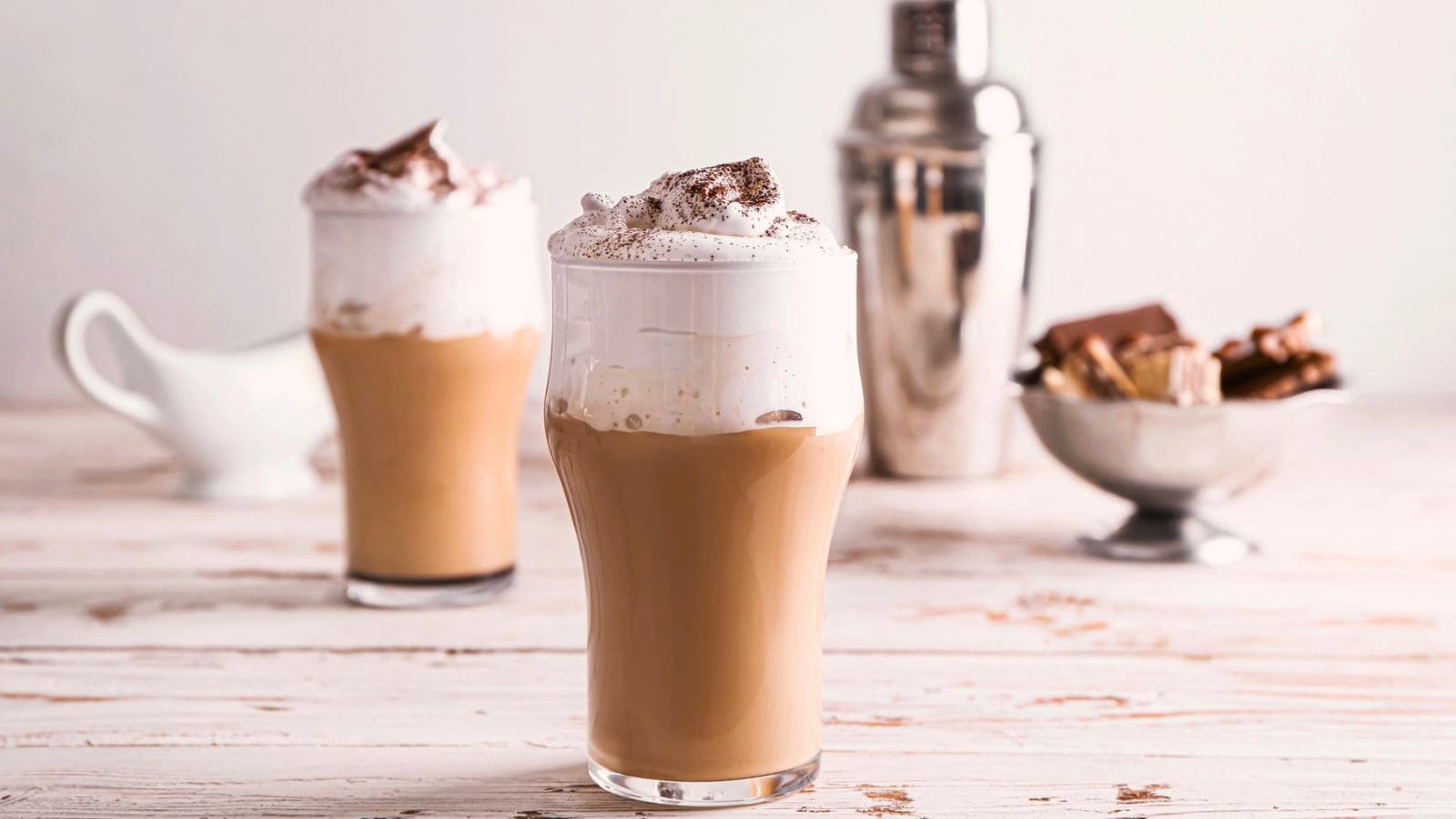
The name comes from the French frappé, from frapper, meaning to strike; frappé also took on a culinary sense of chilling something with ice. In New England, frappe became the regional name for a thick drink made with milk and ice cream, what most of the country calls a milkshake. Traditionally, a milkshake in those same shops was thinner, milk and flavored syrup blended until frothy, with no ice cream. For anyone who grew up with this distinction, it is obvious. For anyone who didn’t, ordering the wrong thing at a Massachusetts ice cream counter is a rite of passage.
The New England frappe
In Massachusetts, the frappe, pronounced “frap,” one flat syllable, no accent, is the drink with ice cream, while traditionally a milkshake is the lighter version without it. The terminology has persisted across much of the region for generations, defended by counter workers who have had the same patient explanation ready for decades.
A visitor orders a chocolate milkshake expecting something thick enough to resist a straw. What arrives is closer to chocolate milk blended until frothy. It’s a mistake that many visitors make, and is enough to make locals overhearing the transaction chuckle.
Rhode Island developed its own name
Rhode Island, which has always maintained a complicated relationship with New England convention, calls the drink something else entirely. There, it is called a cabinet, a name commonly said to come from the wooden cabinet where the blender was kept behind the counter, though the term’s exact origin remains uncertain.
The coffee cabinet became the state’s signature version, made with coffee ice cream, milk and Autocrat Coffee Syrup, a Rhode Island brand with its own devoted following. The drink also appears in parts of southeastern Massachusetts, though the term never spread further across the region or the country.
Where the cold coffee version came from
The Greek-style frappé most Americans associate with the word today traces its modern history to an improvised moment at a trade fair in Thessaloniki, Greece, in 1957. A Nestlé employee named Dimitris Vakondios found himself without hot water for his morning coffee and noticed a cocktail shaker nearby, being used to create a children’s chocolate drink. He combined instant coffee, cold water, ice and sugar in the shaker, and what came out, foamy, cold and strong, became a Greek coffee staple.
The Greek café frappe became a national coffee tradition, still ordered at sidewalk tables across Greece and Cyprus today, often sipped slowly over an hour or two in a way that has no real American equivalent.
How the Frappuccino got its name
The Frappuccino most Americans now recognize originated not in a Starbucks test kitchen but at a small Cambridge, Massachusetts coffee chain called The Coffee Connection in 1992. Owner George Howell wanted a way to keep sales from dropping every summer when Harvard students left town. After tasting an iced cappuccino drink in Seattle, he brought the concept back to Boston, where his marketing director, Andrew Frank, developed a drink using coffee, milk and sugar, frozen smooth in a granita machine.
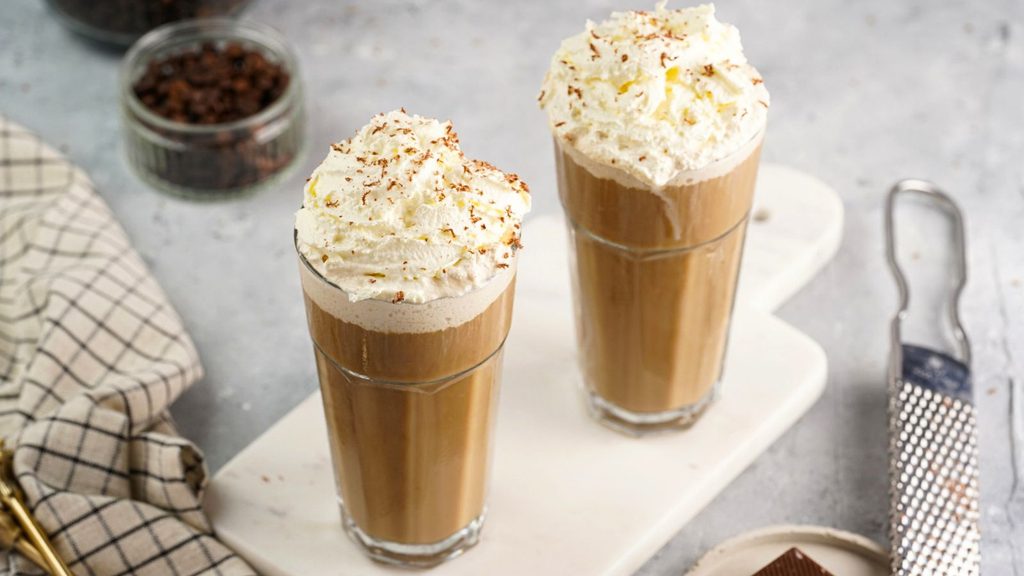
Frank named it the Frappuccino, a portmanteau of the New England frappe and the Italian cappuccino. Starbucks bought The Coffee Connection in 1994 and acquired the rights to the Frappuccino name. Starbucks had already been developing its own blended coffee drink in Southern California, and it applied the newly acquired name to that beverage before launching Coffee and Mocha Frappuccino drinks nationally in 1995. Frank had already left the company before the sale closed. The beverage would eventually become one of Starbucks’ best-known products.
One word became many drinks
The frappe’s fractured identity is a natural consequence of how food terms travel, borrowed, adapted and renamed by whoever encounters them next. A word that began as a French culinary term now means something different in Massachusetts, Greece and Rhode Island, with each tradition carrying its own history. The word kept collecting meaning wherever it went, and it hasn’t stopped.
Mandy writes about food, home and the kind of everyday life that feels anything but ordinary. She has traveled extensively, and those experiences have shaped everything, from comforting meals to small lifestyle upgrades that make a big difference. You’ll find all her favorite recipes over at Hungry Cooks Kitchen.