
Grocery stores stock Fuyu and Hachiya persimmons side by side every fall, and keeping one of them in a refrigerator can make it look spoiled within days. The other can’t be eaten until it feels like a soft bag of pudding, while its lookalike is ready the moment it feels firm. Mix up the rules and shoppers end up with either a wasted fruit or a mouthful of dry, puckering disappointment, often enough to swear off persimmons for good.
Biting into an unripe Hachiya sends the tannins inside into overdrive, puckering every surface in the mouth at once and leaving a chalky, cottony dryness that lingers for minutes. Those tannins sit concentrated in cells spread through the flesh, which is why even a small bite delivers the full effect rather than a mild tang around the edges. It isn’t a letdown like a bland strawberry. It’s unpleasant enough that most people assume something is wrong with the fruit itself, not their timing.
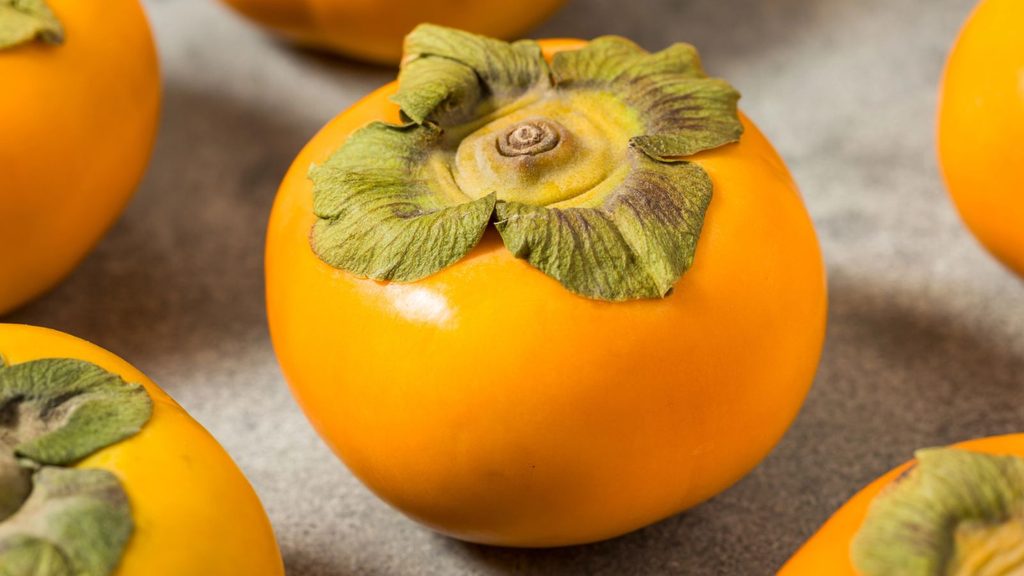
Fuyu, meanwhile, is ready to eat as soon as it’s firm and pale orange, and many describe its taste as a mild, honeyed apple, no waiting required. Shoppers rarely get any explanation at checkout, where the two varieties are usually priced the same per pound.
The two taste nothing alike
Hachiya’s astringency comes from tannins that bind to proteins in saliva, causing the puckering sensation. As the fruit ripens, those tannins convert from a soluble form into an insoluble one that no longer reacts the same way in the mouth, and the astringency disappears almost entirely. Fuyu loses its astringency early, well before full ripeness, which is why it’s pleasant to eat while still firm.
Spotting them before you buy
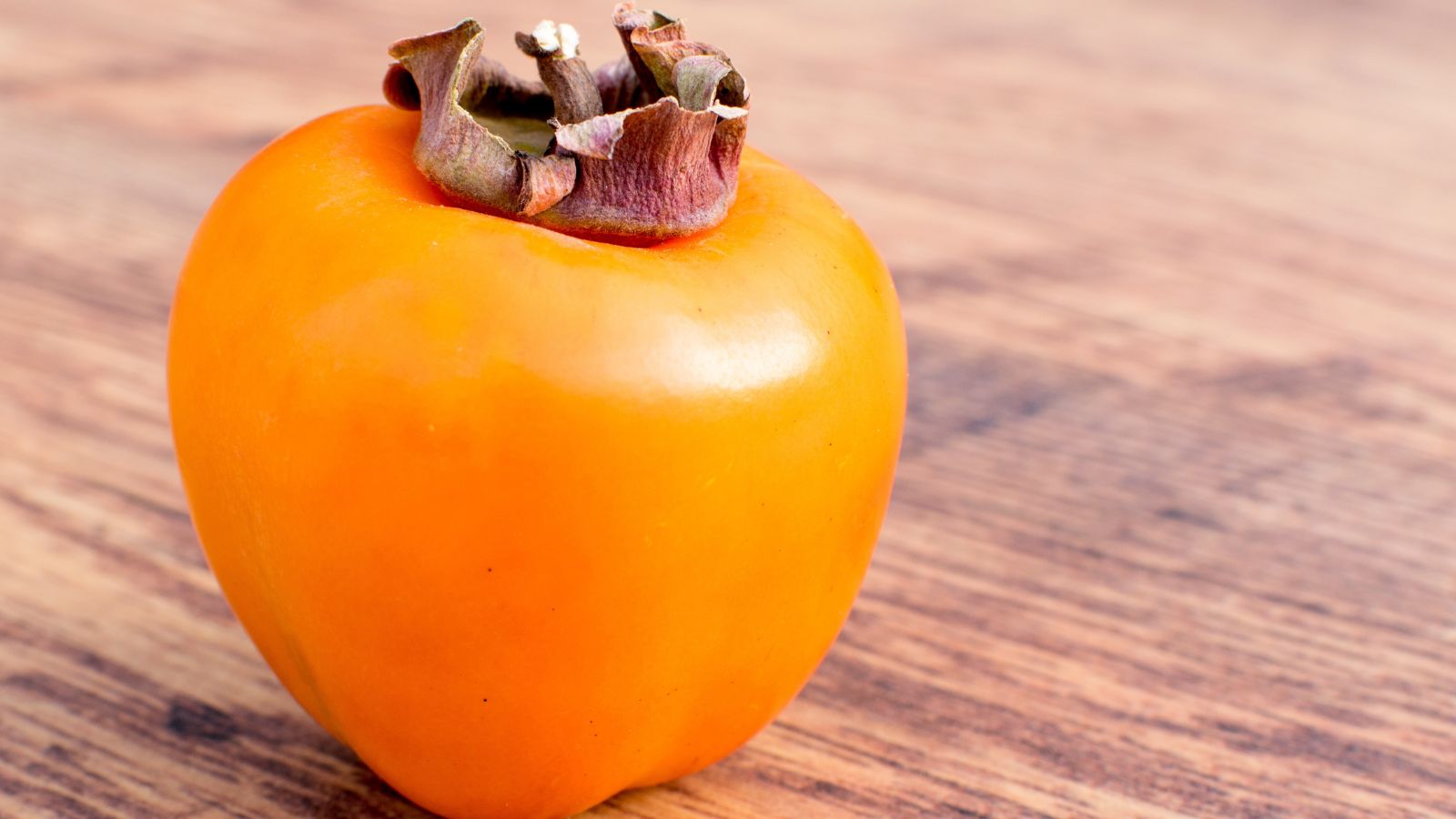
Shape gives away the variety long before ripeness does. Fuyu persimmons are squat and round, with a flat bottom and the look of an orange tomato. Hachiya is heart or acorn shaped instead, tapering to a pointed bottom. Picking by shape first, before even touching the fruit, removes the guesswork that sends both varieties home for the same treatment.
A refrigerator habit that backfires
The two varieties also react in opposite ways to a normal refrigerator. Fuyu suffers chilling injury when stored between about 36 and 59 degrees Fahrenheit, which covers the temperature of most home refrigerators, well above the 32 degrees that commercial growers use for long-term storage. The damage shows up as softened flesh, browning and a water-soaked look, and the full effect typically isn’t visible for one to three days after the fruit comes back out of the cold, catching most shoppers off guard since the fruit looked perfectly fine going in. Hachiya isn’t vulnerable to that particular damage, though an unripe one left in a cold refrigerator will simply soften more slowly, since ripening itself depends on warmth.
Fuyu frozen solid, well below that danger zone, shows none of the same damage. Persimmon flesh doesn’t freeze until about 28 degrees Fahrenheit, cold enough to sidestep the narrower chilling range entirely. For everyday storage, simply keep Fuyu out of the refrigerator until it’s about to be eaten.
Getting a stubborn one ripe faster
A firm Hachiya left on the counter alone can take a week or longer to soften enough to eat safely. Sealing it in a bag with a ripe apple or banana speeds ripening by trapping the ethylene gas those fruits give off. Spreading the fruit in a single layer, rather than piling it in a bowl, is the method one extension guide recommends for ripening evenly.
A ripening Hachiya is ready only once it’s soft all the way through, not simply firmer than it started. Once it reaches that point, it keeps in the refrigerator for up to a month or in the freezer for up to eight months, which takes the pressure off using it the moment it finally softens. Freezing an unripe Hachiya for about a day is another route some home cooks take, since the freeze also helps eliminate tannins and leaves the thawed fruit soft enough for baking or purees.
One is for slicing, one is for baking
The two varieties don’t swap for each other in the kitchen either. Fuyu holds its shape when cut, like a firm pear, which makes it good sliced into a salad or eaten out of hand. Hachiya turns to something closer to custard once it’s ripe, with a texture too loose to slice, so recipes call for scooping out the pulp and folding it into batter. That’s why persimmon bread or pudding recipes almost always call for Hachiya instead of Fuyu.
From Japan to California’s produce aisles
Neither variety is native to the United States. Japanese persimmons were introduced to the country in 1856, when Commander M.C. Perry brought them over. Fuyu, one of many Japanese-derived names used in U.S. markets, translates to “wealthy” or “abundant,” not winter. Florida didn’t get its own trees until the 1870s, nearly two decades after California’s first took root, which is why the state’s harvest still trails California’s by a wide margin.
Jennifer Allen is a retired professional chef and long-time writer. Her work appears in dozens of publications, including MSN, Yahoo, The Washington Post and The Seattle Times. These days, she’s busy in the kitchen developing recipes and traveling the world, and you can find all her best creations at Cook What You Love.