
German immigrants and their descendants have shaped American cooking for more than three centuries, and over time, the food’s origins quietly faded. The recipes had taken such deep root that during World War I, Americans sometimes renamed German foods rather than give them up. This Oct. 6, National German-American Day, it is time to meet the dishes that never actually left.
The observance that became German-American Day traces its history to the arrival of 13 Mennonite families from Krefeld, Germany, in Philadelphia in 1683 and the founding of Germantown, one of the earliest German settlements in what became the United States.
A German-American pioneer celebration was held in Philadelphia on Oct. 6, 1883, marking the 200th anniversary of that arrival. The tradition later faded amid the anti-German sentiment of World War I, when German-language newspapers, church services and cultural institutions came under pressure. A century after the original settlement, President Ronald Reagan proclaimed 1983 the 300th anniversary of German immigration, and in 1987 Congress formally designated Oct. 6 as German-American Day.
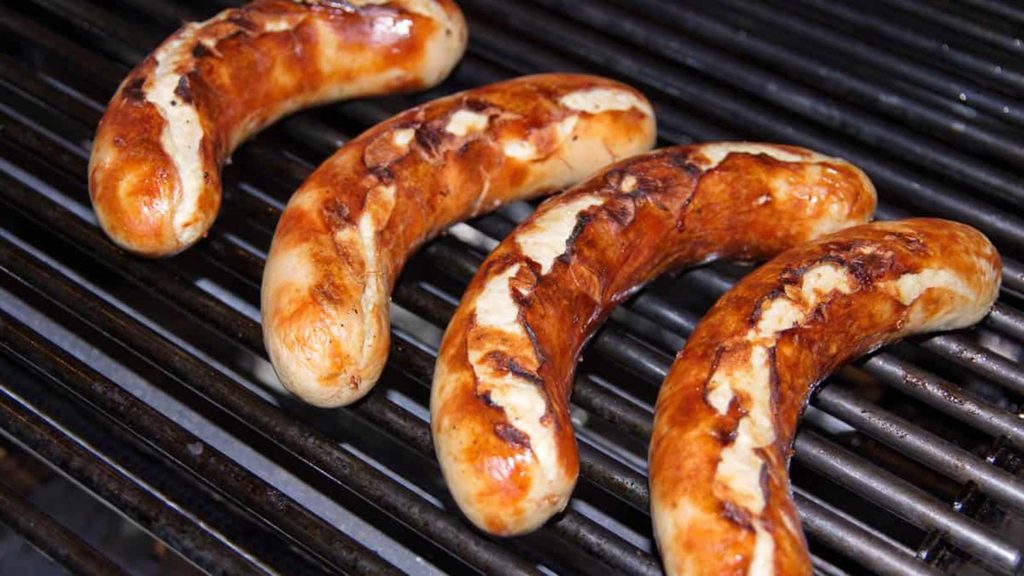
Bigger than bratwurst
About 40 million Americans claim German descent, making German Americans the largest reported ancestry group in the country. That history helped produce a culinary footprint that stretches far beyond bratwurst and beer gardens. It reaches into the morning pastry on bakery counters across the country, the cake pan sitting in millions of American cabinets and the potato salad at every backyard cookout from Pennsylvania to the Pacific Northwest.
Some American cinnamon rolls began as Schnecken
German and German-Jewish immigrants brought a pastry called Schnecken to the U.S. in the 19th century, where it became a specialty of bakeries across the Northeast and Midwest, among other European baking traditions that shaped the American sweet roll. Named for the tight spiral the dough makes when it is rolled and sliced, Schnecken means snail in German. The 1901 edition of the Settlement Cook Book lists the recipe plainly as “Cinnamon Rolls or Schnecken.” By the 1940s edition of that same book, the German name was gone; but the beloved cinnamon roll was here to stay.
How a second-place cake changed American baking
In 1950, three women from the Hadassah Society of Minnesota, Rose Joshua, Fannie Shanfield and Mary Abrahamson, walked into a small Minneapolis company called Nordic Ware with a request. The women brought a heavy traditional ring mold as a model and asked the founder, H. David Dalquist, to make a lighter aluminum version. He said yes.
For much of its first 16 years, the pan struggled to find a mass audience. Then in 1966, a Houston woman named Ella Helfrich entered her Tunnel of Fudge cake in the Pillsbury Bake-Off, placed second and set off more than 200,000 letters asking where to buy the pan. Dalquist ran his factory around the clock to keep up. The Smithsonian’s National Museum of American History has several of the original Nordic Ware pans. Dalquist adapted the name from the German word Bund, adding the final t when he trademarked the name.
Warm, vinegar-dressed and here first
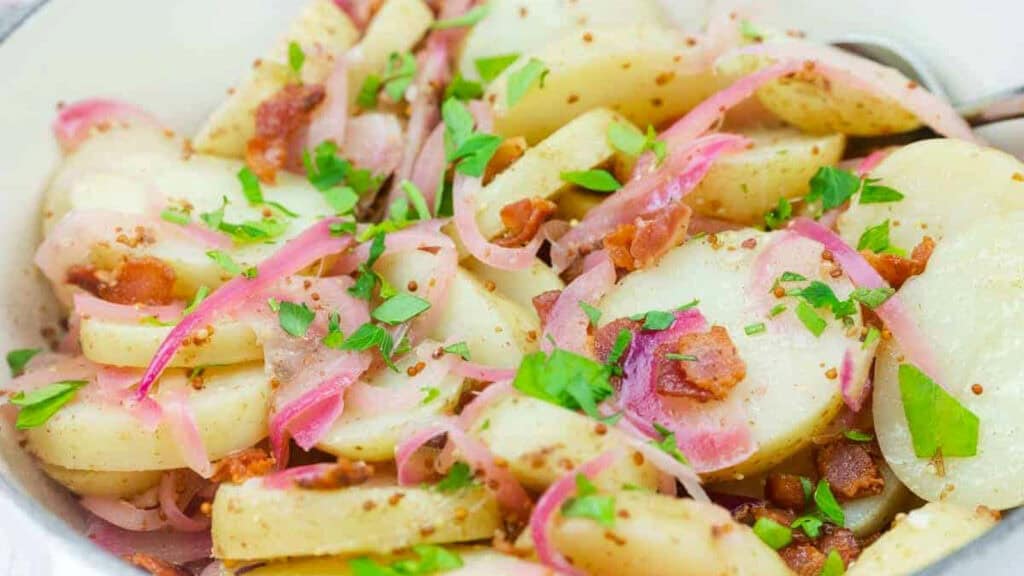
German potato salads often retained the warm, vinegar-based style associated with southern Kartoffelsalat. It arrived with 19th-century immigrants who settled across Pennsylvania, Ohio and the upper Midwest, among other regional traditions. The cold, creamy American version grew later as commercial mayonnaise became increasingly common in the early 20th century. That warm, vinegar-based style has older roots in German-American cooking.
Where to taste it in person
The German culinary thread runs straight to the surface in a handful of American destinations. Fredericksburg, Texas, founded by German immigrants in 1846, lines its historic Main Street with schnitzel and biergartens about an hour northwest of San Antonio, and was revived nationally when Congress made it official in 1987.
Nearby New Braunfels hosts Wurstfest each November, a festival founded in 1961 that expanded to a 10-day run in 1968 and drew more than 240,000 visitors at its 60th anniversary celebration, with potato pancakes, sausage on a stick and polka bands near the Comal River. The crowds keep coming.
Or head north to Milwaukee’s Old World Third Street, the last remaining portion of the city’s original German retail district, comprising three blocks and 15 historic buildings listed on the National Register of Historic Places, where Mader’s German Restaurant has served German specialties since 1902.
German-American food survived the anti-German backlash
Anti-German pressure in 1918 was strong enough that some familiar foods were given patriotic new names. Sauerkraut became liberty cabbage, while hamburgers were sometimes called liberty sandwiches or liberty steaks. That does not happen to food that feels foreign; it happens to food that feels like home. The observance lost public prominence during World War I and was revived nationally when Congress made it official in 1987. The Schnecken, the Gugelhupf, the Kartoffelsalat waited, under different names or no names at all, for everyone to remember where they came from.
More than three centuries later
More than three centuries of German-American cooking built itself so thoroughly into American kitchens that the country stopped thinking of it as foreign; it just became part of the daily cooking routine. Today, much of it is simply American food, claimed by the kitchens that cooked it, the families that passed it down and the country that forgot where any of it started.
Jennifer Allen is a retired professional chef and long-time writer. Her work appears in dozens of publications, including MSN, Yahoo, The Washington Post and The Seattle Times. These days, she’s busy in the kitchen developing recipes and traveling the world, and you can find all her best creations at Cook What You Love.