
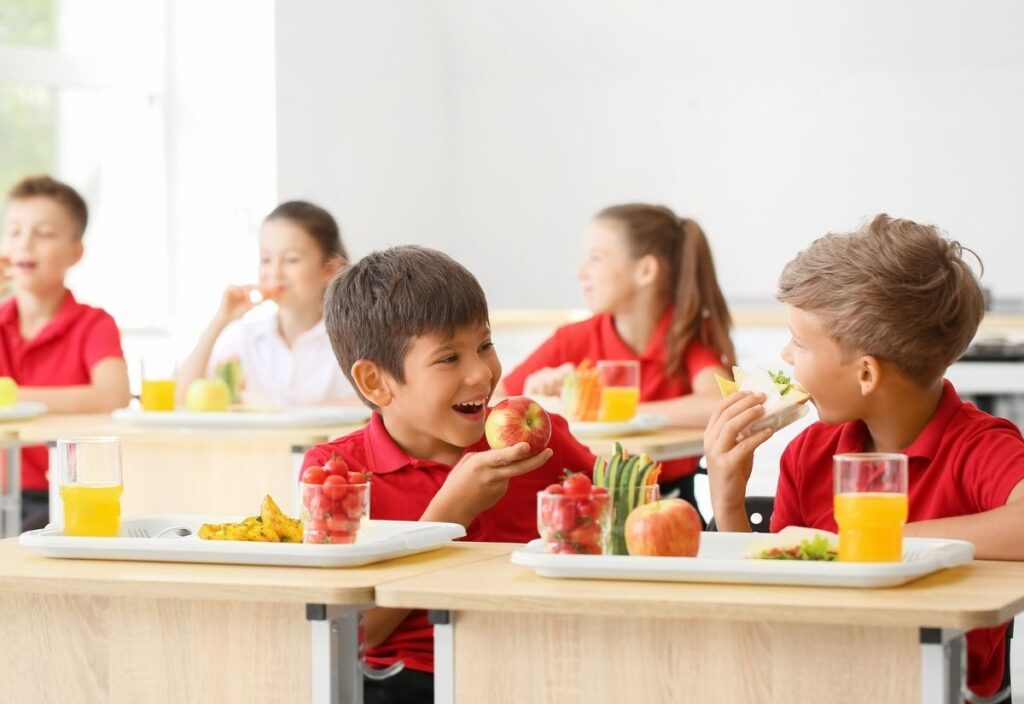
School lunches are getting a major update as districts rethink what belongs on the tray. From nuggets to nori, global flavors are making their way into school cafeterias and changing how students experience lunch. By expanding the menu, schools are using food to spark cultural curiosity, build healthier habits and reflect the diversity of the communities they serve.
This post may contain affiliate link(s). As an Amazon Associate, I earn from qualifying purchases. See Disclosures.
School kitchens are becoming more collaborative as districts look beyond nutrition labels to create meals that reflect student input and cultural relevance. New programs invite families into the process, turning recipe development into a shared effort that connects the cafeteria to the community.
Why school lunches are evolving
New school nutrition rules and evolving student needs are reshaping what gets served in cafeterias. Updated standards began phasing in lower limits for added sugars and sodium while making it easier for schools to buy locally grown foods. These changes align with broader efforts to reduce diet-related disease and improve child health. Another key shift, effective July 2024, promotes culturally relevant meals by encouraging schools to serve traditional and healthy foods to meet nutrition requirements. These updates aim to reflect student backgrounds more accurately and improve both engagement and meal satisfaction.
New forces in the lunchroom
Chefs, dietitians, school leaders, vendors and nonprofits are driving the evolution of school lunch. Four small, rural school districts across Iowa, Ohio, Alaska and Maine earned national recognition for advancing school meal programs. Backed by federal grants, these schools adopted scratch cooking, added regional foods and upgraded training for cafeteria staff.
Georgia’s Cobb County launched a Global Flavors menu that introduces students to dishes like tikka masala, Mediterranean bowls and elote made with local corn. The Caprese flatbread has quickly become a favorite. Together, they’re creating menus that are healthier, more inclusive and shaped by the communities they serve.
Students shaping school lunch
Students are playing a more direct role in shaping what ends up on their trays and lunch boxes. From giving feedback on flavors to participating in taste tests, they help fine-tune new menu items before rollout. Some food service providers are going further. Chartwells K12 launched a program called Student Choice that introduces trending dishes and lets students vote on what gets added to the rotation. The program turns lunch into a shared decision-making experience, encouraging students to consider taste, nutrition and community preferences. Even if a favorite dish doesn’t win, students stay involved and keep the conversation going.
Teamwork behind better school meals
Chefs and dietitians are collaborating more intentionally to improve school menus. Across the country, they’re creating meals that meet nutrition standards while reflecting student tastes. Chartwells K12 follows this model, blending recipe development with real-time student feedback. In New York City, Wellness in the Schools works with nutritionists to train staff in scratch cooking and test new recipes through classroom demos. National providers are also joining industry groups to promote plant-forward, culturally relevant meals.
Global dishes are gaining ground
Districts are expanding their menus with bold, student-driven choices. In Georgia’s Cobb County, students are trying global dishes like beef gyros, chicken tikka masala, chana masala and elote made with local corn. Brainerd Public Schools is adding sushi with nori to its high school snack line, along with Asian-style dumplings and noodles.
New dips like chocolate and apple chickpea spread are offered with apples, graham crackers or carrots. Grab-and-go meals from the grill and pizza lines are gaining popularity, and options like fava bean crisps, ramen and poke bowls are in development. Menu mashups, such as kimchi quesadillas, poke taco bowls and breakfast-for-lunch bowls, also reflect evolving student tastes. Some large districts now dedicate days to international menus tied to cultural celebrations, helping meals connect with students’ heritage and build community around the lunch table.
From home kitchens to school menus
Schools are turning to students and families to help shape the menu. Some districts host themed weeks or recipe contests where students submit traditional dishes, often with input from their parents or grandparents. Judges rate recipes based on simplicity, nutrition and cultural relevance, then schools adapt them for their large-scale kitchens.
In some cases, nutrition teams work directly with students to fine-tune ingredients or presentation. Dishes rooted in family history now appear in regular rotation. These efforts not only reflect the school community but also give students a sense of ownership and pride in seeing their food stories recognized.
The future of school lunch
School meals are undergoing a visible transformation, driven by student input, cultural influence and teamwork among chefs, dietitians and educators. Scratch-cooked dishes and community-inspired recipes are putting global flavors at the center of the cafeteria. From processed nuggets to nori and other nutrient-rich snacks, schools are trading familiar standbys for options that reflect health and heritage. As lunch lines begin to mirror the diversity of the classroom, schools are using food to nourish, teach and build stronger connections with students.
Mandy Applegate is the creator behind Splash of Taste and seven other high-profile food and travel blogs. She’s also co-founder of Food Drink Life Inc., a unique and highly rewarding collaborative blogger project. Her articles appear frequently on major online news sites, and she always has her eyes open to spot the next big trend.